
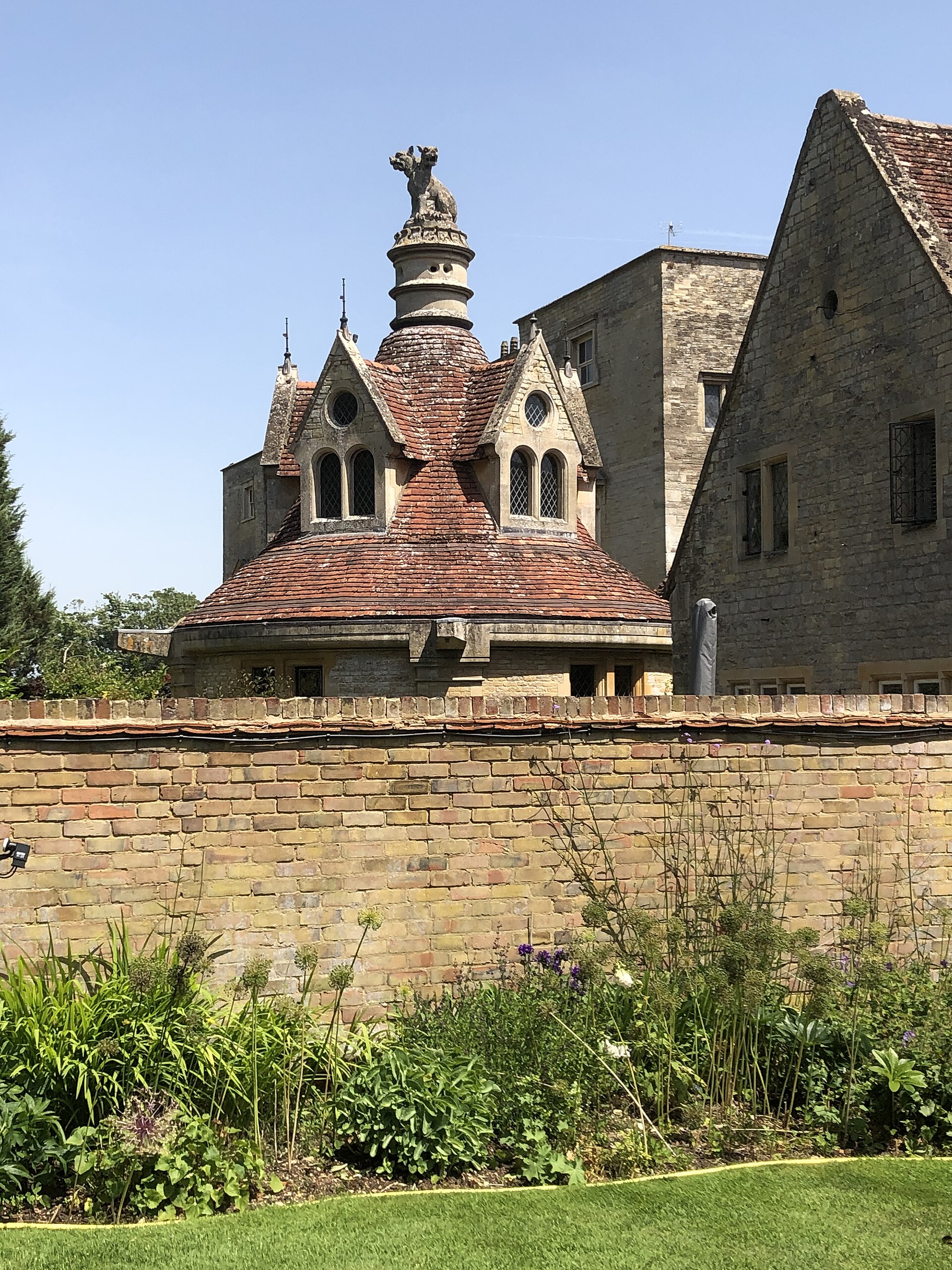
A Victorian communal lavatory designed by architect William Burges for the male servants of Gayhurst House, this Grade II* listed building stands as an unusual monument to 19th-century domestic infrastructure and craftsmanship.
At a glance
The Cerberus Privy is a purpose-built servants’ toilet constructed at Gayhurst House between 1859 and 1860. Designed by the renowned architect William Burges, it reflects Victorian attitudes toward household hierarchy and sanitation. Now converted to private residential use, the building retains its historical designation.
History
Built in the mid-19th century, the privy served the practical needs of Gayhurst House’s male domestic staff. Its construction during the 1859–1860 period coincided with growing attention to sanitary reform in Victorian England. William Burges, celebrated for his Gothic Revival designs, applied his architectural vision even to this utilitarian structure, elevating it beyond its functional purpose.
What you see
The building reflects Burges’s characteristic attention to detail and decorative sensibility. Though modest in scale and function, the privy demonstrates the Victorian belief that even servants’ facilities deserved thoughtful design. Its Grade II* listing acknowledges both its architectural merit and historical significance as a rare surviving example of dedicated servant infrastructure.
Cultural significance
The Cerberus Privy offers insight into Victorian domestic life and social structures. Named after the mythological three-headed dog, it humorously reflects the irreverent humor of the era. The building illustrates how 19th-century architects brought artistic ambition to every corner of a great house, regardless of use or status.
Key facts
- Country: United Kingdom
- Location: Gayhurst, Buckinghamshire
- Coordinates: 52.1081, -0.7671
- Designed by: William Burges
- Built: 1859–1860
- Listed status: Grade II*
- Current use: Private residence
Practical information & getting there
The Cerberus Privy is now a private home and is not open to the public. For those interested in viewing it, discretion and prior arrangement are essential. It remains a notable waypoint for architectural historians exploring William Burges’s work and Victorian domestic design in Buckinghamshire.
Sources & resources
Find it on the map
See this place and what’s around it →📷 Become a Cultural Heritage Online photographer
Share your photos of places: they stay published under your name as the author. The more they're seen, the more you get noticed — and soon a contest will reward the most appreciated photos.
Log in or sign up free to add a photoIs this page about you?
This page is read by travellers and heritage enthusiasts who find it on Google. Tell us how you are connected to this place and we will take it from there.