
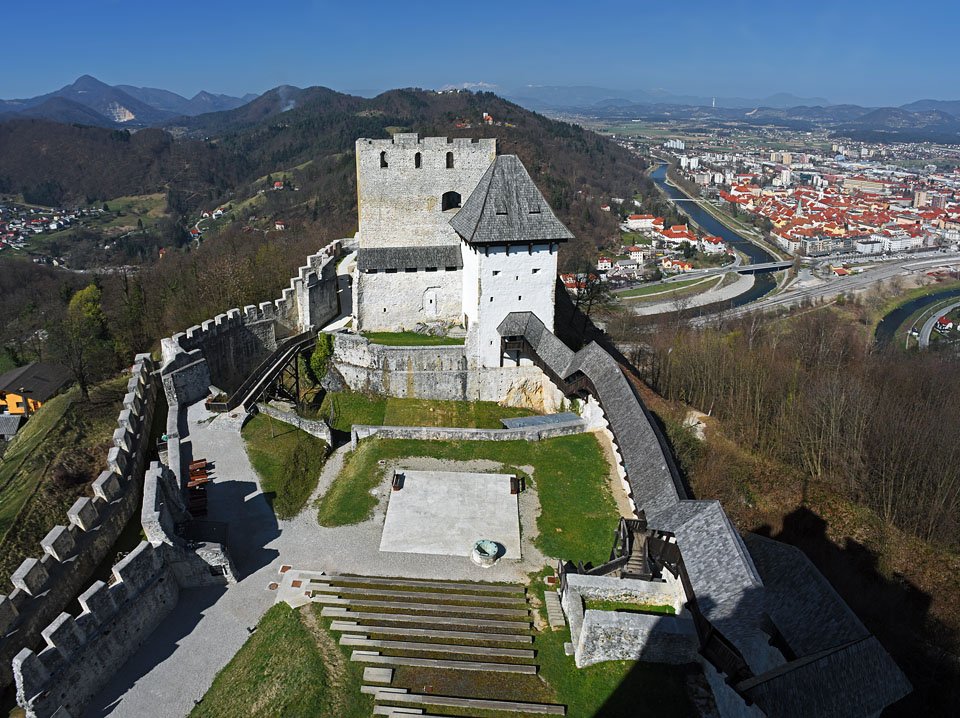
A sprawling castle ruin perched on three hills above the Savinja river valley, Celje Castle was once the largest fortification in Slovenia and the stronghold of a powerful medieval dynasty.
At a glance
Celje Castle stands on three hills southeast of the city of Celje, where the river Savinja winds into the Laško valley. The ruins command the landscape from their elevated position, offering views across the surrounding terrain. Currently undergoing restoration, the site remains one of Slovenia’s most significant architectural monuments.
History
The castle served as the seat of the Counts of Celje, one of medieval Europe’s most influential noble families. At its height, it was the largest fortification on Slovenian territory, reflecting the dynasty’s considerable power and reach. The castle’s prominence eventually waned, leaving behind the ruins visible today.
What you see
The castle occupies three distinct hills, a strategic configuration that made it a formidable defensive structure. Though now in ruins, the site’s spatial arrangement and remaining stonework illustrate medieval military architecture adapted to the challenging terrain of the Savinja valley.
Cultural significance
Celje Castle represents a pivotal chapter in Slovenian medieval history. As the residence of the Counts of Celje, it symbolizes the region’s complex political past and the ambitions of one of Central Europe’s notable noble houses. The ongoing restoration work underscores its importance to contemporary cultural heritage preservation.
Key facts
- Country: Slovenia
- City: Celje
- Coordinates: 46.21972222, 15.27166667
- Former use: Seat of the Counts of Celje
- Status: Under restoration
Practical information & getting there
The castle is accessible from Celje, located in east-central Slovenia. Consult local tourism information for current access conditions and restoration schedules, as ongoing work may affect visiting arrangements.
Sources & resources
Find it on the map
See this place and what’s around it →📷 Become a Cultural Heritage Online photographer
Share your photos of places: they stay published under your name as the author. The more they're seen, the more you get noticed — and soon a contest will reward the most appreciated photos.
Log in or sign up free to add a photoIs this page about you?
This page is read by travellers and heritage enthusiasts who find it on Google. Tell us how you are connected to this place and we will take it from there.