
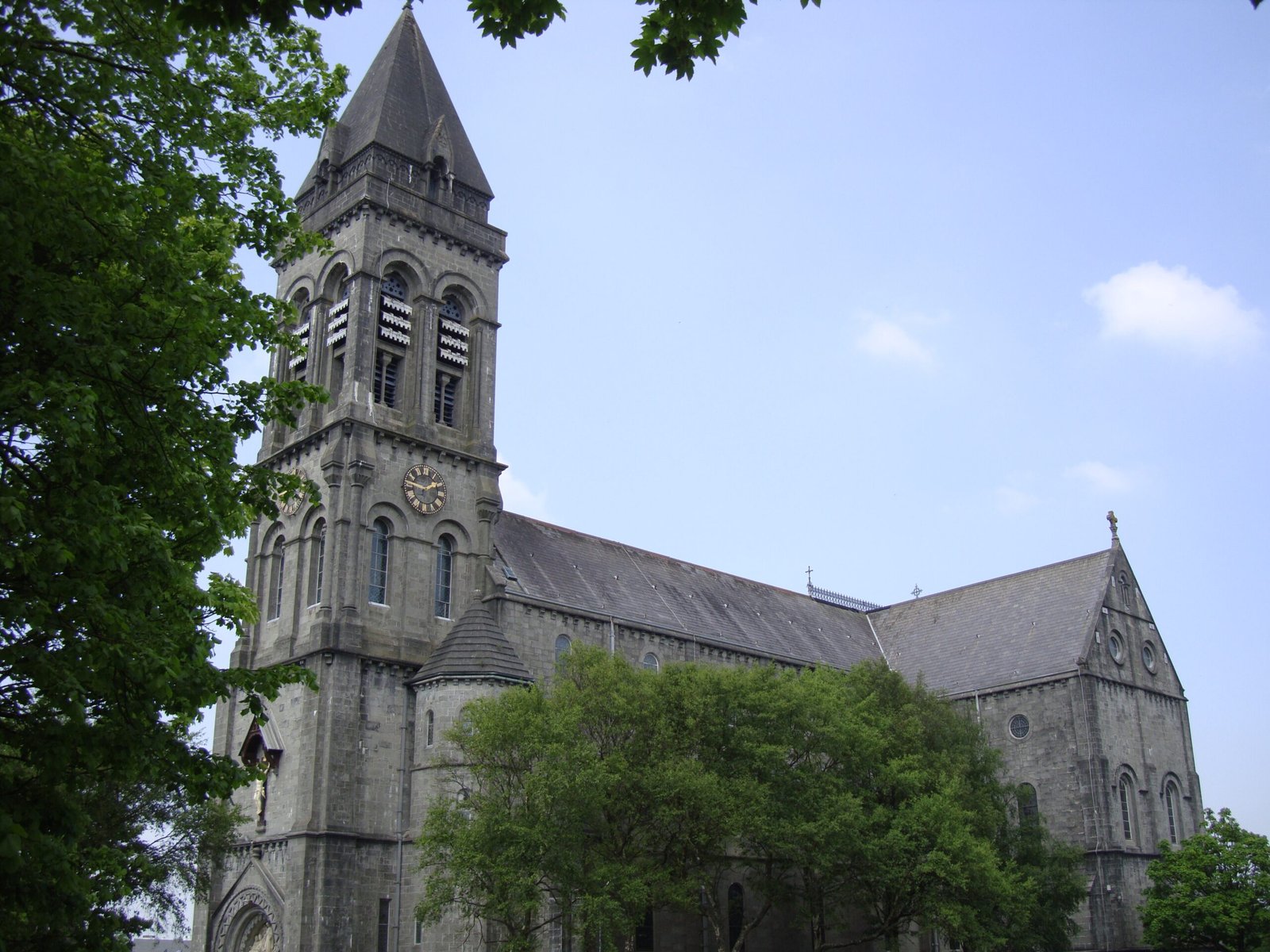
A striking Victorian cathedral in Romanesque style, built to reflect the growing prosperity of the Diocese of Elphin and opened to worship in 1874.
At a glance
Located on Temple Street in Sligo, this cathedral represents a rare achievement in 19th-century Irish ecclesiastical architecture. Designed by George Goldie, one of England’s leading Catholic architects, it replaced an earlier parish chapel as the seat of the Diocese of Elphin. The building can accommodate 1,400 worshippers and remains a visual landmark in the town.
History
Bishop Laurence Gillooly, appointed to lead the Diocese of Elphin in 1858, commissioned the cathedral as a statement of the diocese’s expansion and increased resources. The previous seat, St. John’s Parish Chapel, had served as the pro-cathedral but no longer sufficed for the growing congregation. Gillooly’s choice of architect proved decisive: George Goldie brought international standing and sophisticated design sensibilities to the project. Cardinal Paul Cullen of Dublin formally opened the completed cathedral for divine worship on 26 July 1874, marking a triumphant moment in Irish Catholic institutional development.
What you see
The cathedral follows a basilica plan in Normano–Romano–Byzantine style, distinguishing it as the only Romanesque-style cathedral erected in Ireland during the 1800s. Its most prominent feature is a square tower, capped with a pyramid roof, rising to 70 metres in height. Supporting turrets flank the western end, providing structural emphasis and visual rhythm. The interior contains a circular baptistery within the apse, originally designed as a mortuary chapel; five lancet windows pierce the wall behind the high altar, flooding this space with light.
Cultural significance
The cathedral exemplifies Victorian-era Catholic confidence and architectural ambition in Ireland. Goldie’s design synthesises Romanesque and Byzantine forms into a cohesive statement of faith and permanence. The building testifies to the Church’s central role in Irish civic life during the 19th century and the resources mobilised for institutional expansion following Catholic Emancipation.
Key facts
- Country: Ireland
- City: County Sligo
- Completed: 1874
- Architect: George Goldie
- Opened: 26 July 1874
- Tower height: 70 metres
- Seating capacity: 1,400
- Coordinates: 54.2699, −8.4782
Practical information & getting there
The cathedral stands on Temple Street in central Sligo, making it accessible by foot from the town centre. Opening hours and visitor information should be confirmed in advance. Active as a place of worship, it welcomes respectful visitors during non-liturgical hours.
Sources & resources
Find it on the map
See this place and what’s around it →📷 Become a Cultural Heritage Online photographer
Share your photos of places: they stay published under your name as the author. The more they're seen, the more you get noticed — and soon a contest will reward the most appreciated photos.
Log in or sign up free to add a photoIs this page about you?
This page is read by travellers and heritage enthusiasts who find it on Google. Tell us how you are connected to this place and we will take it from there.