
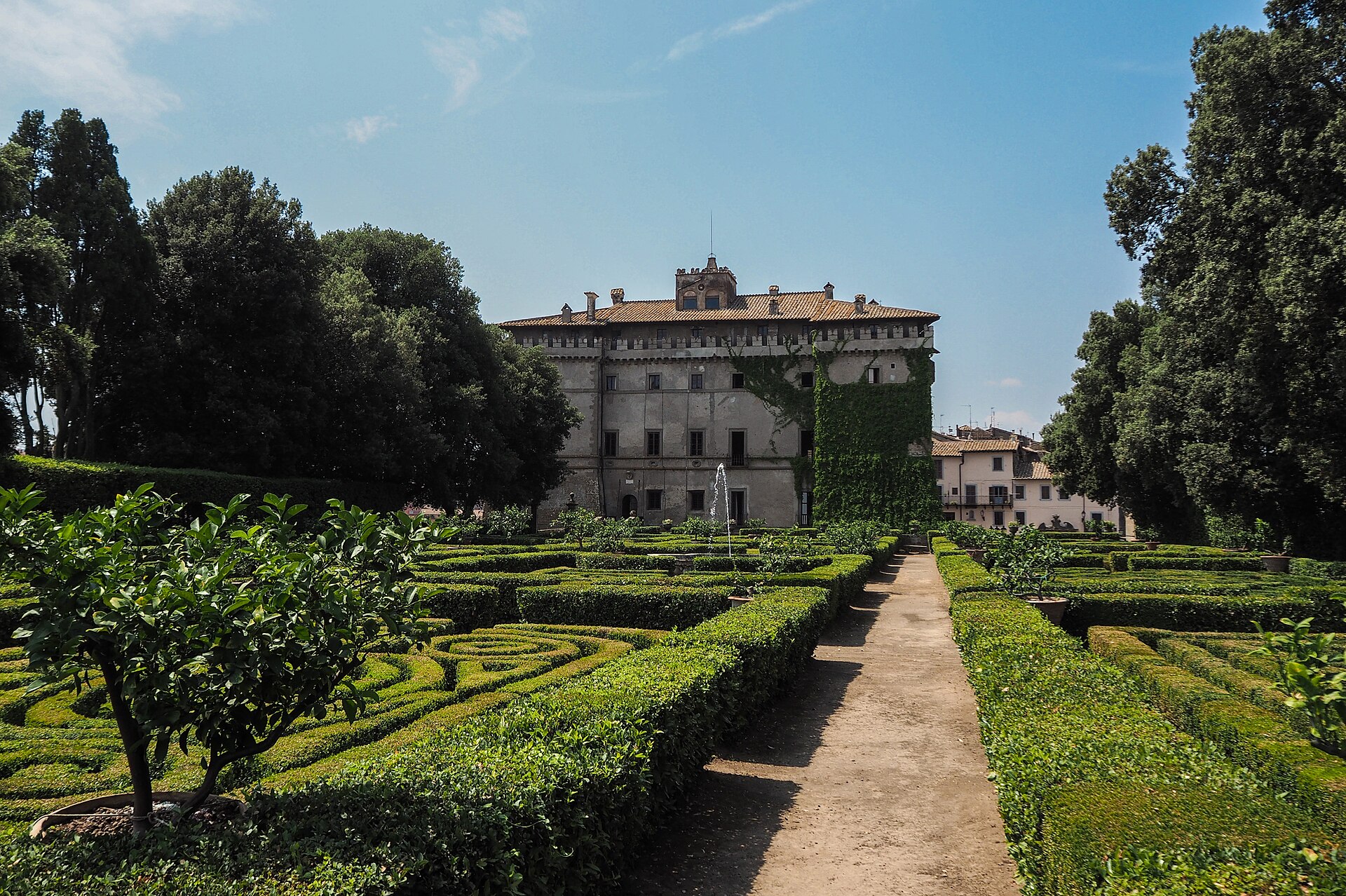
A Renaissance fortress 70 kilometres north of Rome, distinguished by one of Europe’s most celebrated formal gardens and a storied lineage connecting papal and aristocratic power.
At a glance
Castello Ruspoli stands as a working palace hosting cultural events, ceremonies and conventions. Its Renaissance garden ranks among the continent’s finest, offering a setting where history and celebration intertwine.
History
In 1531, Pope Clement VII granted Vignanello as a fief to Beatrice Farnese. When Beatrice’s daughter Ottavia married Sforza Marescotti, Pope Paul III confirmed the feud and elevated it to county status. The castle itself was constructed around 1574 as the family’s principal residence, cementing Vignanello’s position among Lazio’s noble seats.
What you see
The castle’s Renaissance garden is the primary focus—a landscape of formal design celebrated across Europe for its composition and historical significance. The structure itself, built in the 1570s, reflects the architectural preferences of its period and the aspirations of its noble patrons.
Cultural significance
Castello Ruspoli embodies the intersection of ecclesiastical patronage and aristocratic identity in Renaissance Italy. The fortress and its grounds document the lasting influence of the Farnese family, one of the era’s most powerful dynasties, and preserve a rare example of period garden design that continues to inspire study and admiration.
Key facts
- Address: Piazza della Repubblica, 9, 01039 Vignanello
- Coordinates: 42.3843834, 12.2806768
- Website: castelloruspoli.com
- Phone: +39 0761 755338
Practical information
The castle hosts a programme of cultural events and serves as a venue for ceremonies, weddings and conventions. The grounds welcome visitors who wish to experience the Renaissance garden and its historical setting.
Getting there
Vignanello lies approximately 70 kilometres north of Rome in northern Lazio. For visiting hours, current exhibitions and event schedules, consult the official website or contact the castle directly.
See the place
Sources & resources
Find it on the map
See this place and what’s around it →📷 Become a Cultural Heritage Online photographer
Share your photos of places: they stay published under your name as the author. The more they're seen, the more you get noticed — and soon a contest will reward the most appreciated photos.
Log in or sign up free to add a photoIs this page about you?
This page is read by travellers and heritage enthusiasts who find it on Google. Tell us how you are connected to this place and we will take it from there.