
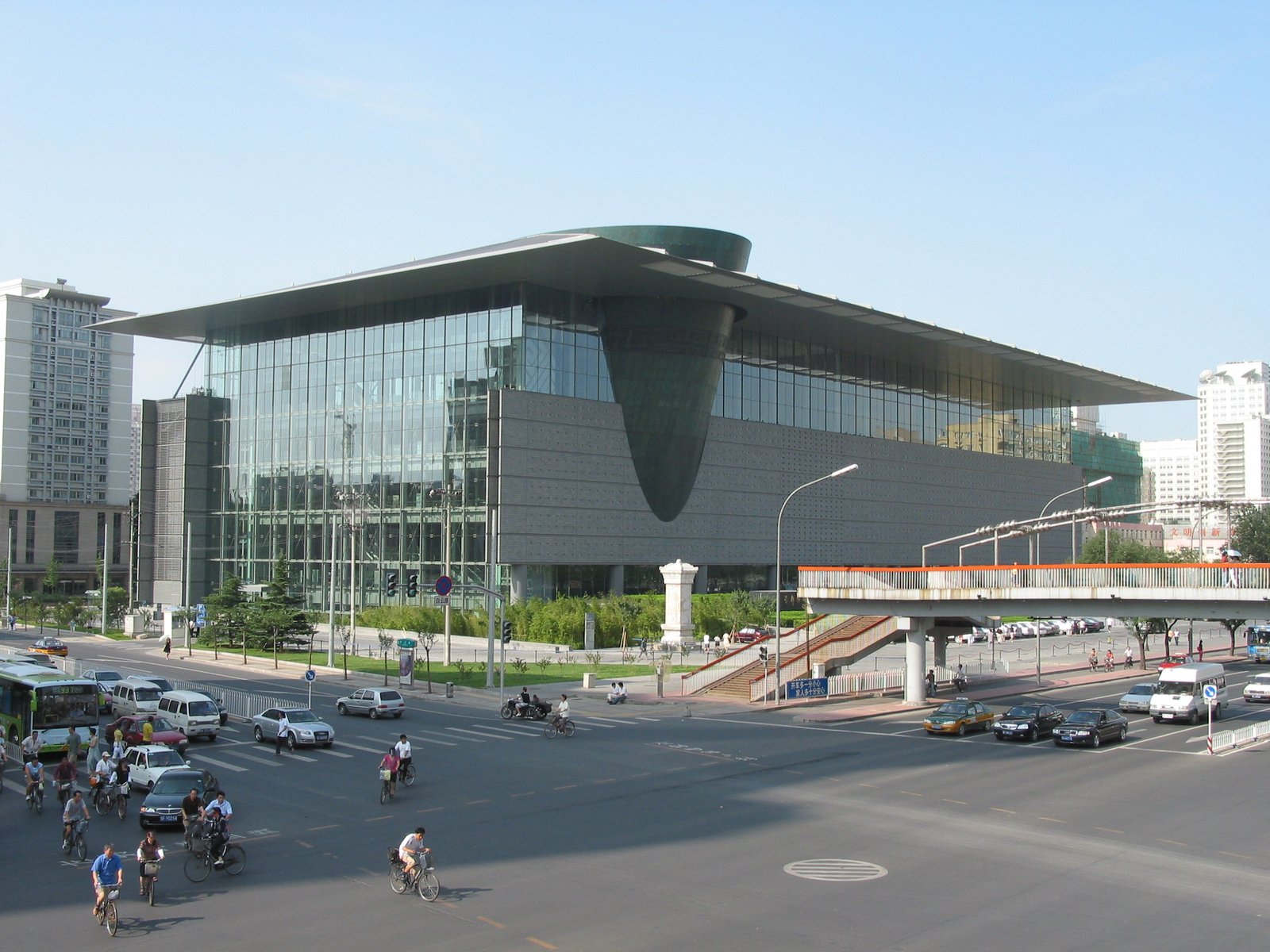
A major repository of Chinese art and antiquities, from ancient bronzes and porcelain to imperial jade and Buddhist sculpture.
At a glance
The Capital Museum holds one of Beijing’s finest collections of material culture spanning imperial China and other Asian traditions. Its modern building, completed in 2006, replaced earlier institutional arrangements that had dispersed holdings across the city.
History
The museum opened in 1981 as a public institution dedicated to Beijing’s artistic heritage. Portions of its collection were previously maintained at the Confucius Temple on Guozijian Street. In 2006, the museum relocated to its current purpose-built structure, allowing for comprehensive display and scholarly access to its expanded holdings.
What you see
The 2006 building provides modern gallery spaces suited to the museum’s diverse collections. Visitors encounter carefully arranged displays of ancient ceramics, metalwork, calligraphy, painting, and sculpture across multiple floors.
Cultural significance
The Capital Museum preserves essential testimony to Beijing’s role as an imperial center and to the broader artistic achievements of Chinese civilization. Its holdings of bronze vessels, porcelain, jade carving, and Buddhist statuary document millennia of aesthetic and technical mastery. The collections also reflect cultural exchange across Asia.
Key facts
- Country: China
- City: Beijing
- Founded: 1981
- Current building: 2006
- Coordinates: 39.905°N, 116.336°E
Practical information & getting there
The museum is located in central Beijing. Check the institution’s website for current hours, admission fees, and exhibition information before your visit.
Sources & resources
Find it on the map
See this place and what’s around it →📷 Become a Cultural Heritage Online photographer
Share your photos of places: they stay published under your name as the author. The more they're seen, the more you get noticed — and soon a contest will reward the most appreciated photos.
Log in or sign up free to add a photoIs this page about you?
This page is read by travellers and heritage enthusiasts who find it on Google. Tell us how you are connected to this place and we will take it from there.