
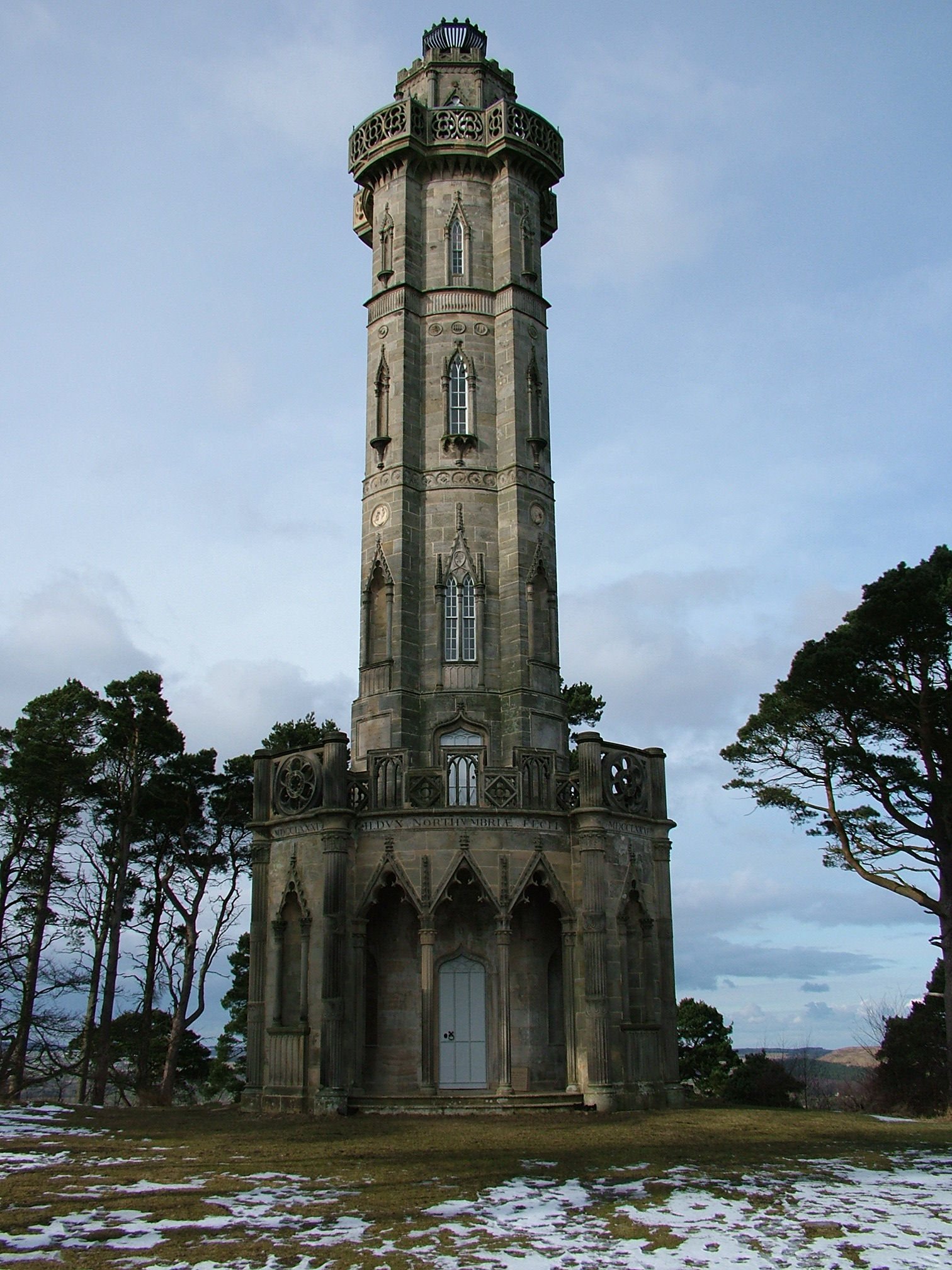
A Grade I listed folly crowning a hilltop in Hulne Park, this 18th-century tower commands sweeping views across North Northumberland and the Scottish Borders.
At a glance
Brizlee Tower stands within Hulne Park, the walled home park of the Duke of Northumberland near Alnwick. Built in 1781 for Hugh Percy, 1st Duke of Northumberland, the tower functions as a folly—a decorative structure designed to ornament the landscape and provide vantage points for viewing the surrounding countryside.
History
The tower was erected in 1781 by order of Hugh Percy, 1st Duke of Northumberland. Its construction reflects the 18th-century fashion among British landowners for embellishing their estates with picturesque structures that combined visual appeal with practical enjoyment of the views they commanded.
What you see
Brizlee Tower is designated Grade I listed, the highest category of architectural protection in England, recognizing its historical and structural significance. Its hilltop location within Hulne Park’s walled grounds ensures prominence in the landscape.
Cultural significance
The tower exemplifies the folly tradition that flourished in Georgian England, when wealthy patrons commissioned ornamental buildings to enhance their estates’ romantic appeal and demonstrate refined taste. Its preservation as a Grade I listed structure underscores its value as a surviving example of 18th-century landscape design.
Key facts
- Country: United Kingdom
- City: Denwick
- Coordinates: 55.42636, -1.75186
- Listed status: Grade I
- Built: 1781
- Commissioned by: Hugh Percy, 1st Duke of Northumberland
Practical information & getting there
Brizlee Tower stands within Hulne Park, the private walled park of the Duke of Northumberland. Access details and visiting hours should be confirmed in advance with Alnwick Castle or the estate offices.
Sources & resources
Find it on the map
See this place and what’s around it →📷 Become a Cultural Heritage Online photographer
Share your photos of places: they stay published under your name as the author. The more they're seen, the more you get noticed — and soon a contest will reward the most appreciated photos.
Log in or sign up free to add a photoIs this page about you?
This page is read by travellers and heritage enthusiasts who find it on Google. Tell us how you are connected to this place and we will take it from there.