
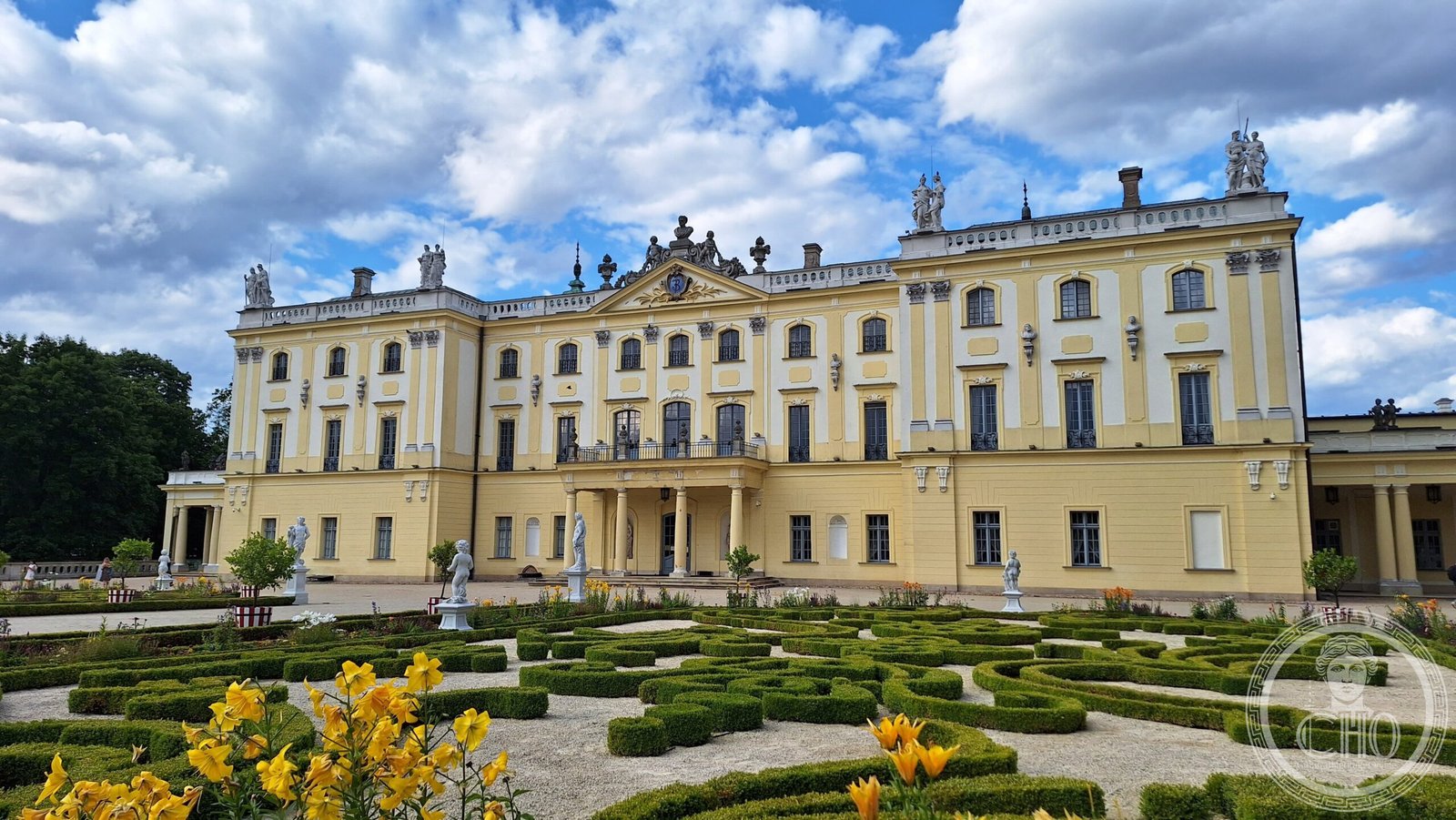
A grand Baroque residence that transformed Białystok into Poland’s answer to Versailles, built by one of the Commonwealth’s most ambitious hetmans.
At a glance
Branicki Palace stands as the architectural centerpiece of Białystok, a city planned and developed according to French models in the 18th century. The palace and its surrounding complex of gardens, pavilions, and sculptures formed part of an ambitious urban vision that earned the city comparisons to the royal palaces of France.
History
Jan Klemens Branicki, a wealthy Polish–Lithuanian Commonwealth hetman, commissioned the palace in the first half of the 18th century on the site of an earlier building. Branicki’s ambitions extended beyond architecture—he envisioned a residence befitting a man who aspired to the Polish throne. His vision encompassed not merely a palace but an entire city, with churches, a city hall, and a monastery all constructed simultaneously according to French architectural principles.
What you see
The palace complex integrates Baroque design with French planning ideals. Beyond the main residence, the ensemble includes formal gardens, decorative pavilions, sculptures, and various outbuildings that demonstrate the scale and sophistication of 18th-century aristocratic patronage in the Polish–Lithuanian Commonwealth.
Cultural significance
Białystok became known throughout the 18th century as Versailles de la Pologne (Versailles of Poland) and later as Versailles de la Podlachie (Versailles of Podlasie). The palace exemplifies the ambitions of the Commonwealth’s magnate class and the influence of French culture on Eastern European architecture and urban planning during the Enlightenment era.
Key facts
- Location: Białystok, Poland
- Coordinates: 53.1306, 23.165
- Period: First half of 18th century
- Patron: Jan Klemens Branicki, hetman of the Polish–Lithuanian Commonwealth
Practical information & getting there
Branicki Palace is located in Białystok’s city center. For current visiting hours, admission details, and guided tour information, consult local tourism resources or the palace’s official website.
Sources & resources
Find it on the map
See this place and what’s around it →📷 Become a Cultural Heritage Online photographer
Share your photos of places: they stay published under your name as the author. The more they're seen, the more you get noticed — and soon a contest will reward the most appreciated photos.
Log in or sign up free to add a photoIs this page about you?
This page is read by travellers and heritage enthusiasts who find it on Google. Tell us how you are connected to this place and we will take it from there.