
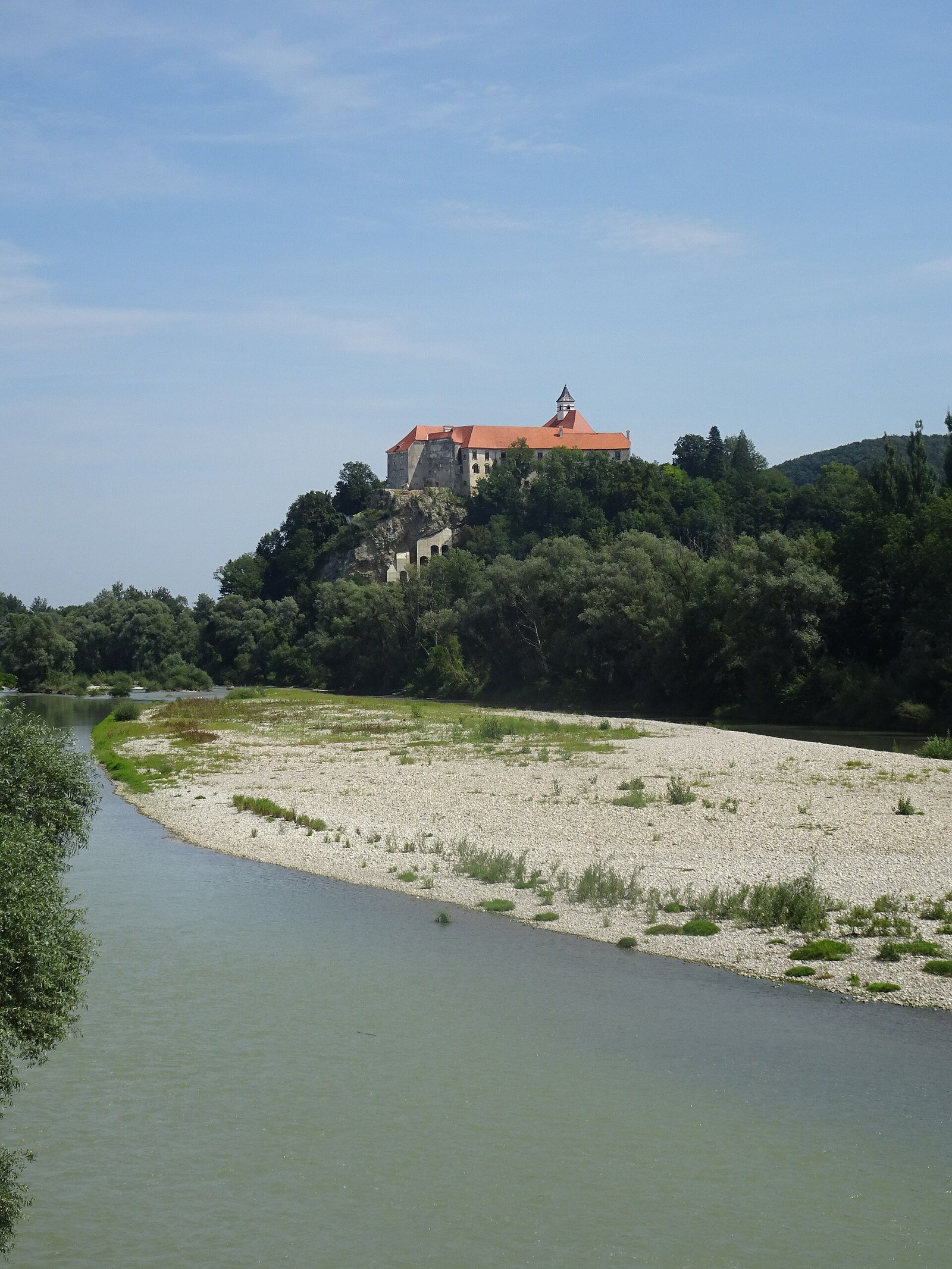
A medieval fortress on the Drava’s banks, transformed into a site of wartime horror and memory.
At a glance
Borl Castle (Ankenstein in German) rises above the Drava River northeast of Dolane in southeastern Slovenia. Originally constructed in the 12th century and expanded in the 15th and 17th centuries, it remains a protected cultural monument of national significance. The castle’s medieval past is overshadowed by its dark Second World War history as a Gestapo prison.
History
The castle probably dates to the 12th century, with substantial modifications added during the 15th and 17th centuries. Its medieval function changed entirely during the Nazi occupation of Slovenia. Between 1941 and 1943, the Gestapo used Borl Castle as a prison and interrogation centre. Initially the stables served this purpose; later, the main building itself was converted. Prisoners were held, interrogated, and tortured within its walls. In 1956, three years after the war’s end, a memorial room was established and a commemorative plaque unveiled to honour the victims and preserve the memory of these atrocities.
What you see
The castle retains original medieval elements alongside later additions. Wall paintings, sculpture, and internal furnishings from various periods survive, offering glimpses into its long occupation. The building’s transformation from fortress to prison—and the physical evidence of both functions—creates a complex architectural narrative.
Cultural significance
Borl Castle embodies two distinct historical layers: medieval regional architecture and twentieth-century wartime trauma. Its designation as a protected cultural monument reflects Slovenia’s commitment to preserving both its heritage and its difficult history. The memorial room and plaque serve as witnesses to resistance and suffering, making the site an important point of reflection on occupation and survival.
Key facts
- Country: Slovenia
- Location: Dolane (northeast of main settlement)
- Coordinates: 46.3748°N, 16.003°E
- Dates: 12th century (original); 15th and 17th centuries (additions)
- Protected as a cultural monument of national significance
- Gestapo prison and interrogation centre, 1941–1943
Practical information & getting there
Borl Castle is located in Dolane, in the Drava River valley of northeastern Slovenia. You can reach the site by road from Ljubljana or other major Slovenian cities, though specific visiting hours and access details are not confirmed in available sources. The memorial room and commemorative plaque remain accessible as testaments to the castle’s wartime history. Contact local tourism offices in the Drava region for current information.
Sources & resources
Find it on the map
See this place and what’s around it →📷 Become a Cultural Heritage Online photographer
Share your photos of places: they stay published under your name as the author. The more they're seen, the more you get noticed — and soon a contest will reward the most appreciated photos.
Log in or sign up free to add a photoIs this page about you?
This page is read by travellers and heritage enthusiasts who find it on Google. Tell us how you are connected to this place and we will take it from there.