
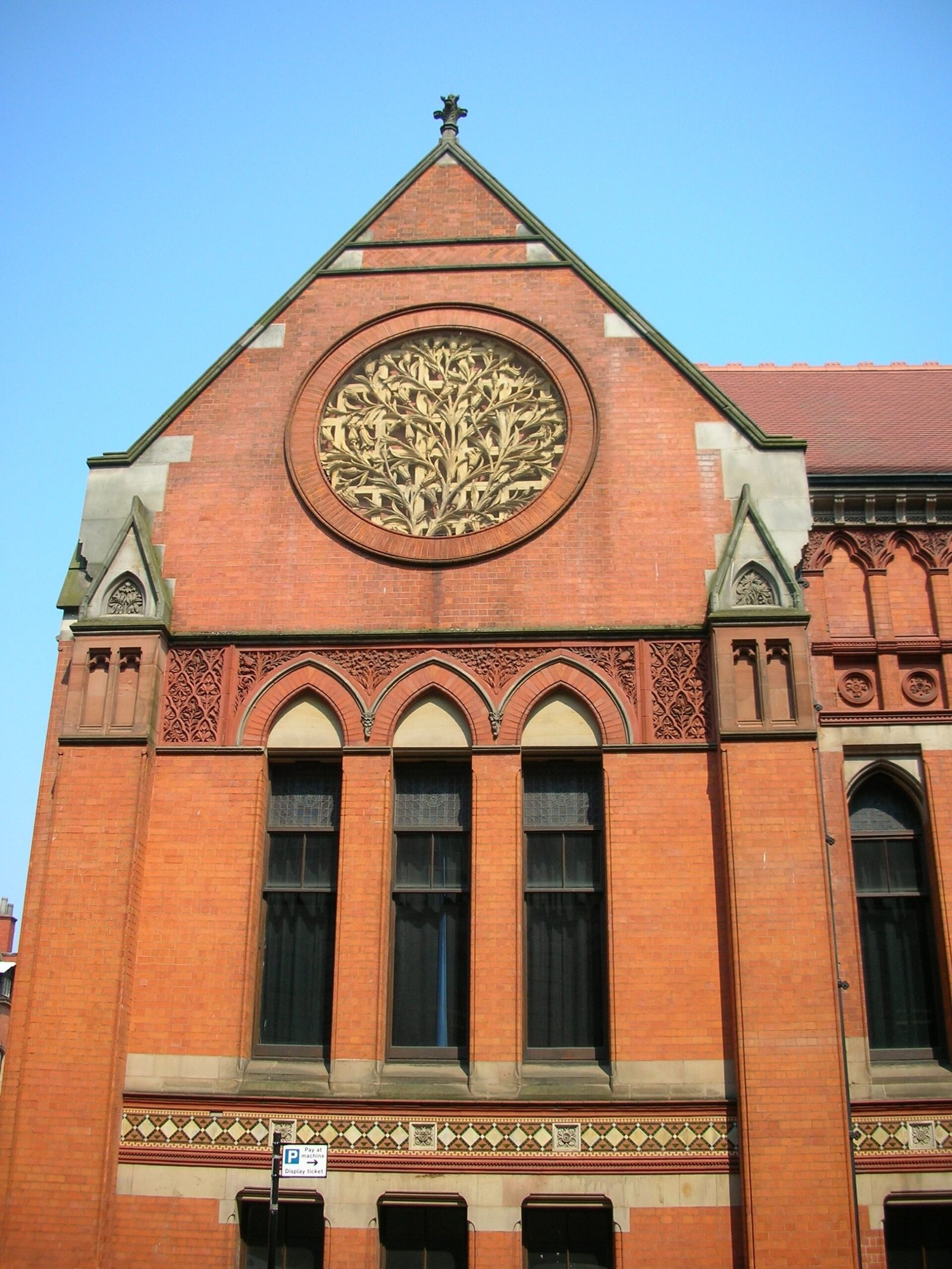
A Victorian institution designed by John Henry Chamberlain, this school of art opened in 1885 as a centre for creative education and remains a landmark of industrial-era Birmingham.
At a glance
The Birmingham School of Art building represents late Victorian investment in arts education. Chamberlain’s design was conceived to serve the school’s pedagogical mission during a period of expanding cultural institutions in Britain’s industrial heartland.
History
John Henry Chamberlain designed the building over nearly two years, from January 1882 to October 1883. Construction began on 31 May 1884 and proceeded through the following year. The school opened its doors in September 1885, establishing itself as an important educational facility in Birmingham.
What you see
Chamberlain’s design reflects the architectural vocabulary of the 1880s, embodying principles of the period’s institutional design. The building was conceived as a purposeful structure for art instruction and creative practice.
Cultural significance
The school served as a vital hub for artistic training in one of Britain’s principal manufacturing cities. Its establishment reflected Victorian confidence in art education as both cultural refinement and practical preparation for design-based industries.
Key facts
- Country: United Kingdom
- City: Birmingham
- Architect: John Henry Chamberlain
- Designed: January 1882–October 1883
- Built: 31 May 1884–September 1885
- Coordinates: 52.4811, -1.9032
Practical information & getting there
The building is located in Birmingham city centre. Visitors should check current opening hours and access arrangements before visiting.
Sources & resources
Find it on the map
See this place and what’s around it →📷 Become a Cultural Heritage Online photographer
Share your photos of places: they stay published under your name as the author. The more they're seen, the more you get noticed — and soon a contest will reward the most appreciated photos.
Log in or sign up free to add a photoIs this page about you?
This page is read by travellers and heritage enthusiasts who find it on Google. Tell us how you are connected to this place and we will take it from there.