
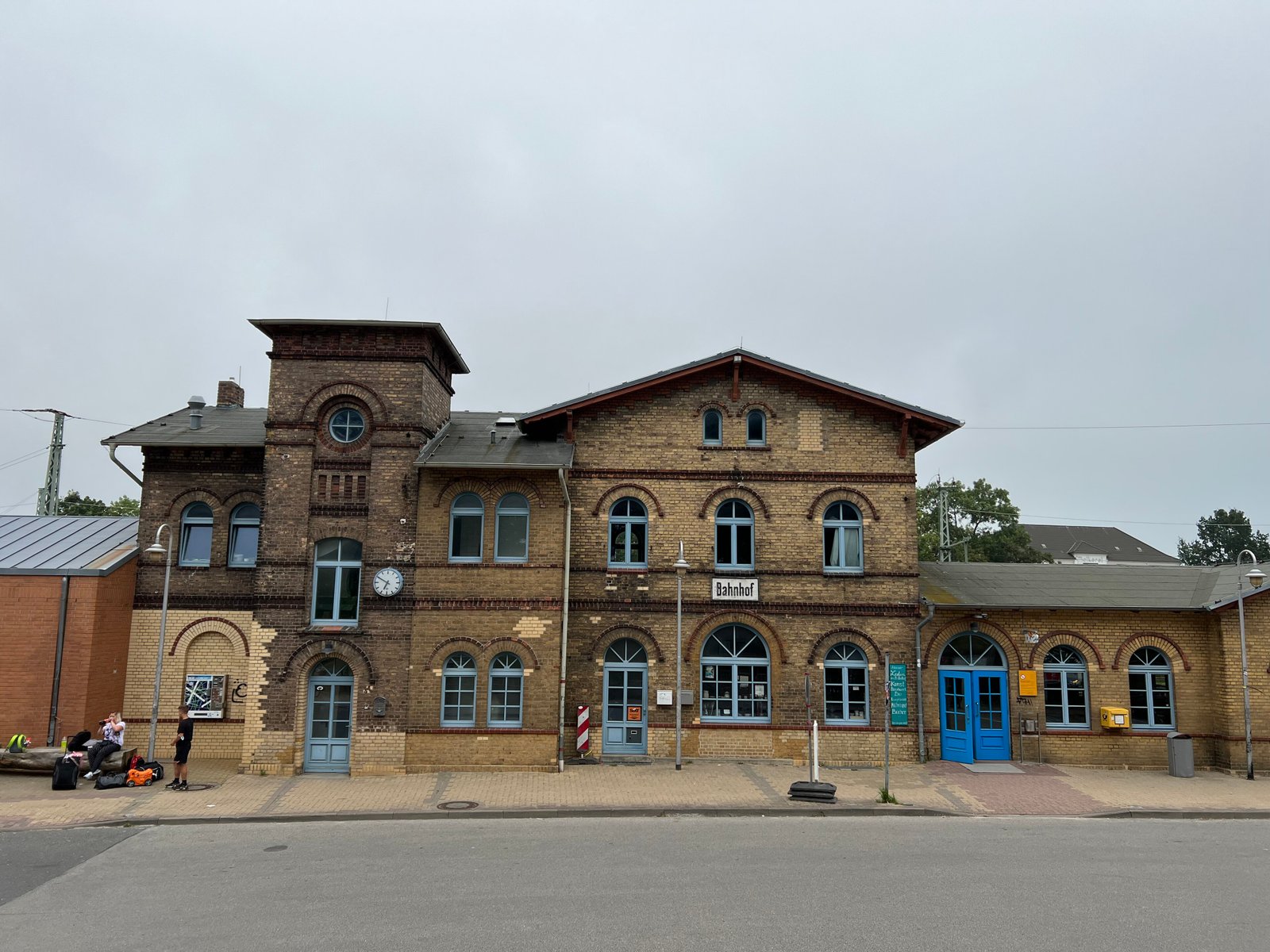
A Victorian-era railway junction on the Baltic island of Rügen, Bergen auf Rügen station has served as a transport hub for over 140 years, connecting the island to mainland Mecklenburg-Vorpommern.
At a glance
Bergen auf Rügen station is a working railway terminus in the town of Bergen, located on Germany’s largest island. The station opened in 1883 as part of the regional rail network and remains an active transport interchange. Multiple rail operators manage service today.
History
The station opened in 1883, establishing Bergen as a rail hub during a period of rapid railway expansion across northern Germany. The Stralsund-Sassnitz line connected the island to the mainland, while a separate narrow-gauge railway to Altenkirchen served local communities. That narrow-gauge line operated until 1970.
What you see
The station survives as a functional example of 19th-century German railway architecture. Its original character reflects the period of its construction, though modern facilities serve contemporary passenger needs.
Cultural significance
Bergen auf Rügen station represents an important chapter in Rügen’s development as both a destination and working community. The rail link transformed the island’s connectivity to the wider German network and remains central to modern island tourism and transport.
Key facts
- Country: Germany
- City: Bergen auf Rügen, Mecklenburg-Vorpommern
- Opened: 1883
- Coordinates: 54.42°N, 13.42°E
- Rail lines: Stralsund-Sassnitz railway; Bergen auf Rügen–Lauterbach Mole railway
- Operators: Deutsche Bahn Fernverkehr, Ostdeutsche Eisenbahn GmbH, Pressnitztalbahn, Hanseatische Eisenbahn
Practical information & getting there
Bergen auf Rügen station is served by regional and long-distance trains. Service operates via the Stralsund-Sassnitz and Lauterbach Mole rail lines. For current schedules and ticket information, contact Deutsche Bahn or the station directly.
Sources & resources
Find it on the map
See this place and what’s around it →📷 Become a Cultural Heritage Online photographer
Share your photos of places: they stay published under your name as the author. The more they're seen, the more you get noticed — and soon a contest will reward the most appreciated photos.
Log in or sign up free to add a photoIs this page about you?
This page is read by travellers and heritage enthusiasts who find it on Google. Tell us how you are connected to this place and we will take it from there.