
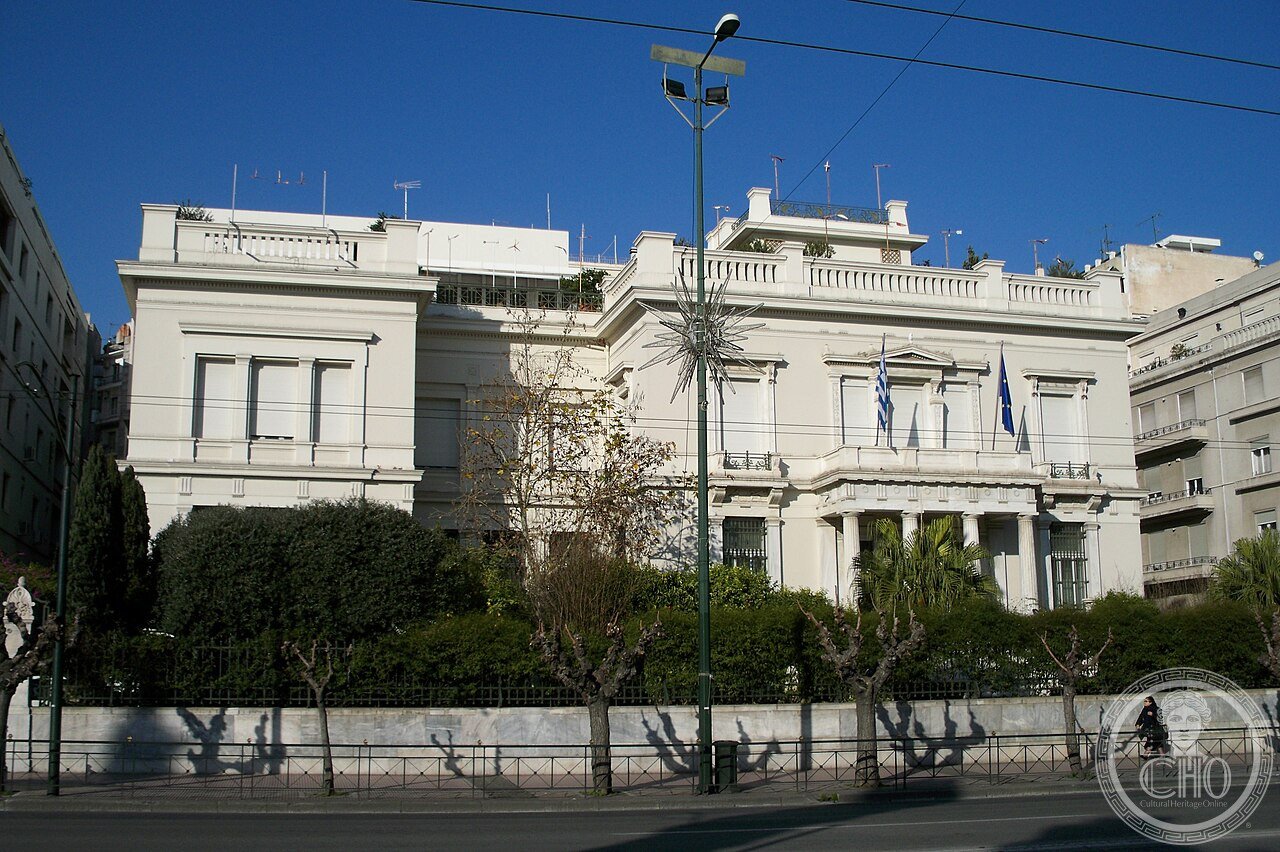
Housed in a refined neoclassical mansion in Athens’s Kolonaki district, the Benaki Museum preserves and presents Greek art and culture across every period of the nation’s history — from prehistory and ancient Greece through Byzantium, the Ottoman era, and into the modern age. Founded in 1931 by Antonis Benakis, an Alexandrian Greek businessman of extraordinary cultural ambition, the museum was conceived as a counterweight to the prevailing obsession with classical antiquity alone. Benakis donated his personal collection — assembled over decades across Cairo, Paris, and Athens — along with the family mansion itself to the Greek state, stipulating that it serve as a permanent public institution. The result is one of the Mediterranean’s most distinguished private-to-public cultural legacies, occupying a building that is itself a gracious example of Athenian neoclassicism, with a celebrated rooftop terrace framing a view directly across to the Acropolis.
At a glance
- Type
- Museum (neoclassical mansion)
- Period
- Building: 1867 adapted 1931; Collection: Prehistory to 20th century
- Style
- Neoclassical
- Location
- 1 Koumbari Street, Kolonaki, Athens, Greece
- Coordinates
- 37.9766 N, 23.7368 E
- Architect
- Anastasios Metaxas (conversion); original mansion 1867
Overview
The Benaki Museum is Greece’s most significant cultural philanthropy project of the twentieth century and the country’s leading private-collection museum. Its holdings encompass over 120,000 objects spanning Greek civilization from the Neolithic period to the twentieth century, making it unique among Athenian museums in its refusal to privilege any single era. Greek antiquities sit alongside Byzantine icons, Coptic textiles, Ottoman-era metalwork, Greek folk costumes and embroideries, and major oil paintings including works attributed to El Greco. The museum’s founding philosophy — that Greek identity flows through all historical layers, not only classical Athens — was culturally radical for its time and has shaped Greek museum practice ever since. Today the Benaki operates as a network of specialist branch museums across Athens, each dedicated to a particular medium or period, while the Kolonaki mansion remains the flagship.
History
Antonis Benakis (1873-1954) was born into one of the great Greek merchant families of Alexandria, Egypt — a community that had grown wealthy in cotton trading and maintained sophisticated connections to European culture. He began collecting seriously in Cairo, focusing initially on Islamic art, then broadening to encompass Greek folk art, Byzantine material, and ancient objects. After his family’s fortune was affected by political changes in Egypt, Benakis transferred the collection — and himself — to Athens in the 1920s. He acquired the neoclassical Stathatos mansion in Kolonaki and commissioned architect Anastasios Metaxas to adapt it as a museum. The museum opened in 1931, with Benakis donating both the collection and the building to the Greek state. During the German occupation (1941-44), Benakis personally protected the collections. The museum has since expanded into eleven branch buildings, including the Museum of Islamic Art in Psiri and the Pireos Street annexe for temporary exhibitions.
Architecture and Design
The mansion that houses the Benaki Museum is a landmark of Athenian neoclassicism, originally built in 1867 and representing the wave of European-influenced urban architecture that transformed Athens after Greek independence. Its restrained facade of ashlar masonry, tall windows with classical surrounds, and iron-railed balconies typifies the style favored by the Athenian bourgeoisie in the latter nineteenth century. Metaxas’s 1931 conversion for museum use added gallery lighting and display infrastructure while preserving the formal room sequence of the original piano nobile. The interior retains ornate plasterwork ceilings in several rooms, creating a distinguished backdrop for the displayed objects. A major expansion and renovation was completed in 2000, adding basement storage, modern conservation facilities, and the celebrated rooftop restaurant-cafe that has become one of Athens’s most beloved social venues, offering unobstructed views of the Acropolis and Lycabettus Hill.
Cultural significance
The Benaki Museum matters for reasons that go beyond its exceptional collections. Its founding represented a challenge to the dominant narrative that Greek cultural identity was synonymous with classical antiquity — a narrative reinforced by the major state museums, the Acropolis Museum, and the National Archaeological Museum. By collecting and displaying Greek material across all historical periods on equal terms, Benakis argued implicitly that Byzantine Christianity, Ottoman coexistence, folk tradition, and modern art were all legitimate chapters of the Greek story. This curatorial philosophy was genuinely progressive in 1931 and remains influential. The museum also pioneered the model of private cultural philanthropy in Greece at a scale and seriousness previously unseen, establishing a template for subsequent foundations. Its Islamic art collection, housed in a separate branch, is considered one of the most important in Europe.
Visiting today
The Benaki Museum’s main building at 1 Koumbari Street is open Wednesday through Monday (closed Tuesday). Hours vary seasonally; check the museum website for current times. Admission covers the permanent collection; temporary exhibitions may require a separate ticket. The rooftop cafe-restaurant is open during museum hours and on some evenings for special events — a reservation is advisable for the terrace on fine days. The museum shop carries an excellent selection of art books, reproductions, and design objects related to Greek cultural heritage. Photography is permitted in most gallery areas. Allow at least two to three hours for a thorough visit to the main building. The branch museums — Islamic Art in Psiri, the Ghika Gallery in Exarchia, the Pireos annexe — each warrant separate visits.
Getting there
The Benaki Museum is in Kolonaki, one of Athens’s most walkable central neighborhoods. The nearest metro station is Evangelismos (Blue Line / Line 3), approximately 500 metres away via Vasilissis Sofias Avenue. From Syntagma Square the museum is a pleasant 15-minute walk north through Kolonaki. Bus routes along Vasilissis Sofias serve the area frequently. Taxis and ride-share services can drop directly at the museum entrance on Koumbari Street. There is limited on-street parking in Kolonaki; the neighborhood is not recommended for car access during peak hours. The National Garden and the Cycladic Museum are within easy walking distance, making a combined cultural itinerary straightforward.
Sources and resources
Find it on the map
See this place and what’s around it →📷 Become a Cultural Heritage Online photographer
Share your photos of places: they stay published under your name as the author. The more they're seen, the more you get noticed — and soon a contest will reward the most appreciated photos.
Log in or sign up free to add a photoIs this page about you?
This page is read by travellers and heritage enthusiasts who find it on Google. Tell us how you are connected to this place and we will take it from there.