
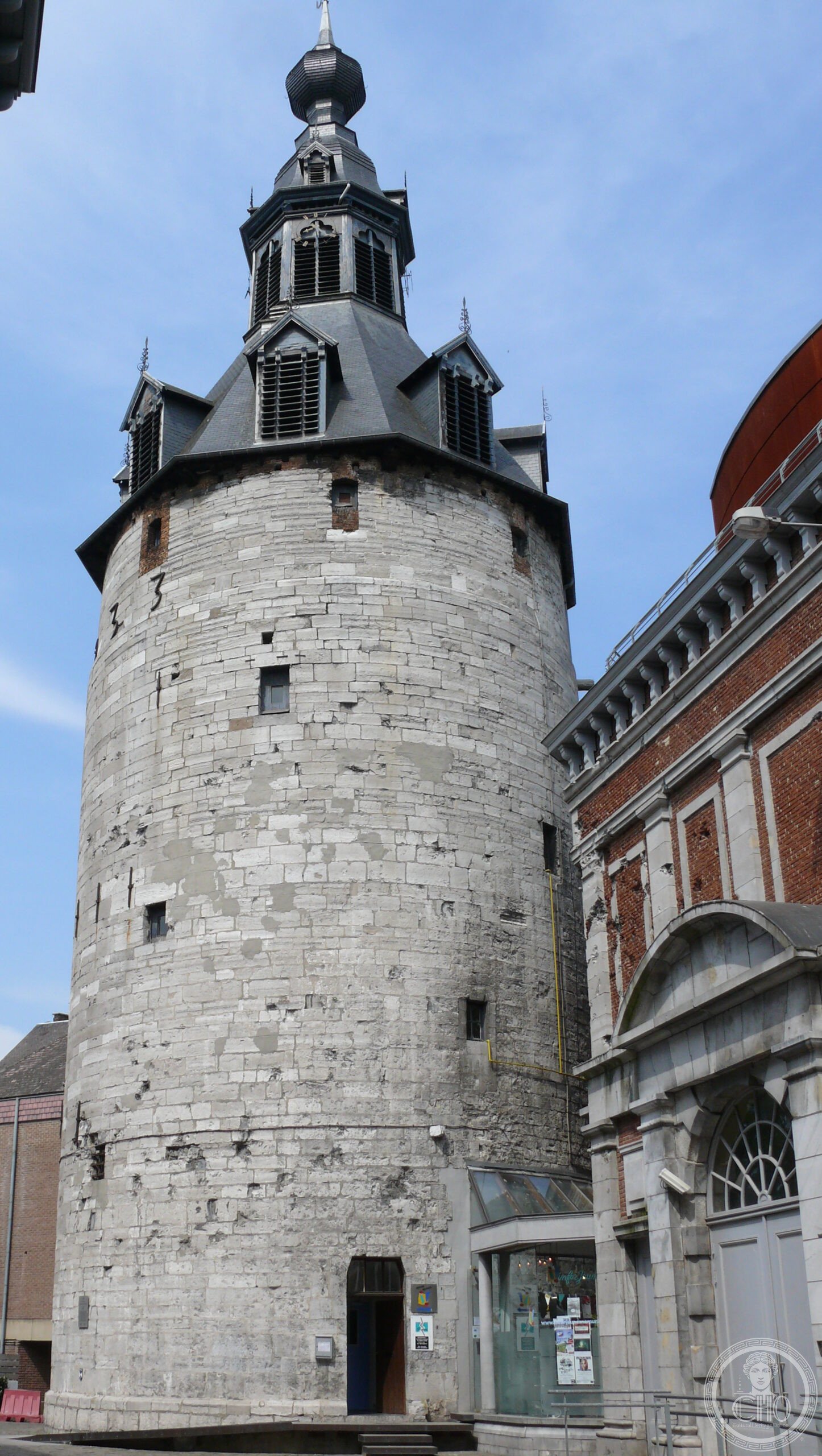
A sturdy tower that guarded Namur’s walls for centuries, this 1388 construction later became one of Europe’s finest expressions of civic authority when it received its belfry apparatus in 1746.
At a glance
Also known as the Tour Saint-Jacques, Namur’s belfry stands as a compact yet commanding example of civic pride. Built into the medieval city defenses, it exemplifies the dual role many European towers played—first as military structure, then as symbol of urban independence and merchant power.
History
The tower was constructed in 1388 as part of Namur’s fortified perimeter. For nearly four centuries it served primarily as a defensive structure. In 1746, it underwent a transformation, receiving the belfry mechanisms and symbolic status that marked it as a seat of civic governance and municipal authority.
What you see
The tower’s austere medieval form reflects its original military purpose. Its later modification to accommodate belfry functions introduced architectural elements signifying the shift from defense to civic ceremony and municipal administration—a transition visible in the building’s evolution.
Cultural significance
Namur’s belfry belongs to an extraordinary collection of 56 belfries spanning Belgium and France, all recognized by UNESCO for representing the rise of civic power in medieval and early modern Europe. These towers testify to the growing independence and commercial influence of Europe’s towns, serving as repositories of municipal archives, symbols of communal autonomy, and visual declarations of urban prosperity.
Key facts
- Country: Belgium
- City: Namur
- Constructed: 1388
- Converted to belfry: 1746
- Coordinates: 50.4639, 4.8669
- UNESCO World Heritage Site: Yes (part of the Belfries of Belgium and France)
Practical information & getting there
The Belfry of Namur is located in the historic center of Namur. For current visiting hours, admission details, and guided tour availability, check directly with Namur’s tourism office or the site itself.
Sources & resources
Find it on the map
See this place and what’s around it →📷 Become a Cultural Heritage Online photographer
Share your photos of places: they stay published under your name as the author. The more they're seen, the more you get noticed — and soon a contest will reward the most appreciated photos.
Log in or sign up free to add a photoIs this page about you?
This page is read by travellers and heritage enthusiasts who find it on Google. Tell us how you are connected to this place and we will take it from there.