
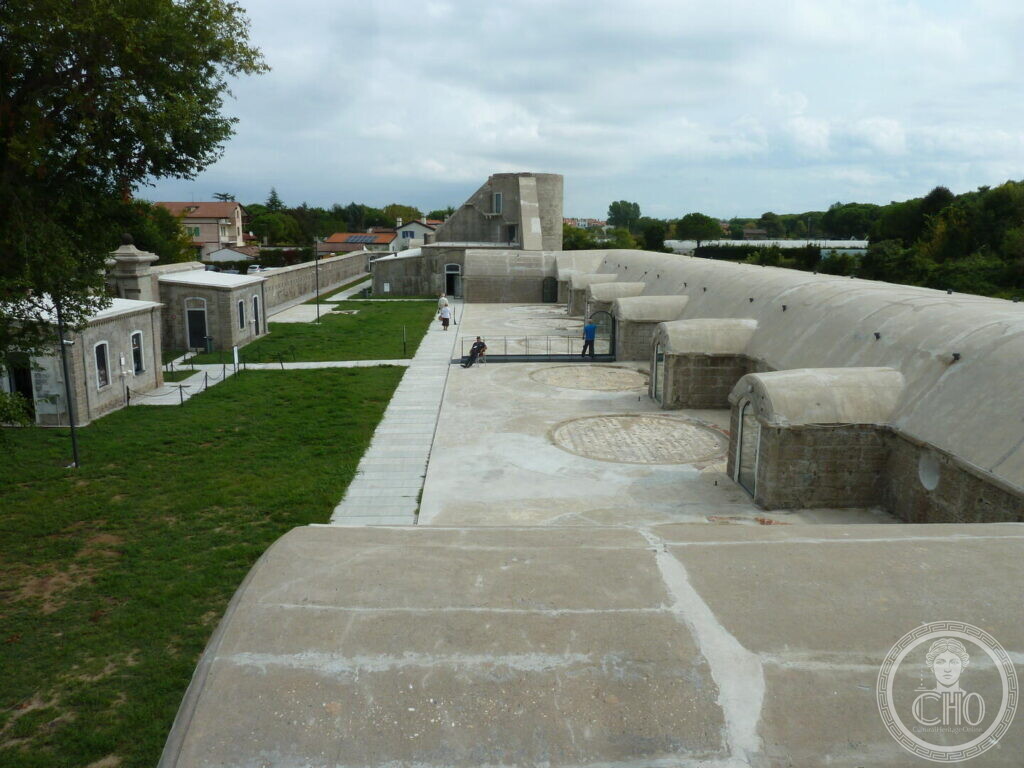
Six 280mm howitzers, a sand embankment to hide it from the beach, and two turrets to measure distances across water with no landmarks. It is now a museum run by the Comune.
At a glance
The Batteria Vettor Pisani stands at Ca’ Savio, on the littoral between the sea and the lagoon north-east of Venice. It was built between 1909 and 1912, one of the main coastal batteries of the system that defended the lagoon, and it is named after the Venetian supreme commander who beat Pietro Doria’s Genoese fleet in the war of Chioggia, in June 1380. Restored by the Comune di Cavallino-Treporti with the support of the Regione del Veneto, it is open to the public and holds a museum of the Great War and of the littoral.
Key facts
- Built: 1909–1912, in reinforced concrete
- Armament: six 280mm L howitzers, on open platforms with a 360° traverse
- Range: about 10,500 metres (the Comune’s panel on site); the Regione del Veneto gives 10,700 — either way too short to reach the land front on the Lower Piave
- Size: a central body more than 80 metres long on a single level; telemetry turrets 11 metres high; side wings 30 metres long
- Garrison in the Great War: a company of the First Fortress Artillery Regiment of the Royal Army
- Later: an anti-aircraft position in the Second World War, then occupied by civilian families
- Today: museum, Via Vettor Pisani 40, Ca’ Savio; restored by the Comune with the Regione del Veneto
- GPS: 45.4505, 12.4688 · Open in Google Maps (OpenStreetMap)
History
The battery belongs to the ring of fortifications raised around the lagoon in the years before the First World War, when the threat to Venice was expected from the Adriatic. Its six howitzers stood in barbetta on open platforms, and the Comune’s panel on the site records a detail of how it worked: when the barrels were swung towards the sea the shots passed so close over the earth slopes of the building that, in the panel’s phrase, they «shaved the ramparts». At the time of the war the sea was only a few metres away, and the side facing the beach was camouflaged with a bank of sand.
In the Great War the battery was held by a company of the First Fortress Artillery Regiment of the Royal Army. Its range, however, left it facing the wrong way: when the front came down to the Lower Piave in late 1917, the howitzers could not reach it. In the Second World War the site served as an anti-aircraft position; after it was decommissioned, civilian families lived in it. The Comune di Cavallino-Treporti later restored it with support from the Regione del Veneto and opened it as a museum.
What you see
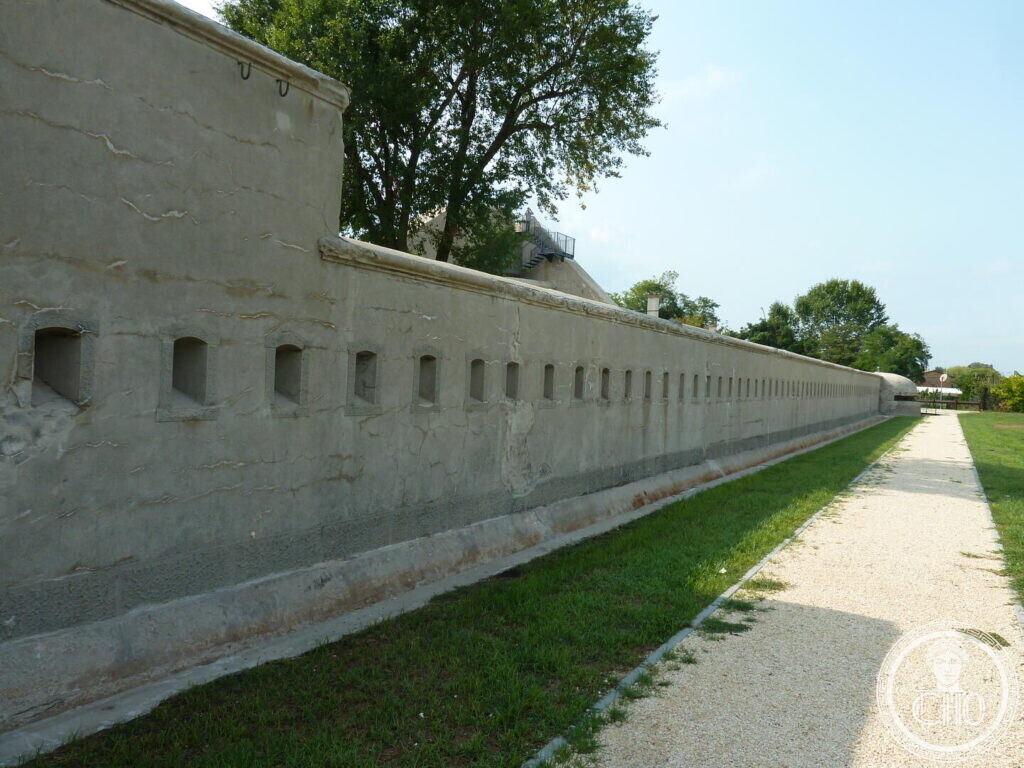
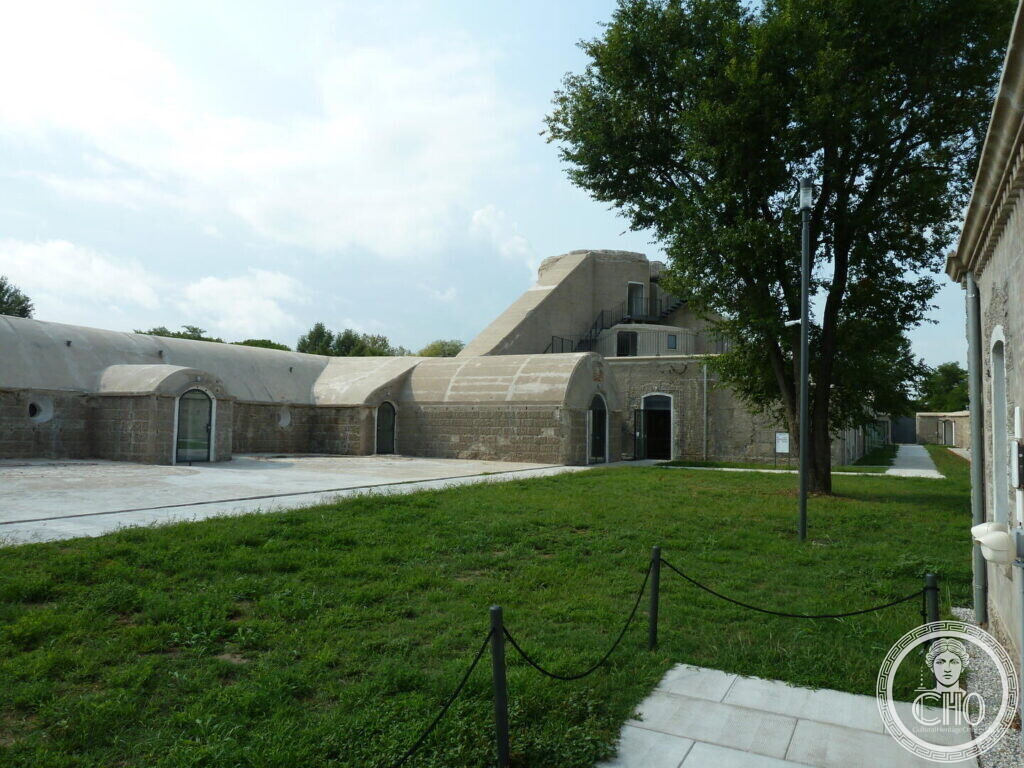
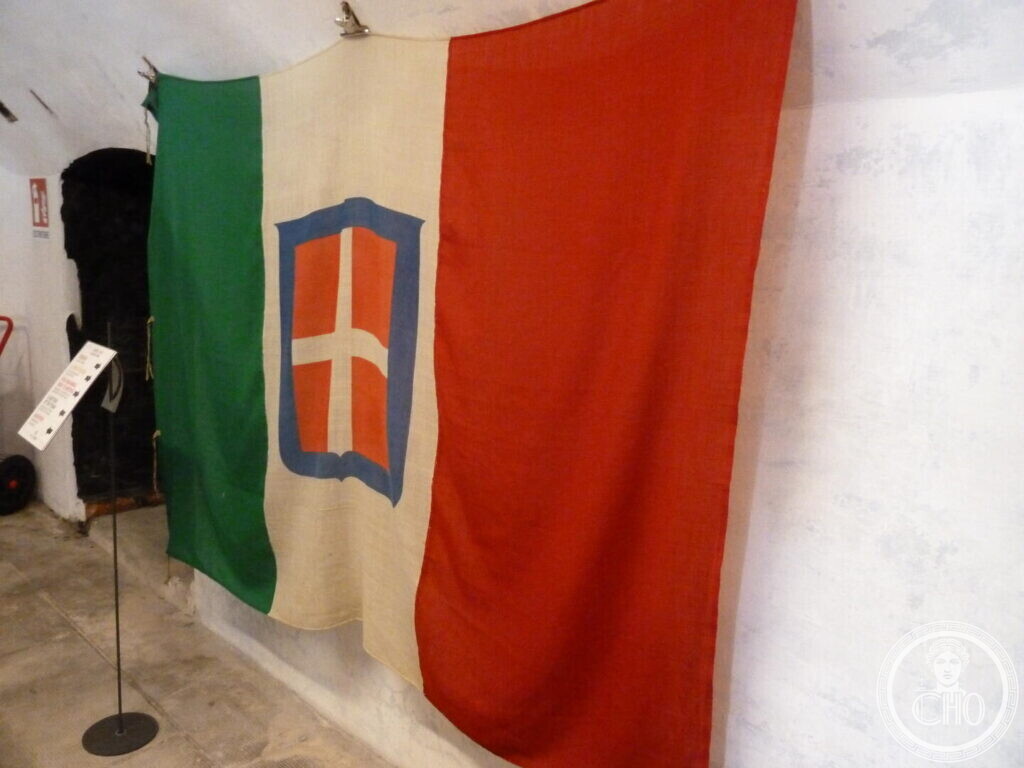
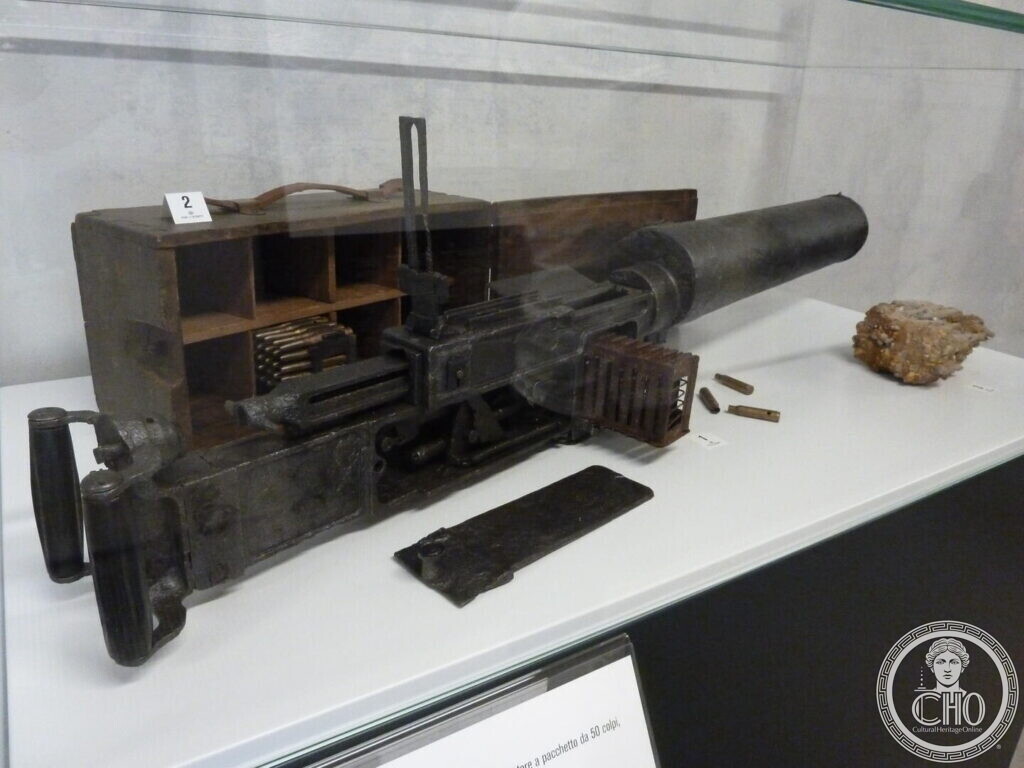
A long, low mass of concrete, more earthwork than building, with a rear wall pierced by a regular line of small loopholes running the whole eighty metres. On top, the barrel vaults of the casemates and the circular tracks of the gun platforms are still set into the paving. Two parallel barrel-vaulted corridors lead from the central body to the telemetry turrets, eleven metres high, and to the side wings, thirty metres long. The turrets held gonostadiometers, for finding the range of a target by triangulation, and panoramic telescopes: the ground here is sand, with no natural height to observe from, and on a flat surface — towards the land as much as towards the sea — it is hard to see where your own shots are falling. Inside the vaults, the museum shows weapons, equipment and documents, among them a flag of the Kingdom of Italy with the arms of Savoy.
Why it matters
The Pisani is the one of the coastal batteries of the Venetian littoral that can be walked through. It sits inside a much larger system — the batteries of San Marco, Amalfi and Radaelli are its neighbours — which the Via dei Forti cycle route now links. What it preserves is not only the concrete but the problem the concrete was built to solve: how to aim a gun at a moving ship from a beach where nothing stands still and nothing is higher than anything else.
Nearby
- Batteria San Marco — the open-air war museum, about a kilometre away
- Batteria Amalfi — about two kilometres away
Gallery
Sources
- Regione del Veneto, Batteria Pisani: built 1909–1912; named after Vettor Pisani, who defeated Pietro Doria’s Genoese fleet in the war of Chioggia in June 1380; six 280mm howitzers on open platforms with 360° traverse and a maximum range of 10,700 metres, too short for the Lower Piave front; the company of the First Fortress Artillery Regiment; the anti-aircraft use in the Second World War and the civilian occupation afterwards; the neighbouring batteries of San Marco and Amalfi
- The Walk of Peace, Battery Vettor Pisani Museum: the concrete structure with a central body on one level, two terraced turrets and two side wings housing the telemetry and observation devices; the restoration by the Comune di Cavallino-Treporti with the support of the Regione del Veneto, and the museum at Via Vettor Pisani 40, Ca’ Savio
- Comune di Cavallino-Treporti, information panel on the site: the dates 1909–1912, the six 280mm L howitzers and their range of about 10,500 metres, the guns in barbetta and the shots grazing the ramparts, the reinforced concrete, the central body of more than 80 metres on one level, the two barrel-vaulted corridors, the telemetry turrets 11 metres high and the side wings 30 metres long, the gonostadiometers and panoramic telescopes, the sandy terrain without natural observation points, and the sand embankment that hid the beach side. Read from a photograph of the panel taken by Stefano Vigolo.
Find it on the map
See this place and what’s around it →📷 Become a Cultural Heritage Online photographer
Share your photos of places: they stay published under your name as the author. The more they're seen, the more you get noticed — and soon a contest will reward the most appreciated photos.
Log in or sign up free to add a photoIs this page about you?
This page is read by travellers and heritage enthusiasts who find it on Google. Tell us how you are connected to this place and we will take it from there.