
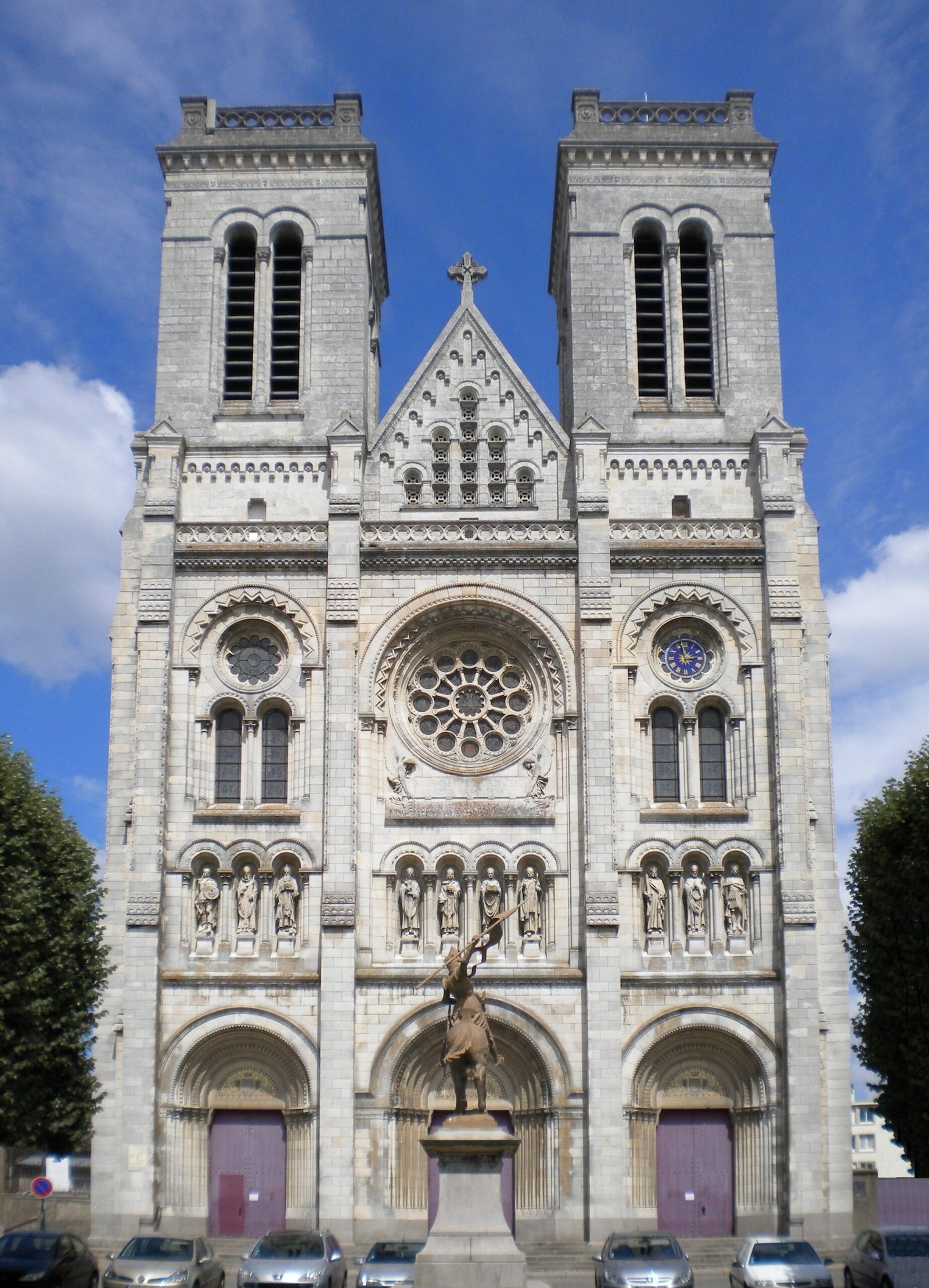
A minor basilica in Nantes dedicated to two early Christian martyrs, completed in the late 19th century and formally elevated to basilica status in 1889.
At a glance
This Catholic minor basilica honours saints Donatian and Rogatian, whose veneration has deep roots in the Loire Valley. Constructed during a period of renewed religious architecture in France, the church received official ecclesiastical recognition less than a decade after its completion.
History
The basilica was built in the late 19th century, a time of significant church construction across France. In 1889, the church was formally elevated to the rank of minor basilica by the Catholic Church, conferring special liturgical status and honour upon the building and its dedication to the two saints.
What you see
Details of the basilica’s architectural style and distinguishing features are not well documented in available sources. A visit reveals a Catholic place of worship shaped by late 19th-century ecclesiastical design principles.
Cultural significance
The basilica represents both the historical veneration of saints Donatian and Rogatian in the Nantes region and the architectural ambitions of 19th-century French Catholicism. Its elevation to minor basilica status reflects the spiritual importance the Church attributed to this sanctuary.
Key facts
- Country: France
- City: Nantes
- Coordinates: 47.2292588, −1.5424418
- Elevated to minor basilica: 1889
Practical information & getting there
The basilica is located in Nantes, the capital of the Loire-Atlantique department. For visiting hours, current services, and accessibility information, contact the basilica directly or check local tourism resources before planning your visit.
Sources & resources
Find it on the map
See this place and what’s around it →📷 Become a Cultural Heritage Online photographer
Share your photos of places: they stay published under your name as the author. The more they're seen, the more you get noticed — and soon a contest will reward the most appreciated photos.
Log in or sign up free to add a photoIs this page about you?
This page is read by travellers and heritage enthusiasts who find it on Google. Tell us how you are connected to this place and we will take it from there.