

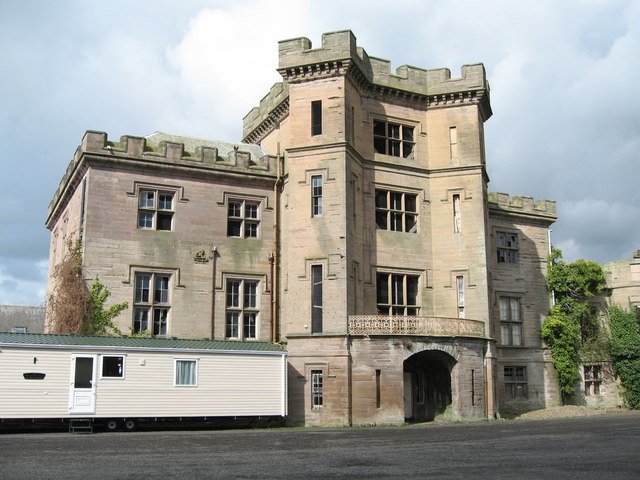
A Grade II* listed country house in Northumberland, built on an ancient site and now privately owned, Barmoor Castle stands as a testament to 19th-century architecture in rural England.
At a glance
Barmoor Castle is a 19th-century country house located in Northumberland, England. Constructed on land with older historical roots, the building represents the architectural ambitions of its era. It is recognized as a Grade II* listed structure, reflecting its architectural and historical importance to the region.
History
The site of Barmoor Castle holds ancient significance, though the current structure dates to the 19th century. The building was erected during a period of Victorian and post-Victorian country house development in northern England. As of 2008, the castle appears on the English Heritage Buildings at Risk Register, indicating concerns about its preservation.
What you see
The building exemplifies 19th-century country house design. Its Grade II* listing acknowledges architectural features of regional merit. The structure remains privately owned and, like many historic properties of its age, requires ongoing conservation efforts.
Cultural significance
Barmoor Castle represents the architectural heritage of Northumberland and the 19th-century country house tradition. Its listing status underscores its importance to English architectural history and regional identity.
Key facts
- Country: United Kingdom
- City: Lowick, Northumberland
- Period: 19th century
- Listed status: Grade II*
- Coordinates: 55.65245, -2.00601
- Status (as of 2008): English Heritage Buildings at Risk Register
Practical information & getting there
Barmoor Castle is privately owned and not open to the public. The building is located in Lowick, Northumberland, in northeastern England. For those interested in 19th-century architecture and heritage conservation in the region, external views of the structure and its historical context are available through documented sources.
Sources & resources
Find it on the map
See this place and what’s around it →📷 Become a Cultural Heritage Online photographer
Share your photos of places: they stay published under your name as the author. The more they're seen, the more you get noticed — and soon a contest will reward the most appreciated photos.
Log in or sign up free to add a photoIs this page about you?
This page is read by travellers and heritage enthusiasts who find it on Google. Tell us how you are connected to this place and we will take it from there.