
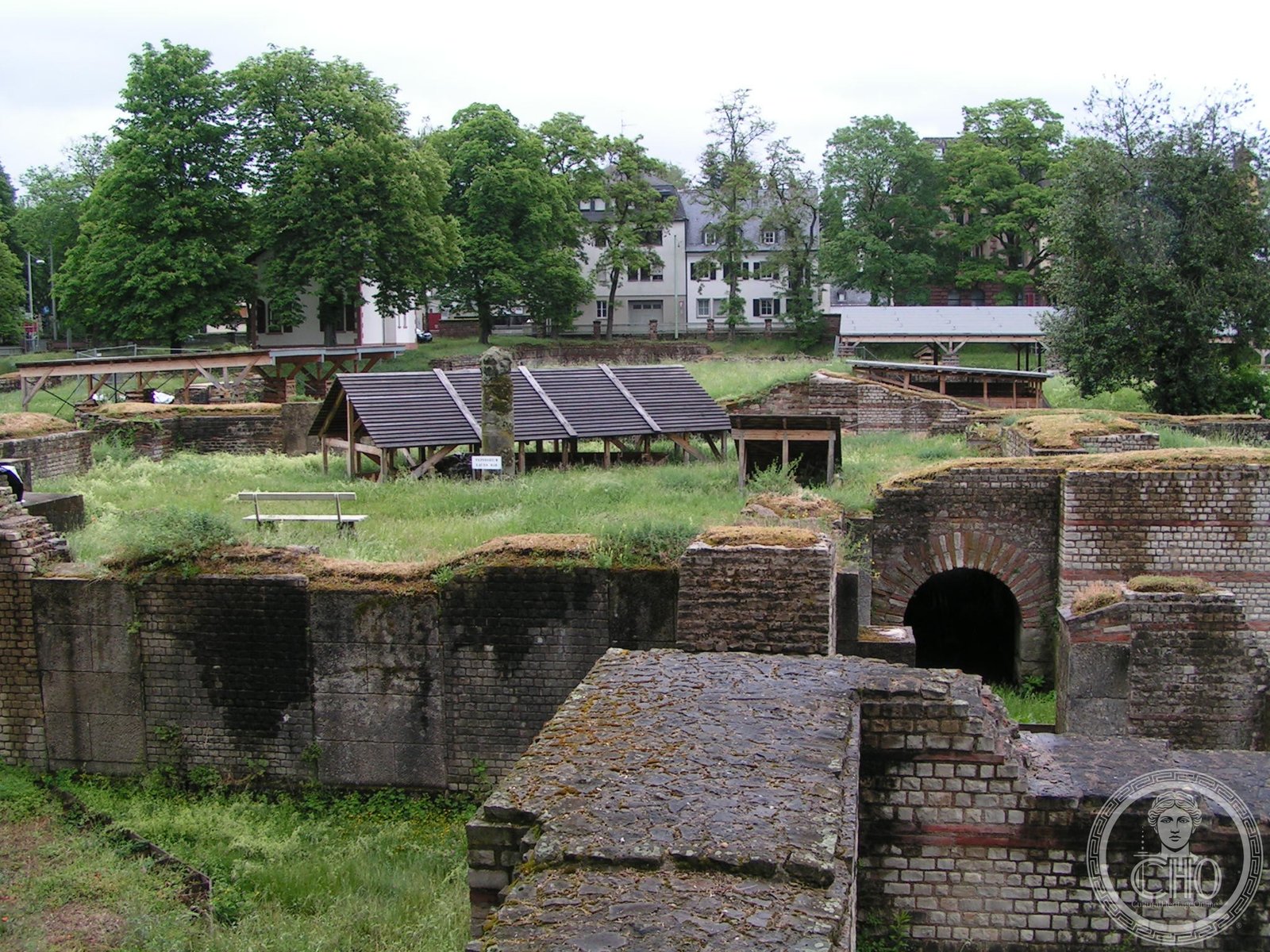
At 42,000 square meters, the Barbara Baths remain the largest Roman bath complex north of the Alps, a testament to the scale and sophistication of Augusta Treverorum during the Roman era.
At a glance
The Barbara Baths are a monumental Roman bath complex in Trier, Germany. Their expansive footprint—spanning over 42,000 square meters—made them a center of public life and engineering achievement in the Roman provinces.
History
Built during the Roman occupation of the region, the Barbara Baths served the city of Augusta Treverorum as a public facility. They testify to the importance of Trier as a major Roman settlement and the investment Romans made in urban amenities and infrastructure.
What you see
The complex’s sprawling architecture includes the characteristic features of Roman thermae: hot rooms, warm rooms, and cold plunges arranged in sequence. The sheer scale of the surviving ruins conveys the ambition of Roman bath design and the engineering required to heat and supply such a vast facility.
Cultural significance
The Barbara Baths stand as a defining monument of Roman urban culture. In 1986, they were designated a UNESCO World Heritage Site as part of the broader Roman Monuments, Cathedral of St. Peter and Church of Our Lady in Trier site, recognized for their historical importance and architectural grandeur. The complex illustrates both the daily life and technological prowess of the Roman Empire in its frontier provinces.
Key facts
- Location: Trier, Germany
- Coordinates: 49.75°N, 6.63°E
- Size: 42,000 square meters
- Distinction: Largest Roman bath complex north of the Alps
- UNESCO World Heritage Site: 1986 (as part of Roman Monuments, Cathedral of St. Peter and Church of Our Lady in Trier)
Practical information & getting there
The Barbara Baths are located in Trier, a city in Rhineland-Palatinate accessible by train and car. As a UNESCO World Heritage Site, the ruins are open to visitors. Contact local tourism information for current visiting hours and any admission details.
Sources & resources
Find it on the map
See this place and what’s around it →📷 Become a Cultural Heritage Online photographer
Share your photos of places: they stay published under your name as the author. The more they're seen, the more you get noticed — and soon a contest will reward the most appreciated photos.
Log in or sign up free to add a photoIs this page about you?
This page is read by travellers and heritage enthusiasts who find it on Google. Tell us how you are connected to this place and we will take it from there.