
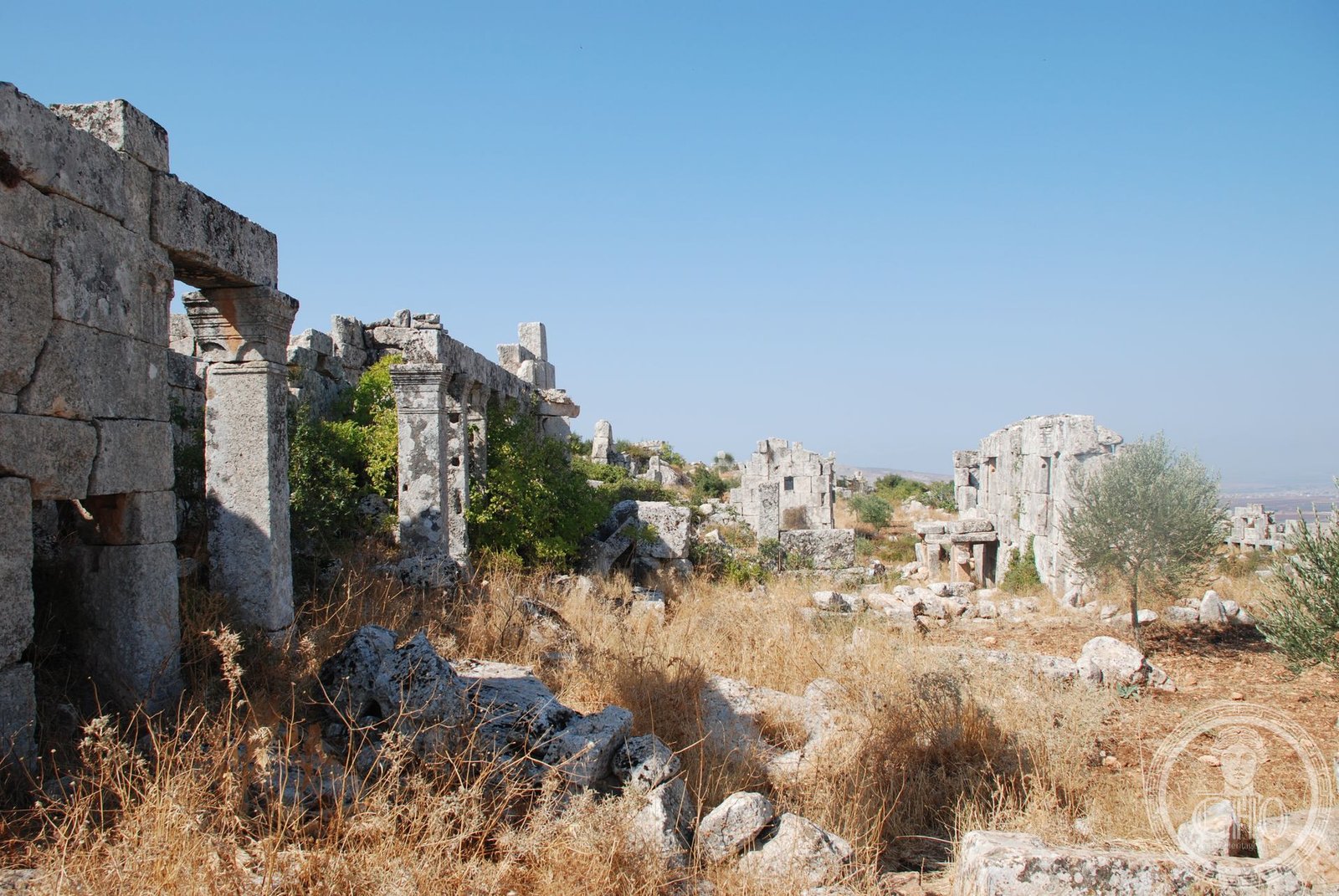
An ancient settlement preserving Roman temples and early Byzantine churches within Syria’s Dead Cities, a UNESCO-protected landscape of archaeological significance.
At a glance
Baqirha stands among the Dead Cities of northern Syria, a region of extraordinary archaeological density. The site contains Roman-period temple remains alongside two Byzantine churches and domestic structures, offering insight into settlement patterns across the classical and early Christian eras.
History
Baqirha flourished during the Roman period, when a temple was constructed at the site. The settlement continued and expanded into the early Byzantine era, when two churches were built, suggesting sustained religious and residential activity. The site was eventually abandoned, preserving these layers of occupation.
What you see
Visitors encounter the fragmentary remains of a Roman temple, evidence of the site’s classical prosperity. Two Byzantine church structures survive in varying states of preservation, alongside residences that illustrate domestic life in the early Christian Levant. Stone foundations and architectural details remain visible across the site.
Cultural significance
Baqirha exemplifies the transition from pagan Roman settlement to Christian Byzantine community. The coexistence of temple and churches at a single location demonstrates religious and cultural change across centuries. As part of the Dead Cities ensemble, it contributes to understanding rural settlement, economic life, and Christianity’s expansion in the ancient Levant.
Key facts
- Country: Syria
- Coordinates: 36.21°N, 36.66°E
- UNESCO World Heritage Site (inscribed 2011 as part of Ancient Villages of Northern Syria)
- Periods: Roman and early Byzantine
Practical information & getting there
Baqirha is located in the Dead Cities region of northwestern Syria. Current accessibility depends on local security conditions. Consult official travel advisories before planning a visit. The site is part of a larger UNESCO zone encompassing numerous archaeological settlements across the region.
Sources & resources
Find it on the map
See this place and what’s around it →📷 Become a Cultural Heritage Online photographer
Share your photos of places: they stay published under your name as the author. The more they're seen, the more you get noticed — and soon a contest will reward the most appreciated photos.
Log in or sign up free to add a photoIs this page about you?
This page is read by travellers and heritage enthusiasts who find it on Google. Tell us how you are connected to this place and we will take it from there.