

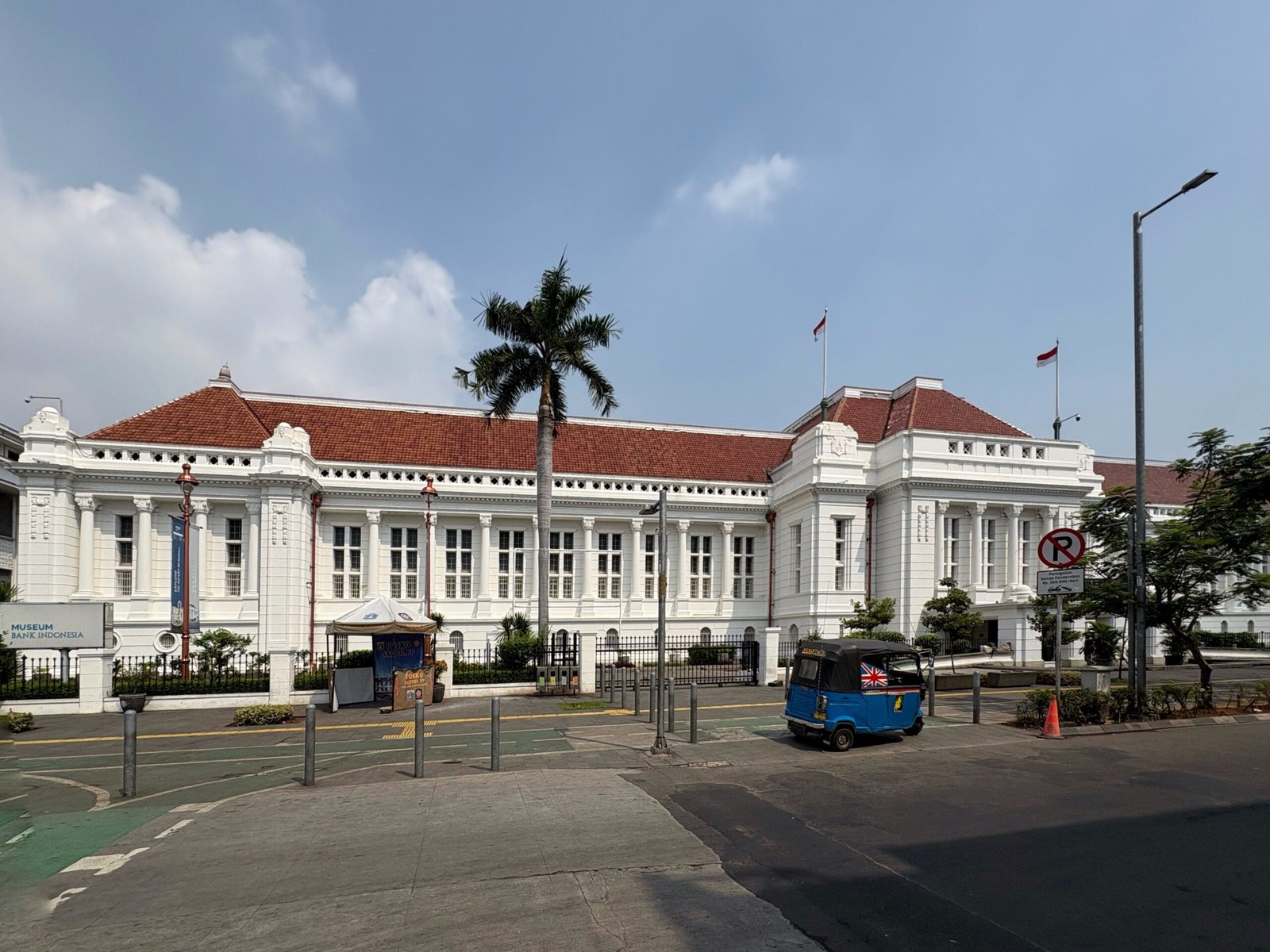
A purpose-built museum chronicling the history of Indonesia’s central bank, housed in a restored colonial-era building that once served as the headquarters of the Dutch East Indies’ monetary authority.
At a glance
The Bank Indonesia Museum occupies a heritage structure in Jakarta Old Town with deep roots in the region’s financial past. Opened in 2009, it explores the evolution of Indonesian banking from colonial times through independence and beyond.
History
The building originally housed De Javasche bank, the central bank of the Dutch East Indies. Following Indonesia’s independence, the institution was nationalized and renamed Bank Indonesia in 1953. Decades later, Bank Indonesia established the museum within this same structure, opening its doors to the public on 21 July 2009, transforming the site into a space dedicated to financial heritage.
What you see
The museum occupies a restored heritage building characteristic of colonial Jakarta’s Old Town. The structure carries the architectural legacy of the Dutch East Indies period, adapted for its modern curatorial purpose.
Cultural significance
The museum documents a pivotal moment in Indonesian history: the transition from colonial monetary control to national sovereignty. It reflects how financial institutions shaped—and were reshaped by—the nation’s journey to independence.
Key facts
- Country: Indonesia
- City: Jakarta
- Coordinates: -6.137333, 106.812816
- Opened: 21 July 2009
- Founded by: Bank Indonesia
- Original use: Headquarters of De Javasche bank (Dutch East Indies central bank)
- Adjacent: Mandiri Museum
Practical information & getting there
The museum is situated in Jakarta Old Town, near Mandiri Museum. For current visiting hours, admission details, and directions, consult the Bank Indonesia website or contact the museum directly.
Sources & resources
Find it on the map
See this place and what’s around it →📷 Become a Cultural Heritage Online photographer
Share your photos of places: they stay published under your name as the author. The more they're seen, the more you get noticed — and soon a contest will reward the most appreciated photos.
Log in or sign up free to add a photoIs this page about you?
This page is read by travellers and heritage enthusiasts who find it on Google. Tell us how you are connected to this place and we will take it from there.