
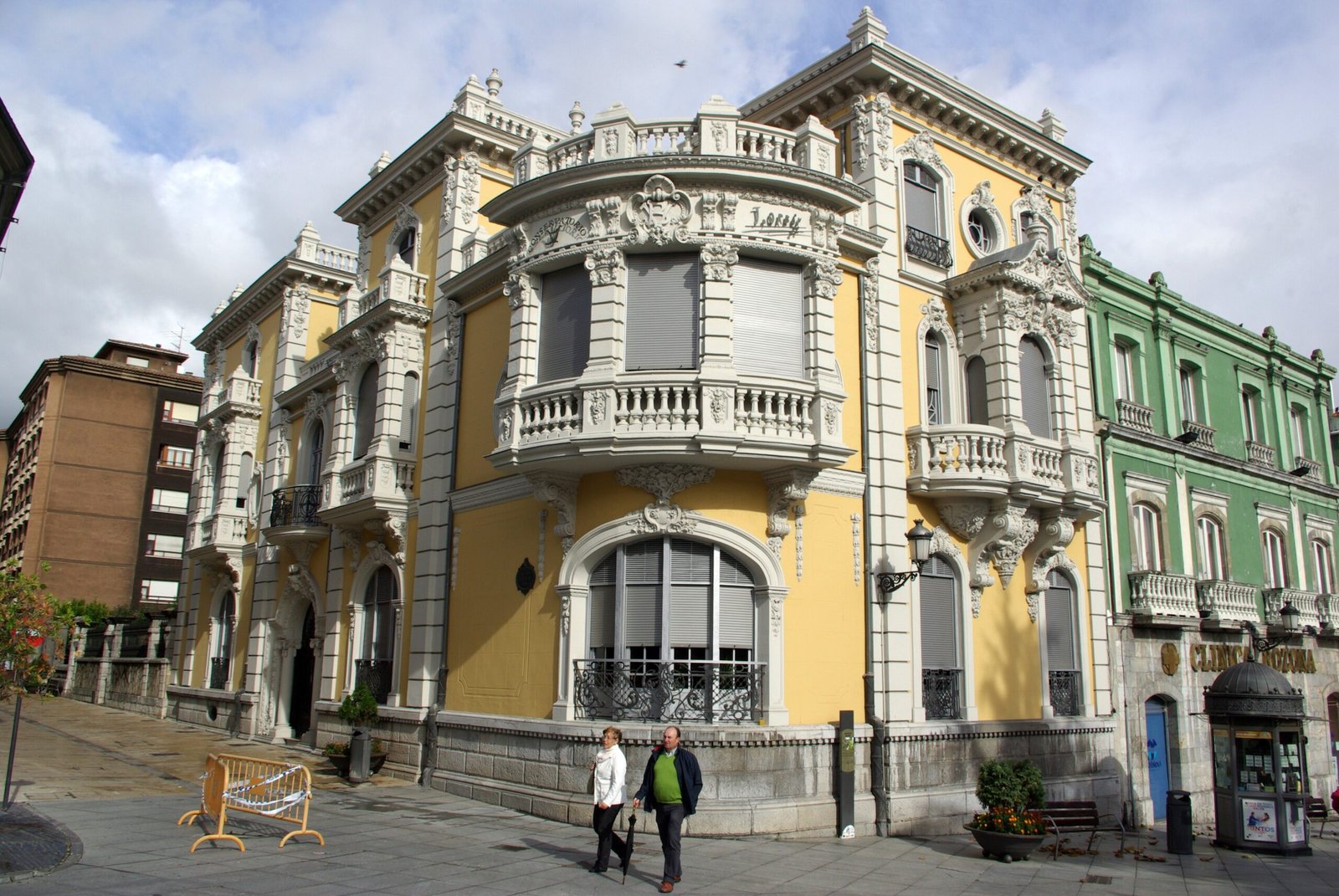
An Art Nouveau masterpiece built in 1909, this Asturian palace showcases the refined taste of the Catalan movement while anchoring the musical life of Avilés as a conservatory.
At a glance
Designed by architect Antonio Palacios for merchant Victoriano Fernández Balsera, Balsera Palace stands as a landmark of early twentieth-century elegance. The mansion has been meticulously preserved and now serves as the Julián Orbón Municipal Conservatory of Music, making it both a historical treasure and a living cultural institution.
History
Construction began in 1909 when Pontevedran architect Antonio Palacios undertook the commission for Victoriano Fernández Balsera, a wealthy merchant from Avilés. The palace originally commanded expansive gardens conceived on the scale of Versailles, though only fragments survive. The city purchased the building in 1982, recognizing its cultural importance. Interior renovations followed in 1984 and 1997, preserving the original layout. Between 2011 and 2012, exterior façades underwent comprehensive restoration. The palace was declared a Culturally important monument on 3 October 1991.
What you see
The building exemplifies the Art Nouveau style that flourished in Catalonia during this period. A signature interior element is the V-shaped staircase that opens dramatically toward the first floor, creating an unexpected spatial flourish. The flat roof terminates in a tower balcony offering sweeping views across historic Avilés. Profuse decorative detailing distinguishes the interiors, maintained in exceptional condition through decades of careful stewardship and restoration work.
Cultural significance
Balsera Palace represents the ambitions of Asturian merchant culture in the early twentieth century, when industrial wealth translated into architectural patronage. Its transformation into a music conservatory honors the building’s spirit while ensuring its continued relevance to the community. The palace remains a statement of Art Nouveau principles adapted to the Iberian context.
Key facts
- Location: Avilés, Asturias, Spain
- Coordinates: 43.554936, −5.924097
- Completed: 1909
- Architect: Antonio Palacios
- Original client: Victoriano Fernández Balsera
- Current use: Julián Orbón Municipal Conservatory of Music
- Protected status: Culturally important monument (declared 3 October 1991)
Practical information & getting there
The palace is located in Avilés in the region of Asturias in northwestern Spain. As it now functions as a music conservatory, visiting hours and access may be restricted. Contact the conservatory directly for information about viewings or performances held within this architectural gem.
Sources & resources
Find it on the map
See this place and what’s around it →📷 Become a Cultural Heritage Online photographer
Share your photos of places: they stay published under your name as the author. The more they're seen, the more you get noticed — and soon a contest will reward the most appreciated photos.
Log in or sign up free to add a photoIs this page about you?
This page is read by travellers and heritage enthusiasts who find it on Google. Tell us how you are connected to this place and we will take it from there.