
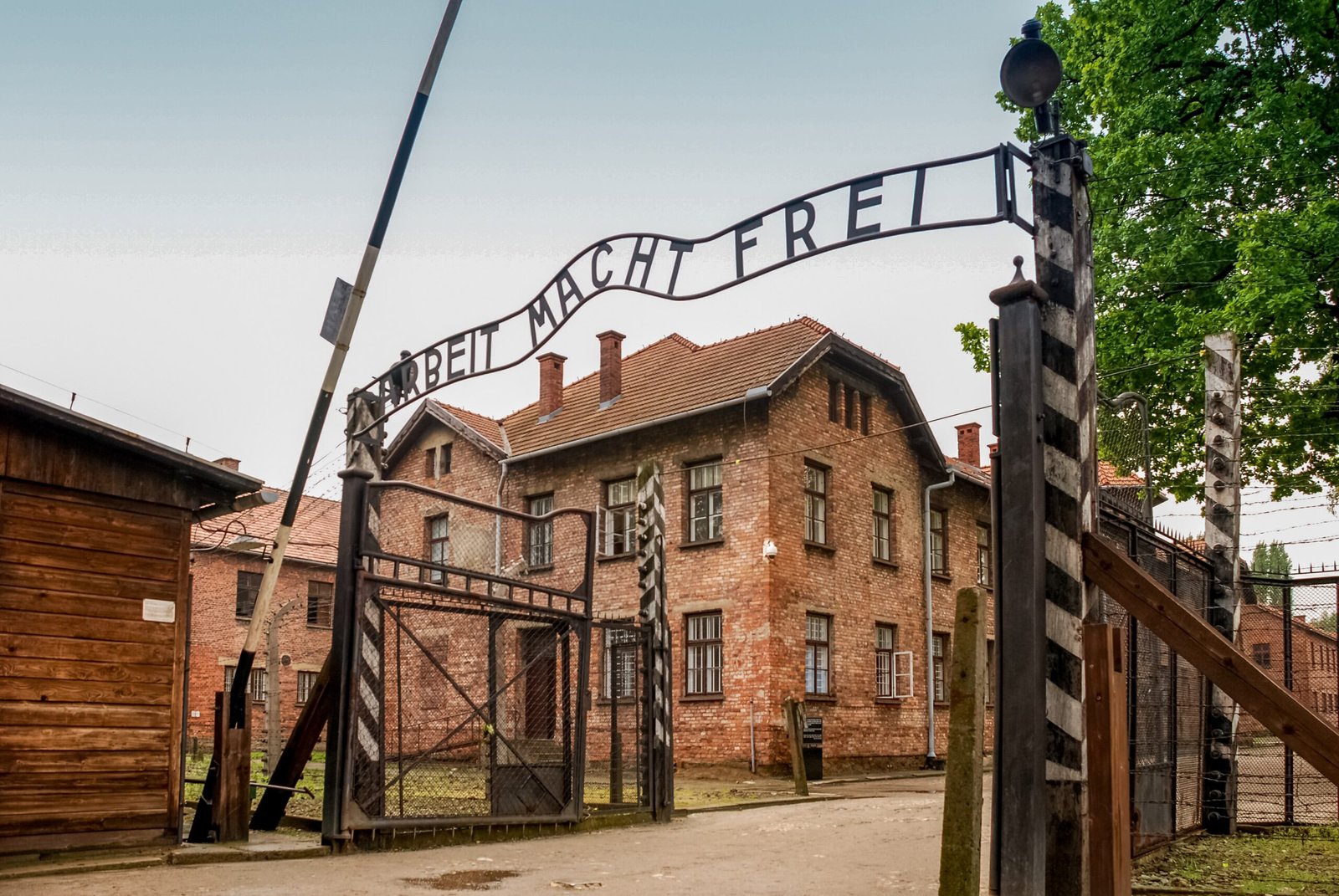
A preserved Nazi concentration and extermination camp, now a museum and memorial to over 1.1 million people murdered during the Holocaust.
At a glance
The Auschwitz-Birkenau State Museum occupies the grounds of two interconnected Nazi German camps established during World War II. Auschwitz I served as the main concentration camp, while Auschwitz II-Birkenau functioned as a concentration and extermination facility. Both operated under Nazi Germany’s occupation of Poland from 1939 to 1945.
History
The camps were developed and operated by Nazi Germany throughout the German occupation of Poland. Approximately 1.1 million people perished at the site during World War II and the Holocaust, including 960,000 Jews. Following the war’s end, the Polish government made the decision to preserve the grounds as a research centre and as a memorial to the victims. The site was designated a UNESCO World Heritage Site in 1979, acknowledging its historical significance and the imperative to remember the atrocities committed there.
What you see
The museum preserves the physical remains of both camps, allowing visitors to comprehend the scale and conditions of these facilities. Barracks, guard structures, and other camp infrastructure remain on the grounds, providing tangible evidence of the camps’ operations during the Nazi occupation.
Cultural significance
Auschwitz-Birkenau stands as one of the most important Holocaust memorial sites in the world. Its preservation serves dual purposes: to educate visitors about the systematic genocide perpetrated by Nazi Germany and to honour the memory of those who died. The site functions as a research centre, supporting scholarly investigation into the Holocaust and World War II history.
Key facts
- Country: Poland
- Location: Oświęcim
- Coordinates: 50.03583333°N, 19.17833333°E
- UNESCO World Heritage Site: 1979
- Current director: Piotr Cywiński (since 2006)
Practical information & getting there
The museum is located in Oświęcim, a town in southern Poland. Visit the official website for current opening hours, admission fees, and guided tour availability. Respectful conduct is expected throughout the site, which serves as both a museum and a memorial.
Sources & resources
Find it on the map
See this place and what’s around it →📷 Become a Cultural Heritage Online photographer
Share your photos of places: they stay published under your name as the author. The more they're seen, the more you get noticed — and soon a contest will reward the most appreciated photos.
Log in or sign up free to add a photoIs this page about you?
This page is read by travellers and heritage enthusiasts who find it on Google. Tell us how you are connected to this place and we will take it from there.