
A Polish dramatic theatre founded in 1928, the Ateneum Theatre reopened after World War II restoration to become one of Warsaw’s principal stages, named after its visionary first director Stefan Jaracz.
At a glance
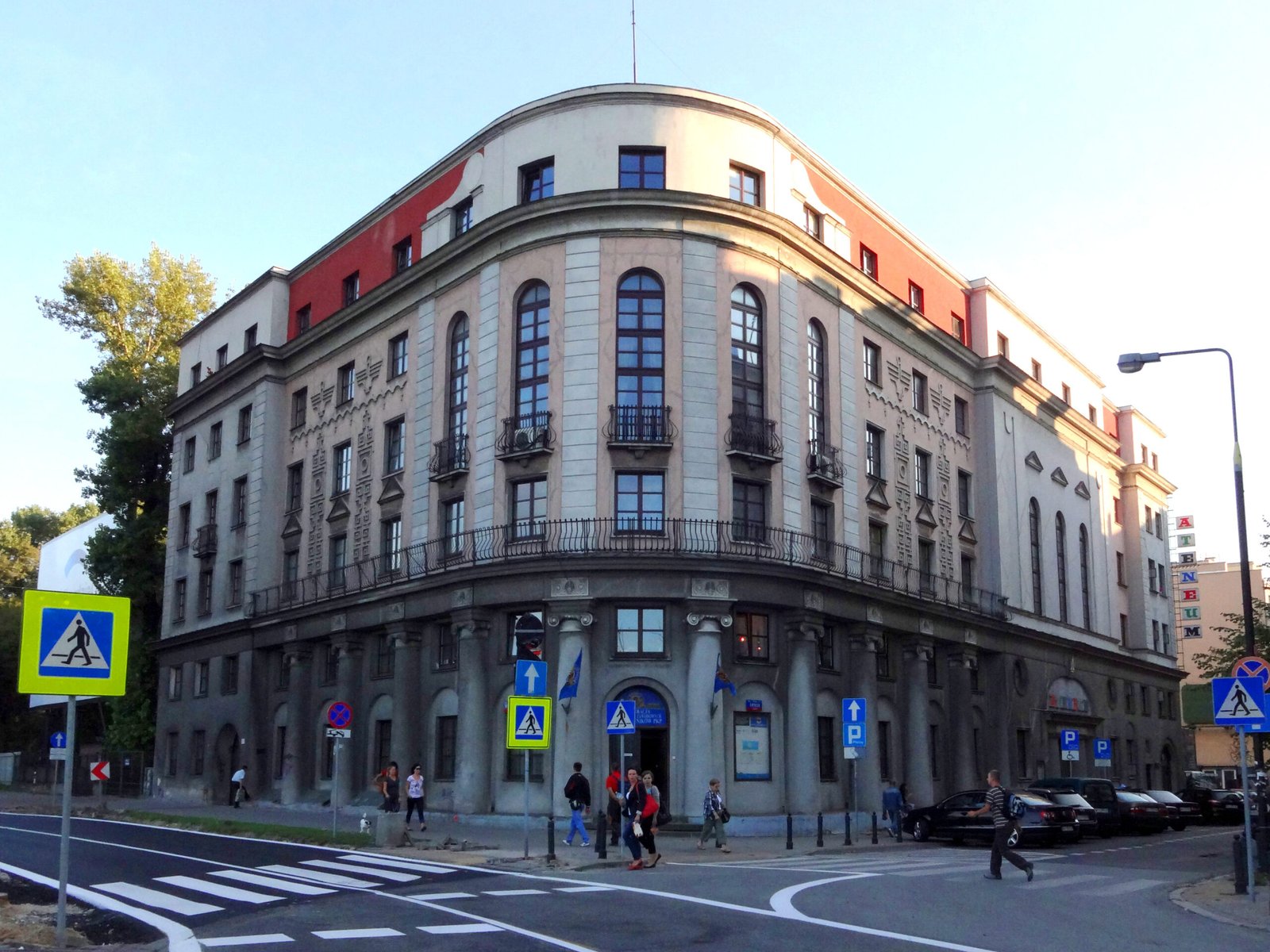
The Ateneum Theatre occupies a building constructed in 1927 as headquarters for the Professional Union of PKP Railway Workers. The interwar structure served a dual purpose, with offices positioned above what would become the theatre space. Today it stands as a significant venue for dramatic performance in Poland’s capital.
History
Founded in 1928, the theatre took root in Warsaw during the interwar period. World War II inflicted severe damage on the building, threatening its survival. After the war, the structure underwent comprehensive restoration funded by the state. The theatre reopened in 1951, when it was formally named in honour of Stefan Jaracz, its first director and an already celebrated figure in Polish theatre by that time.
What you see
The building dates to 1927 and reflects interwar Polish architectural practice. Its original design accommodated both administrative offices and theatrical performance. The restored structure retains this functional duality while serving primarily as a theatre venue.
Cultural significance
The Ateneum Theatre represents both resilience and institutional continuity in Polish cultural life. Its naming after Stefan Jaracz—a pioneering director of the prewar era—underscores the theatre’s role in maintaining artistic traditions through and beyond the rupture of World War II. As a state-run institution, it has anchored Warsaw’s dramatic theatre landscape for over seven decades.
Key facts
- Country: Poland
- City: Warsaw
- Founded: 1928
- Building erected: 1927
- Reopened after restoration: 1951
- Coordinates: 52.23722, 21.03278
Practical information & getting there
The Ateneum Theatre is located in central Warsaw. For current performance schedules, ticket information, and directions, visit the theatre’s official channels or contact Warsaw’s tourism services.
Sources & resources
Find it on the map
See this place and what’s around it →📷 Become a Cultural Heritage Online photographer
Share your photos of places: they stay published under your name as the author. The more they're seen, the more you get noticed — and soon a contest will reward the most appreciated photos.
Log in or sign up free to add a photoIs this page about you?
This page is read by travellers and heritage enthusiasts who find it on Google. Tell us how you are connected to this place and we will take it from there.