
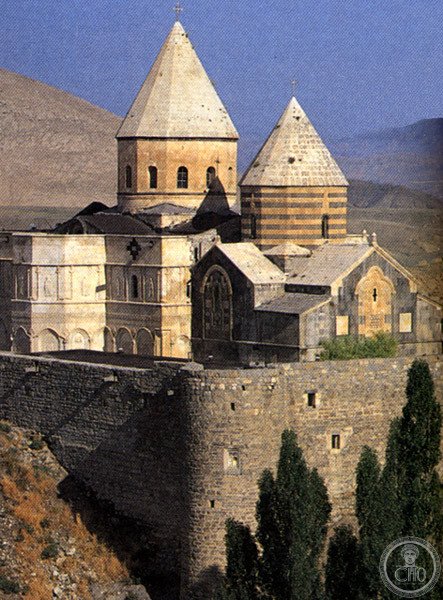
Three groups of Armenian churches spanning a millennium of construction represent the last vestiges of ancient Armenian culture in its southeastern reaches, now protected as a UNESCO World Heritage Site.
At a glance
The Armenian Monastic Ensembles comprise St. Thaddeus Monastery, Saint Stepanos Monastery, and the Chapel of Dzordzor, distributed across 129 hectares (320 acres). Built between the 7th and 16th centuries, these three architectural complexes showcase Armenian ecclesiastical traditions across more than eight centuries of development and remain in good condition today.
History
The churches were established across a lengthy span—from the 7th century through the 16th—documenting the evolution of Armenian monastic practice and devotion. Saint Stepanos and the Apostle Thaddeus hold central importance in Armenian Christian tradition, making these sites pilgrimage destinations. The ensembles have undergone numerous renovations over the centuries, a testament to their enduring spiritual and cultural significance in the region.
What you see
Across the three monastic groups, visitors encounter distinctive Armenian architectural and decorative traditions developed over multiple centuries. The churches display the stone carving, relief work, and structural conventions characteristic of Armenian ecclesiastical design. Each ensemble reflects the building practices and aesthetic values of its period, from early medieval basilicas to later medieval developments.
Cultural significance
UNESCO recognized these ensembles as major centres for the diffusion of Armenian culture throughout the region. They embody the last substantial remains of old Armenian culture in its southeastern periphery—repositories of artistic, architectural, and spiritual heritage. The sites’ designation honours both their architectural excellence and their role as places of pilgrimage connected to foundational figures in Armenian Christianity.
Key facts
- UNESCO World Heritage Site, inscribed 8 July 2008
- Three monastic complexes: St. Thaddeus Monastery, Saint Stepanos Monastery, Chapel of Dzordzor
- Location: West Azerbaijan and East Azerbaijan provinces, Iran
- Total area: 129 hectares (320 acres)
- Constructed: 7th–16th centuries
- Criteria: (ii), (iii), (vi)
- Coordinates: 38.978888888889° N, 45.473333333333° E
Practical information & getting there
The three monastic ensembles are situated in the northwestern provinces of Iran. Both sites remain in good preservation. Consult local tourism authorities or your national foreign office for current access, travel requirements, and visiting conditions before planning your visit.
Sources & resources
Find it on the map
See this place and what’s around it →📷 Become a Cultural Heritage Online photographer
Share your photos of places: they stay published under your name as the author. The more they're seen, the more you get noticed — and soon a contest will reward the most appreciated photos.
Log in or sign up free to add a photo