

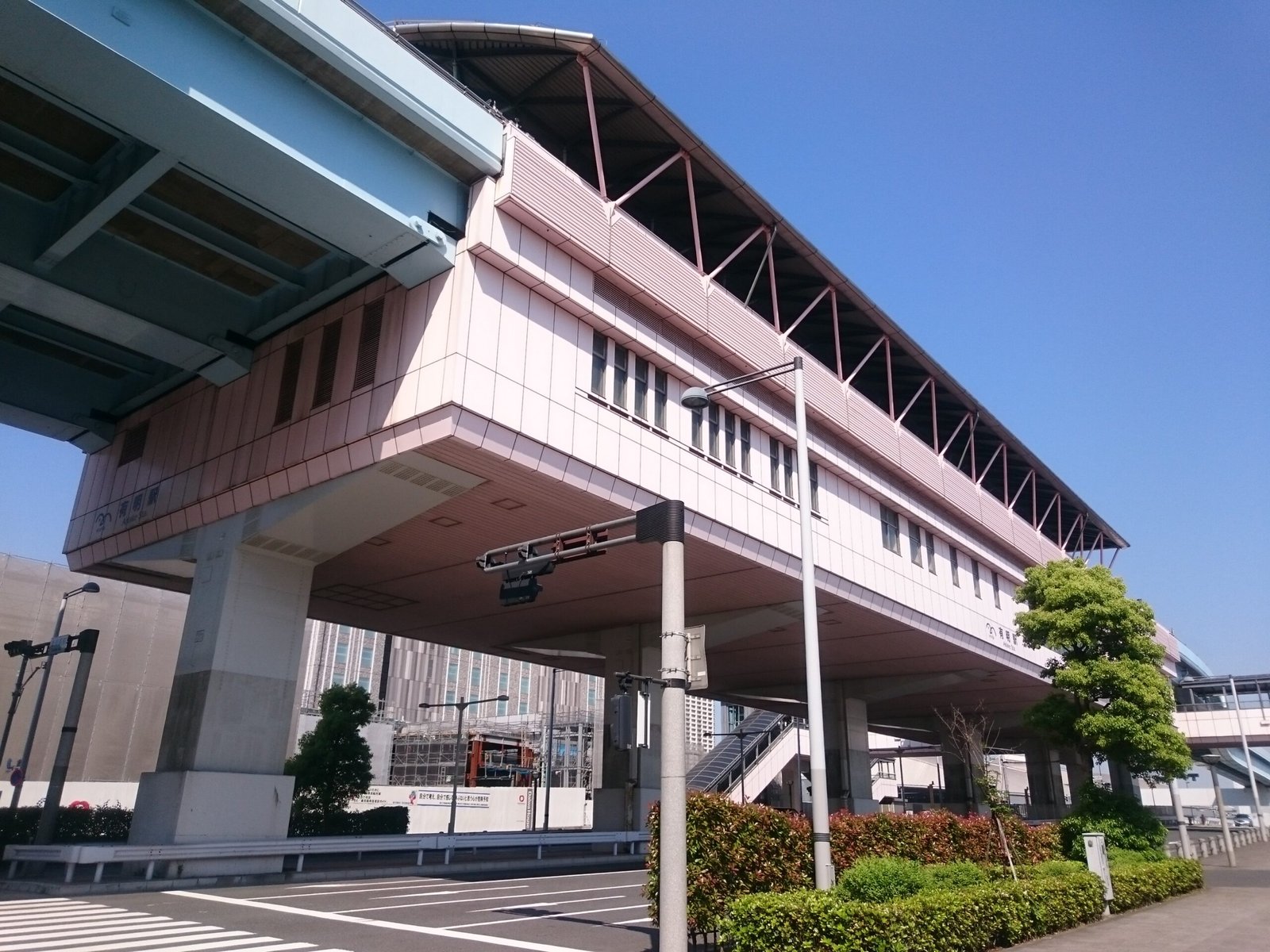
A modern automated transit hub in Tokyo’s waterfront district, Ariake Station serves the Yurikamome line with connections to major transport networks and cultural venues.
At a glance
Ariake Station is a railway station in Kōtō ward, serving the Yurikamome automated transit line. The station number is U-12. Two elevated island platforms serve three tracks, handling approximately 9,242 daily passengers in fiscal year 2023.
History
The station opened on 1 November 1995 as the eastern terminus of the Yurikamome line. When the line extended to Toyosu in March 2006, Ariake lost its endpoint status—though some services from Shimbashi continue to terminate there. The station’s strategic location made it a key interchange point from the start.
What you see
The station’s design reflects modern Japanese transit infrastructure: two elevated island platforms with three tracks. The elevated structure allows pedestrian and vehicle traffic to flow beneath, characteristic of Yurikamome’s automated guideway design through urban Tokyo.
Cultural significance
Ariake Station serves as a gateway to Tokyo’s Odaiba waterfront district, connecting visitors to the nearby Kokusai-Tenjijō Station on the Rinkai Line and the Tokyo BRT bus network. The station anchors this transformed industrial area, now home to museums, exhibitions, and entertainment venues.
Key facts
- Country: Japan
- City: Tokyo (Kōtō ward)
- Opened: 1 November 1995
- Line: Yurikamome (automated transit)
- Station number: U-12
- Coordinates: 35.63° N, 139.79° E
- Daily ridership (FY2023): 9,242 passengers
Practical information & getting there
Ariake Station is located within walking distance of Kokusai-Tenjijō Station on the Rinkai Line, providing multiple entry points to the area. A large bus plaza near the station serves the Tokyo BRT line. The Yurikamome line connects Ariake to central Tokyo via Shimbashi.
Sources & resources
Find it on the map
See this place and what’s around it →📷 Become a Cultural Heritage Online photographer
Share your photos of places: they stay published under your name as the author. The more they're seen, the more you get noticed — and soon a contest will reward the most appreciated photos.
Log in or sign up free to add a photoIs this page about you?
This page is read by travellers and heritage enthusiasts who find it on Google. Tell us how you are connected to this place and we will take it from there.