

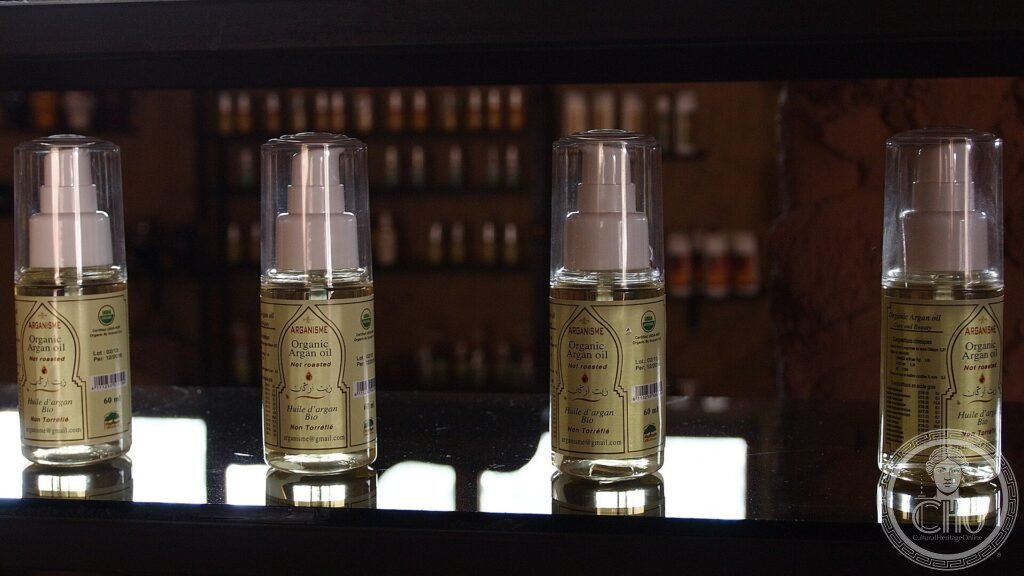
For generations, Moroccan communities have harvested, pressed, and prepared argan oil from the kernels of the argan tree—a practice woven into daily life, cuisine, and beauty rituals across southwestern Morocco.
In UNESCO’s words
The argan tree is an endemic woodland species found in the Arganeraie Biosphere Reserve in south-west Morocco. Rural women and, to a lesser extent, men living in the reserve practise traditional methods to extract argan oil from the fruit of the tree. Different tasks, transmitted by means of imitation and through non-formal education, are required to obtain the oil, which has multiple uses for cooking, medicines and cosmetics. These include harvesting the fruit, drying, pulping, grinding, sorting, milling and mixing. The specific hand mill is manufactured by local craftspeople, and the mixing involves the gradual addition of warm water in exact quantities. All the cultural aspects of the argan tree, including the cultivation of the tree, oil extraction, the preparation of recipes and derived products, and the crafting of traditional tools for the various tasks, contribute to social cohesion, understanding between individuals and mutual respect between communities. Argan oil is given as a wedding gift and is used extensively in the preparation of festive dishes. Traditional know-how specific to the extraction of the oil and its multiple uses is systematically transmitted by ‘argan women’, who teach their daughters from a young age to put it into practice.
Official description, UNESCO Intangible Cultural Heritage List — Argan, practices and know-how concerning the argan tree
At a glance
Argan oil is extracted from the fruit of the argan tree through a series of labour-intensive traditional tasks. Rural women and, to a lesser extent, men living in the Arganeraie Biosphere Reserve practise these methods, which include harvesting, drying, pulping, grinding, sorting, milling and mixing. The oil has multiple uses for cooking, medicines and cosmetics. Knowledge of these extraction methods and applications is transmitted by argan women, who teach their daughters from a young age.
Origins & history
The argan tree is endemic to the Arganeraie Biosphere Reserve in south-west Morocco. The different tasks required to obtain argan oil are transmitted through imitation and non-formal education, passed down within families and communities over generations. Traditional know-how specific to the extraction of the oil and its multiple uses is systematically maintained by argan women teaching younger generations to put these practices into work.
The practice
Oil extraction requires multiple steps: harvesting fruit, drying, pulping, grinding, sorting, milling and mixing. The hand mill is manufactured by local craftspeople. Mixing involves the gradual addition of warm water in exact quantities. These tasks are performed by rural women and men living in the reserve, often working together. The practice also includes the cultivation of the tree and the crafting of traditional tools for the various extraction tasks.
Cultural significance
Argan oil practices contribute to social cohesion, understanding between individuals and mutual respect between communities. Argan oil is given as a wedding gift and used extensively in the preparation of festive dishes. All cultural aspects—cultivation, oil extraction, preparation of recipes and derived products, and crafting of traditional tools—strengthen bonds within and between communities. The tradition sustains livelihoods while maintaining ecological knowledge specific to the argan tree and its ecosystem.
Key facts
- Country: Morocco
- Inscribed: 2014
- UNESCO list: Representative List of the Intangible Cultural Heritage of Humanity
- UNESCO reference: 00955
- UNESCO vocabulary: Cosmetics; Food preparation
- Map: Arganeraie Biosphere Reserve — the locality named in UNESCO’s official description of this element
Where to experience it
The Arganeraie Biosphere Reserve in south-west Morocco is where this tradition thrives among rural communities. Visitors can observe the complete argan oil extraction process in family workshops and cooperatives, where women demonstrate traditional techniques passed down through generations. The oil appears in local cuisine and is central to festive preparations. Seasonal visits allow observers to witness harvesting practices and meet practitioners who continue to teach these skills to younger generations, ensuring the cultural knowledge and social bonds surrounding argan cultivation and use remain active.
Sources & resources
- UNESCO — official element page: Argan, practices and know-how concerning the argan tree
- UNESCO — open data record: Intangible Heritage List, reference 00955
- UNESCO — official video: UNESCO film on this element — embedded on this page
- UNESCO — official photograph: Photograph of this element — Direction du patrimoine culturel, Maroc, 2013
- Reference — Wikipedia (secondary): Argan oil — consulted as a secondary reference, not as confirmation
- Cultural Heritage Online: Our archive and city guides

Find it on the map
See this place and what’s around it →📷 Become a Cultural Heritage Online photographer
Share your photos of places: they stay published under your name as the author. The more they're seen, the more you get noticed — and soon a contest will reward the most appreciated photos.
Log in or sign up free to add a photo