

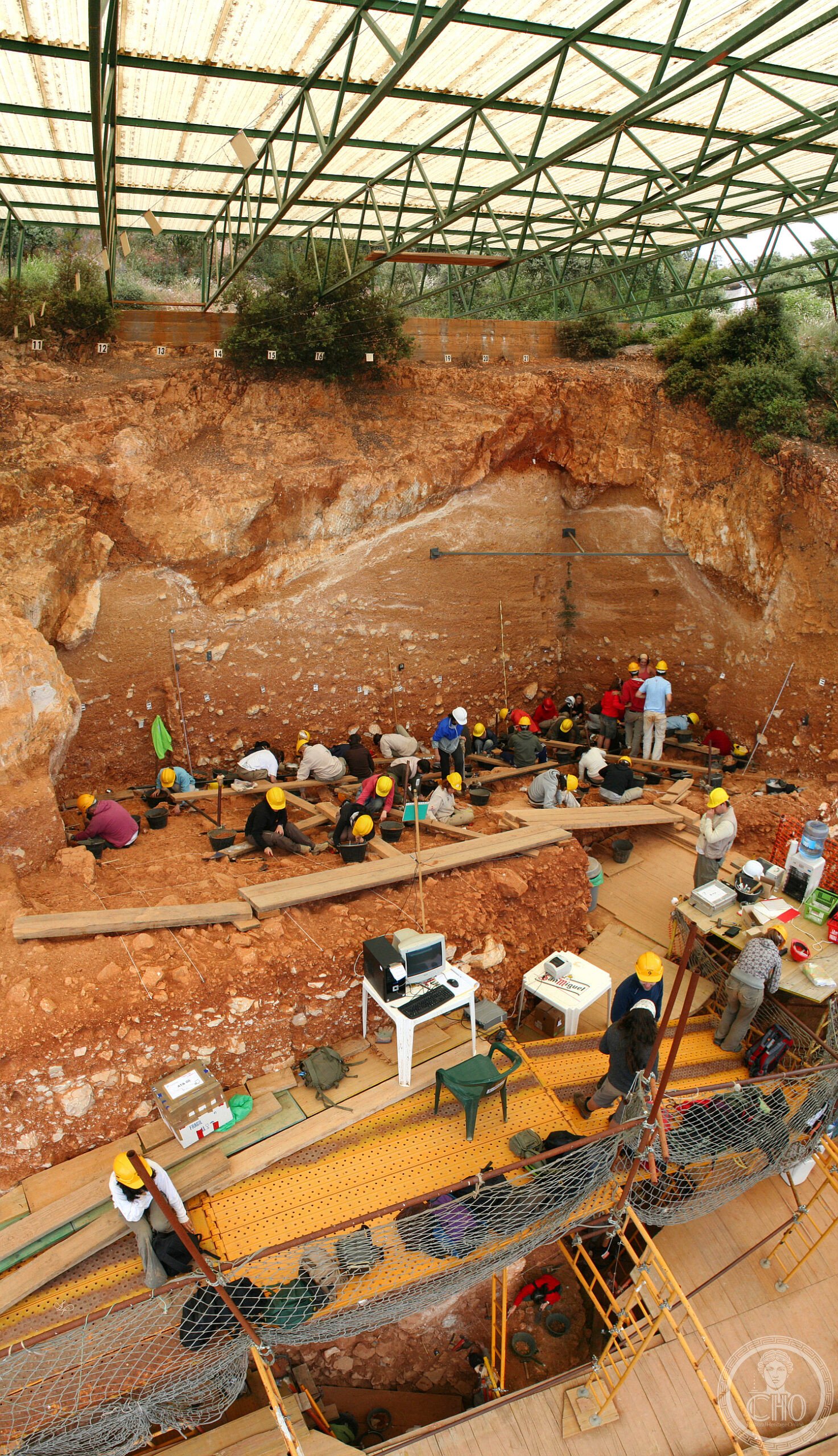
A limestone cavern system in northern Spain preserving evidence of human habitation stretching back 800,000 years, including the oldest known traces of hominid activity in Western Europe.
At a glance
Atapuerca lies in Burgos province, its network of caves and rock shelters serving as an archaeological record of early human presence. Bone fragments discovered within the Gran Dolina cavern date to approximately 800,000 years ago, representing the earliest confirmed evidence of hominid settlement across Western Europe.
History
The site’s excavation has revealed successive layers of occupation spanning hundreds of thousands of years. The Gran Dolina cavern contains fossil remains that document an extraordinary span of human prehistory, with materials suggesting sporadic but repeated visits by early hominids over millennia.
What you see
The site consists of multiple caverns and rock shelters carved into limestone formations. The Gran Dolina—the most significant chamber—contains stratified deposits that allow researchers to trace changes in tool-making techniques, dietary patterns, and settlement behavior across deep time.
Cultural significance
Atapuerca holds exceptional importance for understanding early human development and migration patterns. The bone evidence provides the world’s oldest known archaeological record of hominid cannibalism, offering rare insights into the practices and social structures of prehistoric communities. The site’s continuous occupation record makes it invaluable for studying human adaptation to changing climates and environments over hundreds of millennia.
Key facts
- Country: Spain
- Location: Burgos province
- Coordinates: 42.3525°N, 3.5183°W
- UNESCO World Heritage Site: designated 2000
- Principal discoveries: hominid bone fragments dating to approximately 800,000 years ago
Practical information & getting there
The site is located in the province of Burgos in Spain’s north. Consult local tourism resources for current visitor access, guided tour availability, and any restrictions on archaeological site entry.
Sources & resources
Find it on the map
See this place and what’s around it →📷 Become a Cultural Heritage Online photographer
Share your photos of places: they stay published under your name as the author. The more they're seen, the more you get noticed — and soon a contest will reward the most appreciated photos.
Log in or sign up free to add a photo