
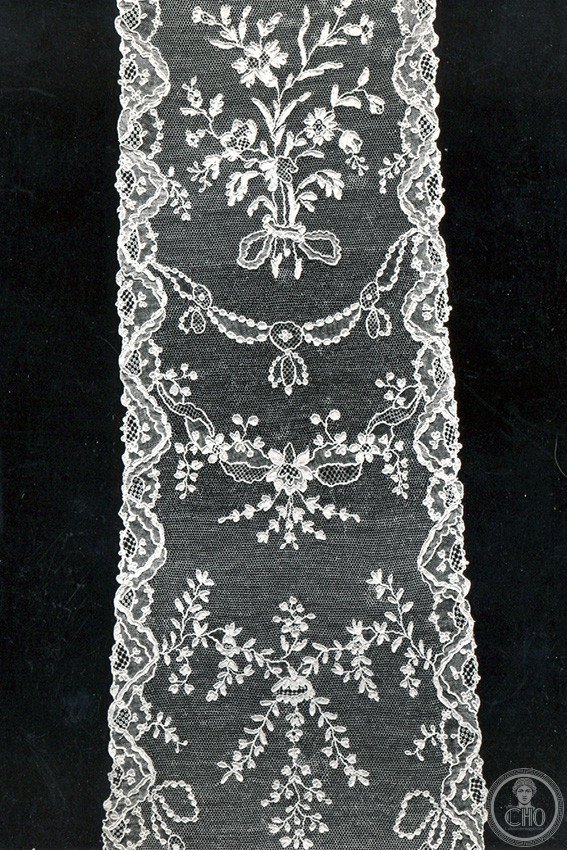
A needle lace of extraordinary finesse, Alençon lace emerged from royal patronage in the 17th century to become what many call the Queen of lace—a tradition of meticulous hand-stitching that has endured in its Norman birthplace for nearly four centuries.
At a glance
Alençon lace is a needle lace distinguished by its mesh ground, raised outlines of densely packed buttonhole stitches, decorative picots along the outer edge, and open areas filled with intricate patterns. Each piece requires months of skilled hand-work, making it among the most labour-intensive and precious laces ever made.
Origins and history
Lace-making arrived in Alençon during the 16th century. The industry transformed dramatically in 1665 when Jean-Baptiste Colbert, the powerful minister under King Louis XIV, established a Royal Workshop in the town. His goal was direct: to break French dependence on expensive Venetian lace imports and keep wealth within the kingdom.
Colbert recruited master craftspeople and imported Venetian techniques, but the monopoly proved temporary. Around 1675, after Colbert’s hold ended, a local artisan named Marthe La Perrière refined and modified the Venetian approach, creating a distinctly Alençon style that would define the craft for centuries to come.
The tradition today
Alençon lace-making remains a living craft practised by a small number of dedicated artisans in the town. The process is labour-intensive and demands years of apprenticeship. Each lace is worked by hand, needle by needle, with no mechanical shortcuts. Contemporary makers continue to employ the same fundamental techniques—creating the mesh ground, laying and couching pattern threads, executing the buttonhole stitch outline, and adorning edges with picots—that define the tradition.
Cultural significance
Alençon lace represents not merely technical virtuosity but a philosophy of patience and perfection rooted in the Enlightenment ideal of French craftsmanship. For nobility and royalty across Europe, owning a piece of Alençon lace signalled refinement, wealth, and connection to the French court. The tradition embodies the continuity of regional identity in Normandy and stands as testimony to how a single artisan—Marthe La Perrière—could transform a borrowed technique into an irreplaceable cultural inheritance.
Key facts
- Country: France
- Anchor community: Alençon, Normandy
- UNESCO Intangible Cultural Heritage: Craftsmanship of Alençon needle lace-making (Representative List)
- Origins: Lace-making established in Alençon in the 16th century; Royal Workshop founded 1665; distinctive Alençon style emerged c. 1675
- Key figure: Marthe La Perrière, credited with adapting Venetian technique into the Alençon method
- Distinctive features: Mesh ground, raised buttonhole-stitch outline, picotted edges, open decorative fillings
Where to experience it
Alençon remains the heart of lace-making in France. You can visit the town’s museums and heritage centres to see historical and contemporary examples of the craft. Several ateliers and cultural organisations in Alençon offer demonstrations and, in some cases, classes in traditional lace-making techniques for those wishing to learn this exquisite art.
Sources & resources
Find it on the map
See this place and what’s around it →📷 Become a Cultural Heritage Online photographer
Share your photos of places: they stay published under your name as the author. The more they're seen, the more you get noticed — and soon a contest will reward the most appreciated photos.
Log in or sign up free to add a photo