
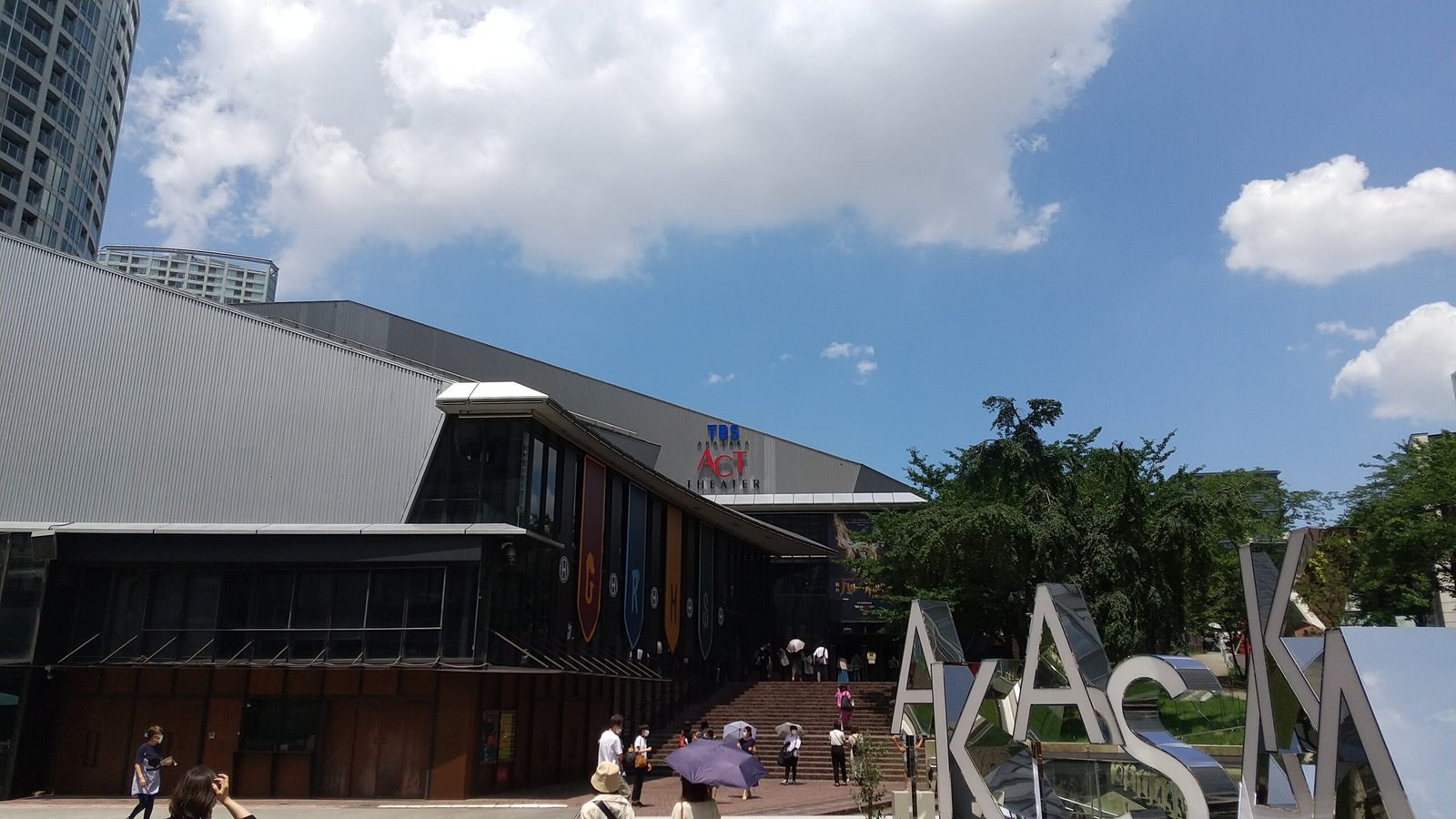
A contemporary performance venue in Tokyo’s Minato ward, purpose-built for theatrical productions and musicals.
At a glance
This four-storey theatre opened in 2008 as a dedicated stage for major theatrical productions. Rising 28.9 metres, it accommodates 1,324 seats across its single auditorium, making it a medium-sized venue suited to Broadway-scale musicals and drama.
History
Completed in 2008, the Akasaka ACT Theater quickly established itself as a key venue for international theatrical productions in Tokyo. In September 2014, it mounted Arthur Kopit’s musical adaptation of Gaston Leroux’s classic The Phantom of the Opera. Since June 2022, the theatre has been dedicated to staging Harry Potter and the Cursed Child, anchoring its programming around this flagship production.
What you see
The building rises four storeys and stands 28.9 metres high. Its modern design prioritizes acoustic quality and audience comfort, with 1,324 seats arranged to ensure sightlines to the stage. The theatre’s architecture reflects contemporary Japanese performance-space design, balancing technical sophistication with elegant simplicity.
Cultural significance
The Akasaka ACT Theater represents Tokyo’s ongoing commitment to hosting world-class theatrical productions. Its long-running engagement with Harry Potter and the Cursed Child demonstrates the venue’s role in bringing international theatrical phenomena to Japanese audiences, while maintaining programming that includes adaptations of classic works.
Key facts
- Country: Japan
- City: Tokyo (Minato ward)
- Coordinates: 35.67277778, 139.735
- Completed: 2008
- Capacity: 1,324 seats
- Height: 28.9 metres
Practical information & getting there
The theatre is located in Akasaka, a well-served neighbourhood in central Tokyo accessible by multiple train lines. Consult the venue’s website for current programming, ticket information, and accessibility details.
Sources & resources
Find it on the map
See this place and what’s around it →📷 Become a Cultural Heritage Online photographer
Share your photos of places: they stay published under your name as the author. The more they're seen, the more you get noticed — and soon a contest will reward the most appreciated photos.
Log in or sign up free to add a photoIs this page about you?
This page is read by travellers and heritage enthusiasts who find it on Google. Tell us how you are connected to this place and we will take it from there.