
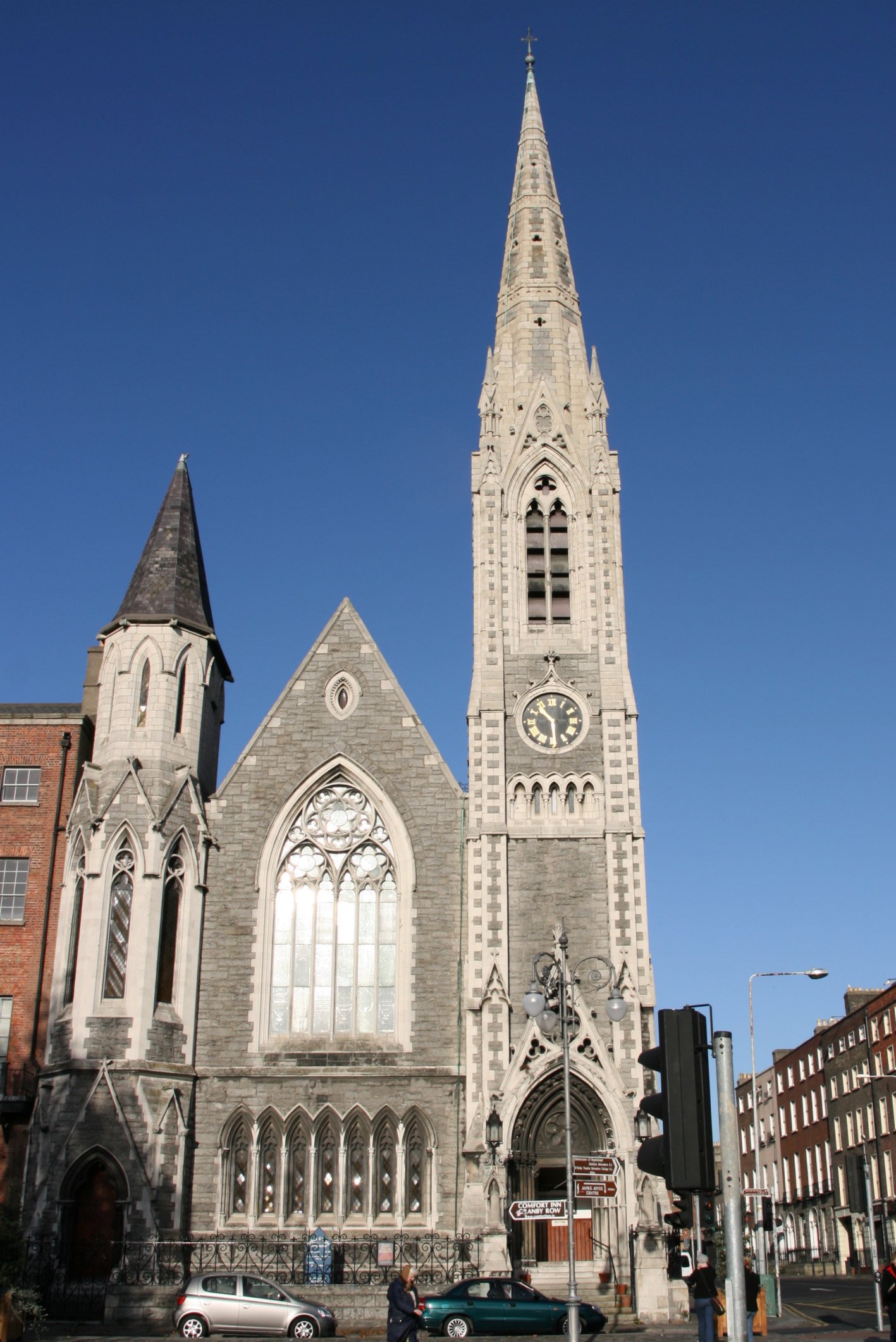
A decorated Gothic church on Parnell Square, funded by Dublin merchant Alexander Findlater and immortalized in James Joyce’s fiction.
At a glance
Abbey Presbyterian Church stands as a striking Victorian-era addition to Dublin’s ecclesiastical landscape. Its soaring spire rises 180 feet above Parnell Square, commanding attention in the city’s northside streetscape. The building exemplifies the decorated Gothic style favored during the 19th century.
History
Erected in 1864, the church was made possible through the generosity of Alexander Findlater (1797–1873), a prominent Dublin merchant and philanthropist. Findlater’s substantial funding secured the building’s construction and ensured its place in the city’s religious and cultural fabric. The church’s association with its patron proved enduring: locals came to know it colloquially as “Findlater’s Church.”
The building achieved literary immortality when James Joyce referenced it by name in two of his novels, embedding it into the texture of early 20th-century Dublin as seen through modernist fiction.
What you see
Architect Andrew Heiton of Perth, Scotland designed the structure in the decorated Gothic mode. The 180-foot spire dominates the composition, rising with characteristic Victorian verticality. The Gothic styling emphasizes pointed arches, ornamental detailing, and the visual drama typical of the period.
Cultural significance
Beyond its architectural merit, Abbey Presbyterian Church embodies the philanthropic spirit of 19th-century Dublin commerce and the intersection of faith, wealth, and urban development. Its appearance in Joyce’s novels—works fundamental to modern literature—secures its place in cultural memory far beyond Dublin’s borders.
Key facts
- Country: Ireland
- City: Dublin
- Completed: 1864
- Architect: Andrew Heiton (Perth, Scotland)
- Spire height: 180 feet (54.9 m)
- Location: Parnell Square
- Coordinates: 53.3546, -6.2639
Practical information & getting there
The church is situated on Parnell Square in Dublin’s north city center, accessible by public transport and on foot from multiple city neighborhoods. For current opening hours, services, and visiting details, contact the church directly or consult local tourism resources.
Sources & resources
Find it on the map
See this place and what’s around it →📷 Become a Cultural Heritage Online photographer
Share your photos of places: they stay published under your name as the author. The more they're seen, the more you get noticed — and soon a contest will reward the most appreciated photos.
Log in or sign up free to add a photoIs this page about you?
This page is read by travellers and heritage enthusiasts who find it on Google. Tell us how you are connected to this place and we will take it from there.