Guinea-Bissau has no UNESCO World Heritage Sites but is home to the Bijagós Archipelago — 88 islands and islets off its Atlantic coast that are a UNESCO Biosphere Reserve and one of the most significant coastal wetland and marine turtle nesting areas in West Africa. The nearest inscribed UNESCO site is the Stone Circles of Senegambia in Gambia, 260 km northeast. From Cultural Heritage Online.
Stone Circles of Senegambia, Gambia and Senegal 260 km northeast — road via Bafatá
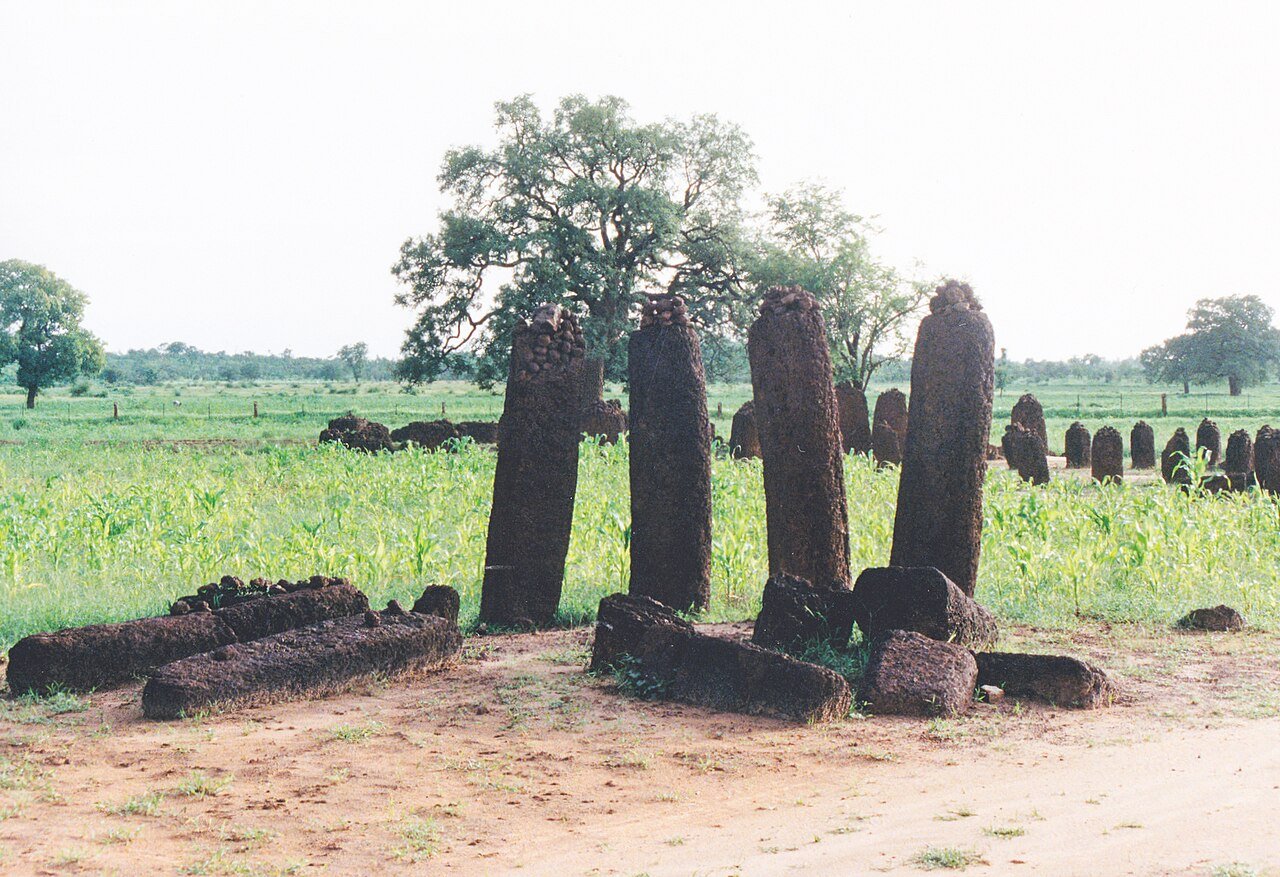
The Stone Circles of Senegambia constitute the largest concentration of stone circles in the world — approximately 1,000 monuments distributed across four major sites in a 350 km belt straddling the Gambia River in Gambia and Senegal. The circles were built between the third century BCE and the sixteenth century CE by the ancestors of the present-day Serer, Mandinka, and other peoples of the Senegambia region, using large cylindrical or polygonal blocks of laterite (a reddish iron-rich rock) that in some cases reach 2.5 metres in height and 10 tonnes in weight. The monuments are believed to be funerary — human burials are associated with most of the circles that have been archaeologically excavated. UNESCO inscribed the site in 2006.
The four main monument groups are Wassu and Kerbatch (in Gambia) and Sine Ngayène and Wanar (in Senegal). The Wassu site, approximately 260 km northeast of Bissau, is the most visited of the four groups and has a small on-site museum. The scale of the Senegambia stone circle complex — thousands of monuments built over more than a millennium across a large area — suggests a sophisticated and long-lived mortuary and commemorative tradition that was poorly understood by outside observers until twentieth-century archaeological work began to document the sites systematically.
Bijagós Archipelago, Guinea-Bissau In the Atlantic offshore from Bissau — ferry or boat from Bissau port
The Bijagós Archipelago consists of 88 islands and islets off the coast of Guinea-Bissau, formed from the ancient delta of the Geba and Corubal rivers. The archipelago is a UNESCO Biosphere Reserve and a Ramsar Wetland of International Importance. The islands support one of the most important saltwater hippopotamus populations in Africa (the hippos swim between the islands and feed on marine grass in the tidal channels), significant populations of nesting sea turtles (particularly green turtles, Chelonia mydas), West African manatees, bottlenose dolphins, and one of the largest concentrations of migratory waterbirds on the West African coast.
The Bijagó people, the indigenous inhabitants of the archipelago, have maintained a matrilineal social system, traditional animist practices, and a unique material culture including carved dugout canoes and initiation masks, despite the pressures of conversion, colonisation, and economic marginalisation since the Portuguese colonial period. The Bijagós Archipelago is on Guinea-Bissau’s Tentative List for UNESCO inscription.
Getting there from Bissau: Stone Circles at Wassu (Gambia): approximately 260 km northeast by road via Bafatá and the Gambia border crossing (4–5 hours). Bijagós Archipelago: regular ferry and boat services from Bissau port; the main islands (Bubaque, Bolama) are 2–4 hours by boat. Allow: 2 days for a Bijagós island visit; 1 day for Wassu Circles. Best for: Coastal and island wildlife; hippos in salt water; pre-colonial African archaeology.
Frequently Asked Questions
Does Guinea-Bissau have any UNESCO World Heritage Sites?
No. Guinea-Bissau has no inscribed UNESCO World Heritage Sites. The Bijagós Archipelago is on the national Tentative List and is widely considered one of the strongest potential candidates for inscription in West Africa, given its marine biodiversity, saltwater hippo population, sea turtle nesting, and the cultural significance of the Bijagó people’s traditions. A formal nomination process has not been completed.
What are the saltwater hippopotamuses of the Bijagós and why are they unusual?
The hippopotamuses of the Bijagós Archipelago are the same species as the common river hippopotamus (Hippopotamus amphibius), but they have adapted to marine and estuarine conditions — swimming between islands in saltwater channels and feeding on marine vegetation including seagrass in the tidal shallows. This is unusual behaviour for a species normally associated with freshwater rivers and lakes. The Bijagós population is estimated at approximately 1,000 animals, making it one of the largest remaining hippo populations in West Africa in a context where the species has been heavily hunted for meat and ivory throughout its range.
What do the Stone Circles of Senegambia represent?
The Stone Circles of Senegambia are believed to be funerary monuments, associated with the burial of high-status individuals across the pre-colonial societies of the Senegambia region. Archaeological excavations at several circle sites have revealed human skeletal remains, iron ornaments, and pottery beneath and around the standing stones. The circles range from a single ring to double and triple concentric ring configurations; the largest individual stones reach 2.5 metres in height and 10 tonnes in weight. The construction of over 1,000 such monuments across a 350 km belt over approximately 1,500 years implies a substantial population, significant social organisation, and persistent cultural traditions across many generations.
What is the situation of the Bijagó people today?
The Bijagó people are the indigenous inhabitants of the Bijagós Archipelago, with a population of approximately 30,000–40,000 people. They are among the few West African communities to have maintained a matrilineal kinship system in which descent, inheritance, and social identity pass through the female line. They also maintained a degree of military and political independence under colonial rule — the Portuguese found the Bijagós difficult to subjugate and did not achieve effective control until the early twentieth century. Traditional initiation ceremonies, communal fishing practices, and the production of carved canoes and masks continue, though they face increasing pressure from economic migration, evangelical Christianity, and integration into Guinean national life.
Sources
- S1 — Forrest, Joshua B. Lineages of State Fragility: Rural Civil Society in Guinea-Bissau. Ohio University Press, 2003. ISBN 978-0-8214-1490-3.
- S2 — Gallay, Alain. Les mégalithes du Sénégal et de la Gambie. Éditions Errance, 2010. ISBN 978-2-87772-421-0.
Spotted an error? Write to editorial@culturalheritageonline.com and we correct it the same day.