
Ireland’s national bagpipes, played sitting indoors with bellows strapped to the waist, produce a sweet and complex sound unlike any other bagpipe tradition.
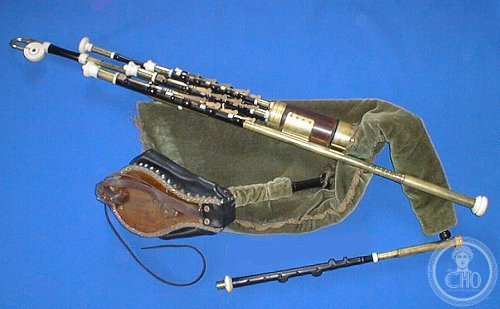
In UNESCO’s words
Uilleann piping is a musical practice which uses a particular type of bagpipe (known as the ‘uilleann’, ‘Irish’ or ‘union’ pipes) to play Irish music. It is a highly developed instrument with strong roots in tradition dating back many generations. Bearers and practitioners are dispersed throughout the world, but the greatest concentration is in Ireland and Irish communities abroad. Uilleann piping offers an important way of socializing and plays an integral role in life events such as marriages and funerals, where it provides a sense of rootedness and a connection to the past. The most highly valued method of transmission is the practice of one-to-one, master-to-student instruction, but transmission also occurs through more modern methods such as video and DVD tutorials and the internet. The most prominent group involved in safeguarding Uilleann piping is Na Píobairí Uilleann (NPU), which was founded in 1968 by pipers with a mission to stop the decline of the instrument. Through a programme of research, publications, tuition and training, the NPU has contributed to a huge increase in the use and appreciation of the instrument and its music, resulting in a flowering of the art in modern times, with more players than in any previous period.
Official description, UNESCO Intangible Cultural Heritage List — Uilleann piping
At a glance
Uilleann piping is an Irish musical practice using a distinctive type of bagpipe to play traditional Irish music. The instrument is powered by small bellows strapped to the player's body, rather than blown by mouth, which allows the musician to keep hands free for fingering. It is a highly developed instrument with deep roots in tradition, and practitioners are found worldwide, with the largest concentration in Ireland and Irish communities abroad.
Origins & history
Uilleann piping has strong roots in tradition dating back many generations, though its early history remains obscure. The instrument itself has evolved over time as a distinct practice within Irish culture. In 1968, Na Píobairí Uilleann was founded by pipers determined to stop the decline of the instrument. Through research, publications, tuition and training, the organization has contributed significantly to increased use and appreciation, resulting in more players than in any previous period.
The practice
The piper sits with the bag under one elbow and operates bellows worn around the waist and arm to maintain steady air pressure. The player's hands work three sound-producing components: the chanter, which produces melody across two octaves; three drones that sound continuously; and three regulators with keys that allow the player to create simple chords for rhythmic accompaniment. Grace notes and ornaments embellish the melody throughout performance.
Cultural significance
Uilleann piping offers an important way of socializing and plays an integral role in life events such as marriages and funerals, providing a sense of rootedness and connection to the past. Transmission occurs primarily through one-to-one, master-to-student instruction, though modern methods including video tutorials and the internet now also play a role in teaching the tradition to new generations.
Key facts
- Country: Ireland
- Inscribed: 2017
- UNESCO list: Representative List of the Intangible Cultural Heritage of Humanity
- UNESCO reference: 01264
- UNESCO vocabulary: Instrumental music; Woodwind instruments
- Map: not shown — UNESCO’s official description of this element names no locality, and a living tradition is practised across a community, not at one address.
Where to experience it
Uilleann piping thrives in Ireland and Irish communities around the world, with the greatest concentration of practitioners and bearers found throughout Ireland itself. The tradition lives in everyday social contexts—traditional music sessions, concerts, and private gatherings—where pipers perform at celebrations including marriages and funerals. Those interested in learning can seek out one-to-one instruction from experienced players, or explore modern resources including video tutorials and online platforms. Na Píobairí Uilleann, the principal organization dedicated to safeguarding the practice since 1968, offers research, publications, and training programmes that continue to strengthen the instrument's presence and foster new generations of players.
Sources & resources
- UNESCO — official element page: Uilleann piping
- UNESCO — open data record: Intangible Heritage List, reference 01264
- UNESCO — official video: UNESCO film on this element — embedded on this page
- UNESCO — official photograph: Photograph of this element — Pat McNulty — NPU, 1968
- Reference — Wikipedia (secondary): Uilleann pipes — consulted as a secondary reference, not as confirmation
- Cultural Heritage Online: Our archive and city guides

Sources
- S1 — Vallely, Fintan, ed. The Companion to Irish Traditional Music. Cork University Press, 1999. ISBN 978-1-85918-148-5.
- S2 — Breathnach, Breandán. Folk Music and Dances of Ireland. Mercier Press, 1977. ISBN 978-0-85342-509-0.
Spotted an error? Write to editorial@culturalheritageonline.com and we correct it the same day.