
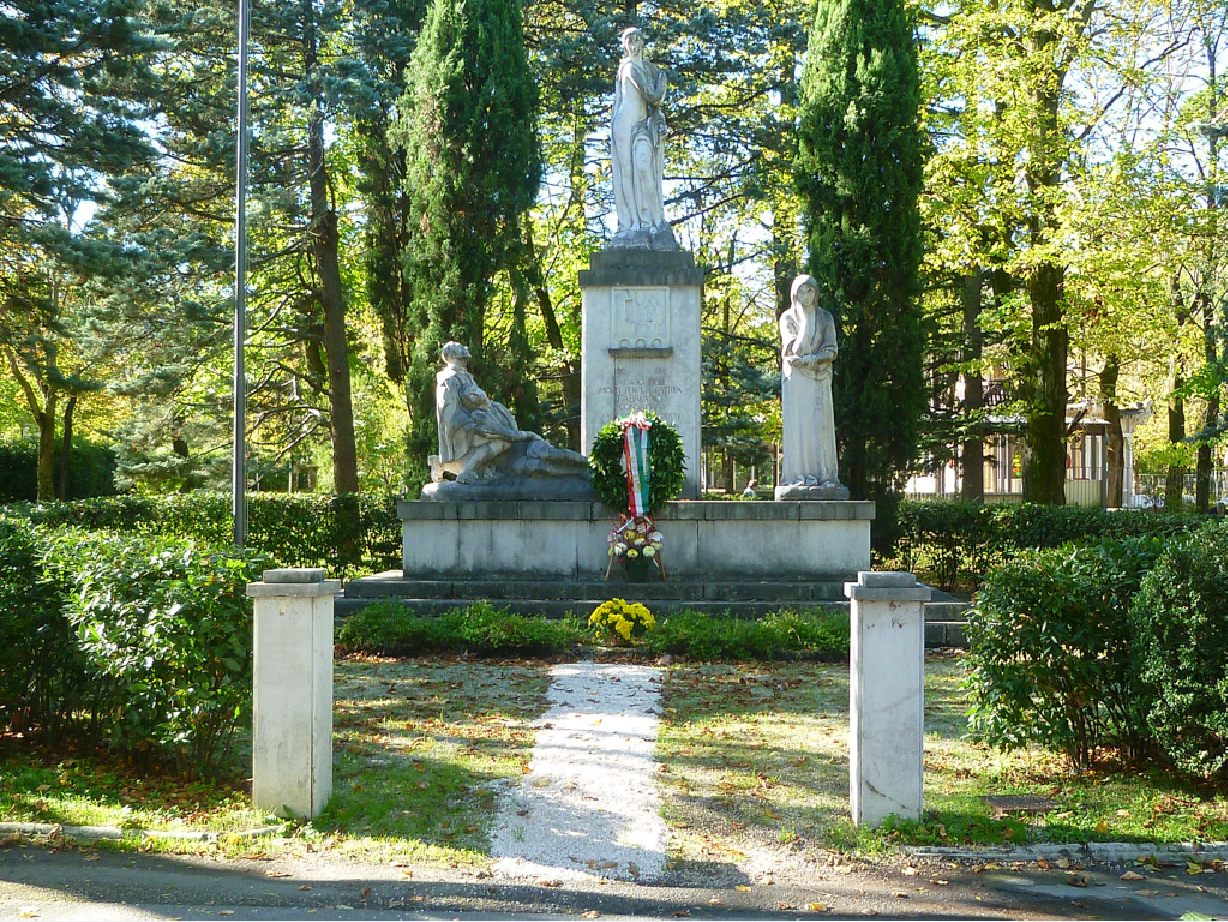
The Monumento ai Caduti in Fabriano, Ancona, is a commemorative sculpture created by Arturo Dazzi in 1926. This work exemplifies the tradition of public monuments erected across Italy during the interwar years to honour those who died in conflict.
Dazzi (1881–1966) was a Carrara-born sculptor and painter who established himself through academic training and significant public commissions. Following early recognition—including a prize at the 1915 San Francisco international exhibition—he received major commissions for celebratory sculpture in the 1920s and 1930s. His practice extended beyond autonomous monuments to collaborations with architects such as Marcello Piacentini on monumental public buildings and commemorative structures throughout Italy.
About Arturo Dazzi
Dazzi trained at the Accademia di Belle Arti di Carrara under sculptor Lio Gangeri and won the Pensionato Artistico Triennale Prize in 1901. By the early twentieth century, he had secured a position among Italy’s leading sculptors, executing works for significant civic and institutional contexts alongside architectural partnerships.
Details
- Creator: Arturo Dazzi, Italian sculptor and painter (1881–1966)
- Year: 1926
- Location: Fabriano, province of Ancona, Marche region
- Type: Commemorative monument
Frequently asked questions
Who created this monument?
The Monumento ai Caduti was designed by Arturo Dazzi, an Italian sculptor born in Carrara who received commissions for major public works throughout the 1920s and 1930s.
When was it completed?
The monument was created in 1926.
What was Dazzi’s broader sculptural practice?
Beyond commemorative monuments, Dazzi collaborated with prominent architects including Marcello Piacentini on architectural decoration and public buildings, establishing himself as a leading practitioner of interwar Italian sculpture.
Sources
- S1 — Panzetta, Alfonso. Nuovo dizionario degli scultori italiani dell'Ottocento e del primo Novecento. AdArte, 2003. ISBN 978-88-422-1158-7.
- S2 — Pontiggia, Elena. Il Novecento Italiano. Abscondita, 2003. ISBN 978-88-8416-048-5.
Spotted an error? Write to editorial@culturalheritageonline.com and we correct it the same day.


