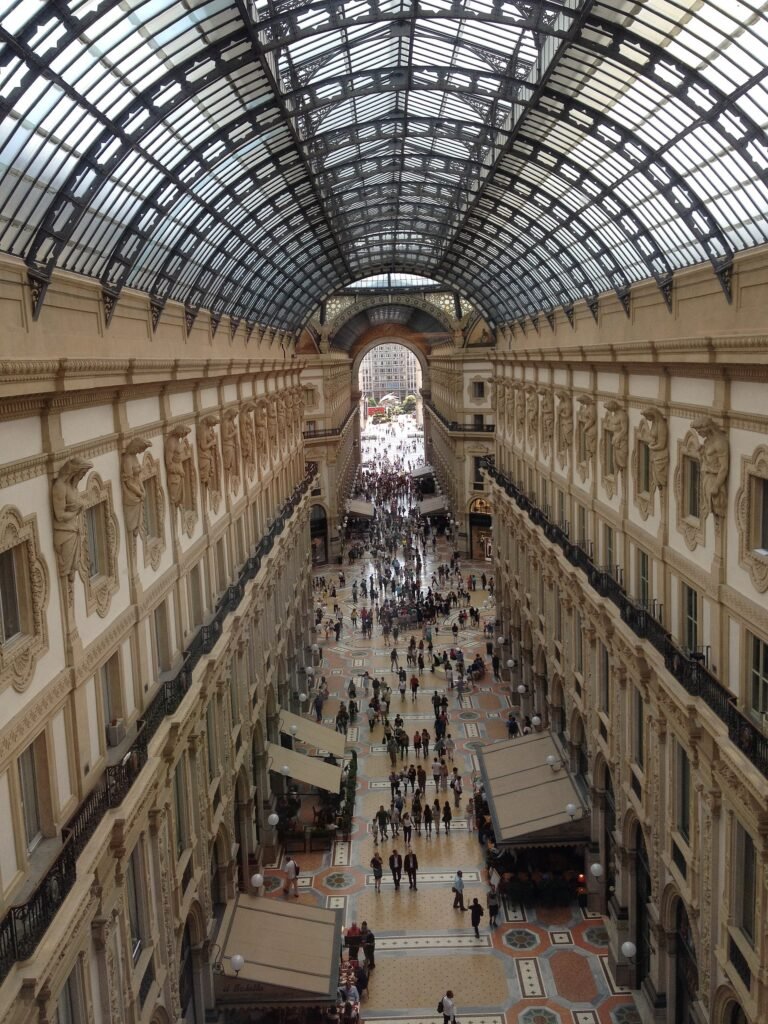
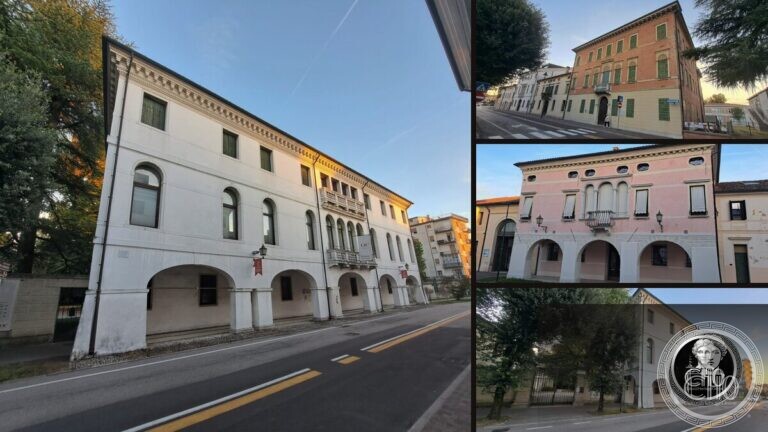
A conference delegate spends more hours outside the conference room than inside it, and those hours are where the city wins or loses the next conference. MICE tourism is usually discussed as logistics: rooms, seats, catering, transport. The part that is remembered is the programme around the sessions.
1. What MICE means
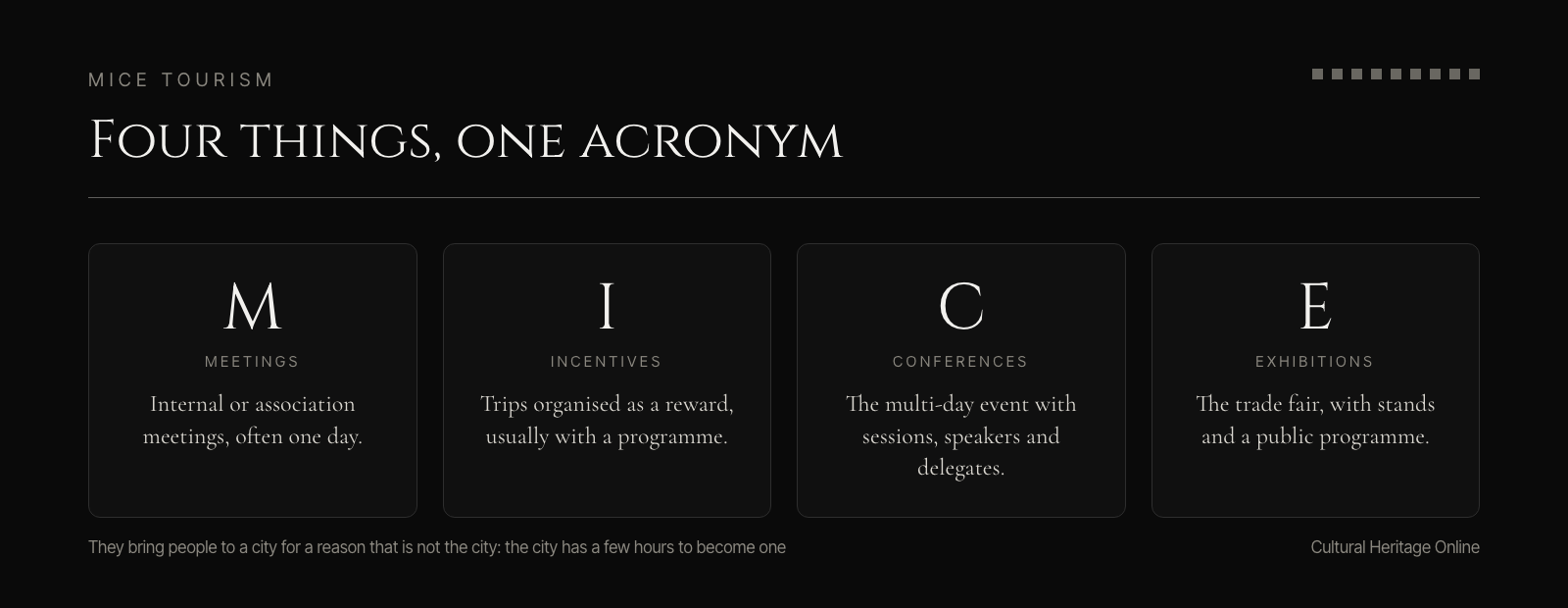
Four things, one acronym:
- meetings: internal or association meetings, often one day;
- incentives: trips organised as a reward, usually with a programme;
- conferences: the multi-day event with sessions, speakers and delegates;
- exhibitions: the trade fair, with stands and a public programme.
The four share the same problem: they bring people to a city for a reason that is not the city, and the city has a few hours to become the reason to come back.
2. The delegate’s free hours
Between the last session and the flight, there is a window: an afternoon, an evening, a morning. What fills it is not another conference room. It is a walk, a museum, a building, a dinner in a place with a history.
That window is the market of the venues and the guides who organise the programme: a guided visit to the collection, a walk through the district around the hotel, an opening at the museum, a route with a map that delegates can follow alone. It is also the part the organiser is judged on: a delegate who remembers the evening recommends the conference.
3. The programme as a product
A programme for delegates is a product with four parts:
- a set of options, short and long, for the free hours;
- a page with dates, places, duration and language;
- a booking or a registration that does not require a phone call;
- a programme that can be printed and followed without a guide, for the part that is self-guided.
The last point is the one that scales: the self-guided route serves the delegates who arrive late, the partner who cannot attend, the group that splits. A programme that cannot be found online is a programme that does not exist for the delegate who arrives tomorrow.
4. Why cities compete on it
For a city, MICE is an economic engine with a short season and a long memory: a delegate who spends an afternoon in a heritage district is a visitor who may return with a family.
For a venue, the incentive is more direct: the conference brings a hundred people to the door, and the programme is how they come in. A place with a documented page, a route and a programme is the one the organiser can put in the delegate’s folder. A venue that can be linked from that folder is a venue the organiser can sell to the next client, and the one after.
5. What the archive gives
Publishing the programme here is free, with no ceiling: the events go into the archive, onto the map and onto the city pages, where they can be found by the people who are planning the trip. 5,635 events are already published (figures measured on 22 October 2026).
The Organiser plan, at 149 dollars a year, adds the organiser page, the whole programme in one place, and the link to your ticket page. For a DMC or an association that organises the programme around a conference, it is the page the organiser can link in the delegate’s folder, and it stays online after the date, with a date and a place.
Publish the programme with a free account, and keep it together with the Organiser plan, 149 dollars a year: /organiser/