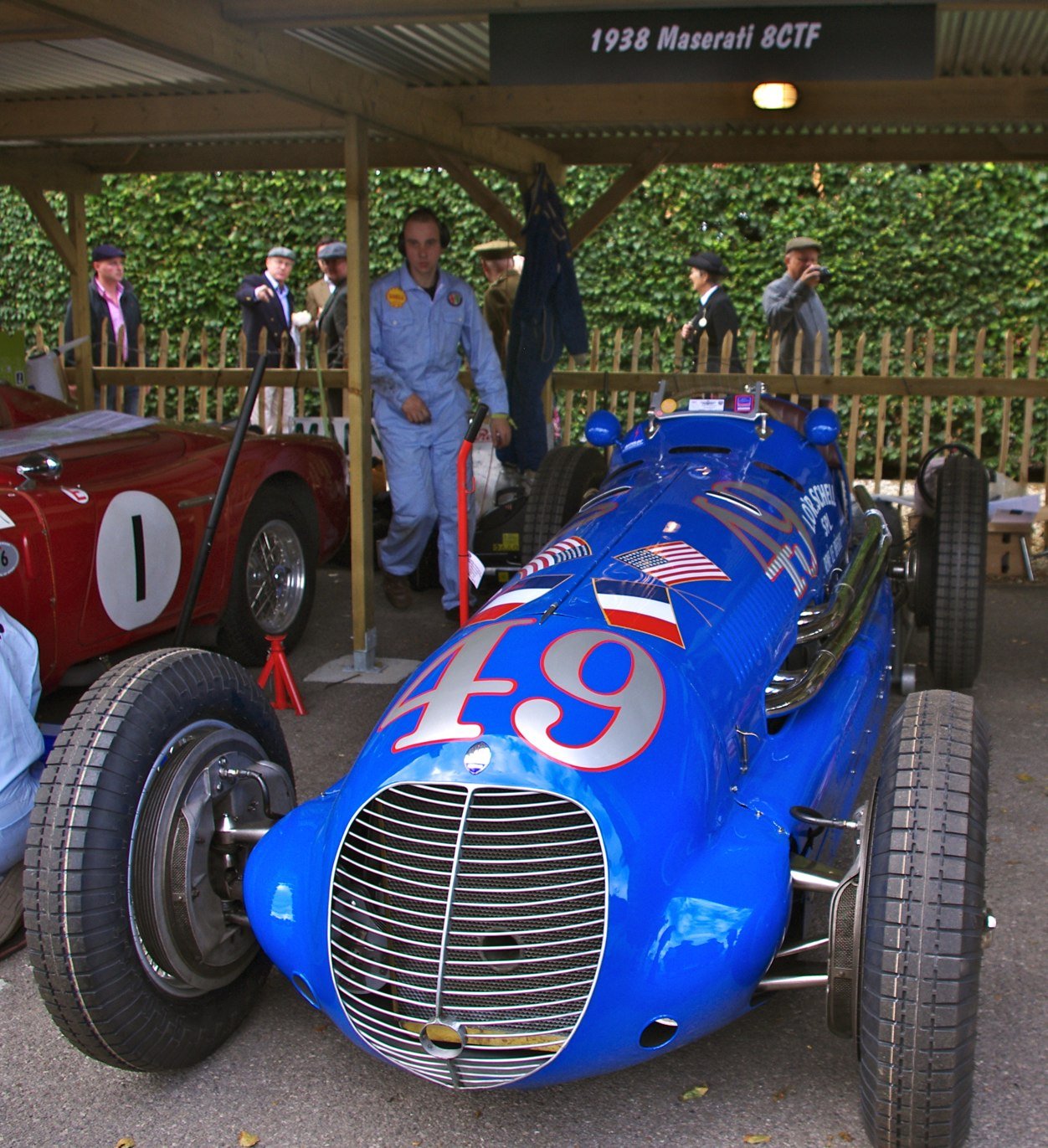
The Maserati 8CTF, a single-seat competition car built between 1938 and 1939, became the only Italian car to win the Indianapolis 500—excluding the Dallara, which supplied chassis but not engines. The vehicle debuted on 15 May 1938 at the Grand Prix of Tripoli with strong performance but ultimately failed to finish the race.
Engineering Innovation
The 8CTF’s principal innovation was its independent fuel system for each set of four cylinders, featuring two Roots-type superchargers. By 1939, following successive improvements, the engine produced 366 horsepower. Another distinctive feature was its oil tank, which functioned as the central crossmember of the chassis.
Racing Success and Historical Context
Driven by Wilbur Shaw, the 8CTF—nicknamed the Boyle Special—secured victories in the Indianapolis 500 in both 1939 and 1940, establishing itself as one of the era’s most competitive racing machines. However, the escalation of the Second World War significantly reduced the racing calendar, which compromised the vehicle’s further development and limited its competitive opportunities.
Frequently asked questions
How many times did the Maserati 8CTF win the Indianapolis 500?
The 8CTF, driven by Wilbur Shaw and nicknamed the Boyle Special, won the Indianapolis 500 twice, in 1939 and 1940.
What made the 8CTF’s engine design unique?
The car featured an independent fuel system for each set of four cylinders with two Roots-type superchargers, and its oil tank served as the central crossmember of the chassis.
Why did the 8CTF’s development end prematurely?
The approach of the Second World War significantly reduced the racing calendar, compromising the vehicle’s further development.