

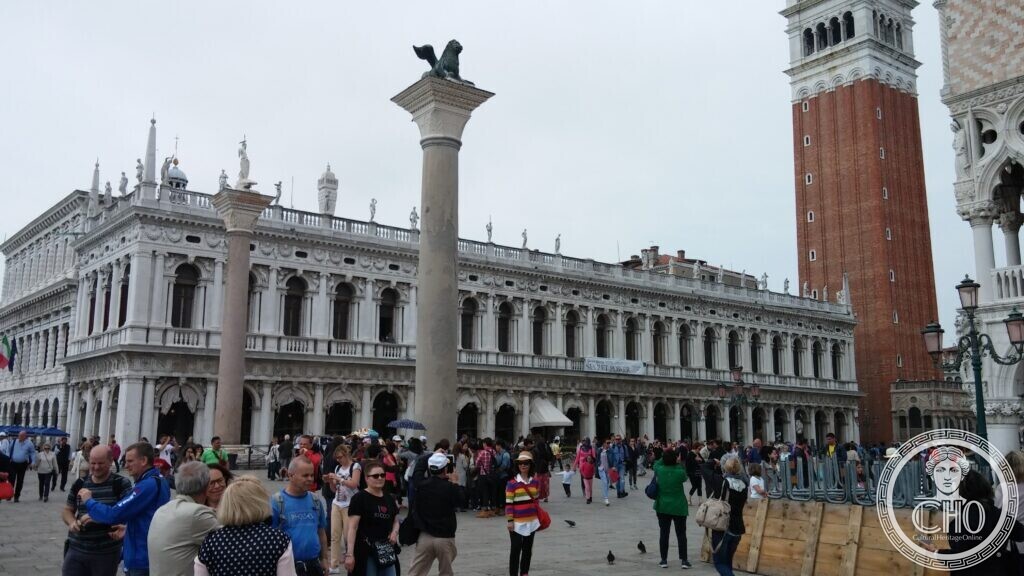
One of Italy’s largest libraries and Venice’s most important cultural institution, housing over one million volumes, thousands of manuscripts, and a priceless collection of Greek texts, Venetian editions, and Renaissance masterpieces.
At a glance
The Marciana Library ranks among Italy’s greatest repositories of books and manuscripts. Located in Piazza San Marco, it holds approximately one million volumes, 13,000 manuscripts, and more than 2,800 incunabula. The institution depends on the Ministry for Cultural Heritage and Activities and serves scholars worldwide. Part of the building occupies the former Mint of the Republic of Venice, designed by Jacopo Sansovino.
History
The library’s foundation rests on Cardinal Bessarione’s 1468 donation of roughly 1,000 manuscripts and printed works to Venice. Francesco Petrarca had envisioned a public library for the city decades earlier. Venice accepted Bessarione’s gift and in 1537 began construction of the Palazzo della Libreria using Sansovino’s designs. A structural collapse in 1545 briefly halted progress, but the building was completed by Vincenzo Scamozzi in 1588.
Over centuries, the collection expanded through monastery transfers and a 1603 Venetian law requiring one copy of each published book. Napoleonic-era suppressions of religious institutions further enriched holdings. The library moved to the Doge’s Palace in 1811 before returning to its historic location in 1924. Since 1996, digitization and cataloging projects have continued modernizing the collection.
What you see
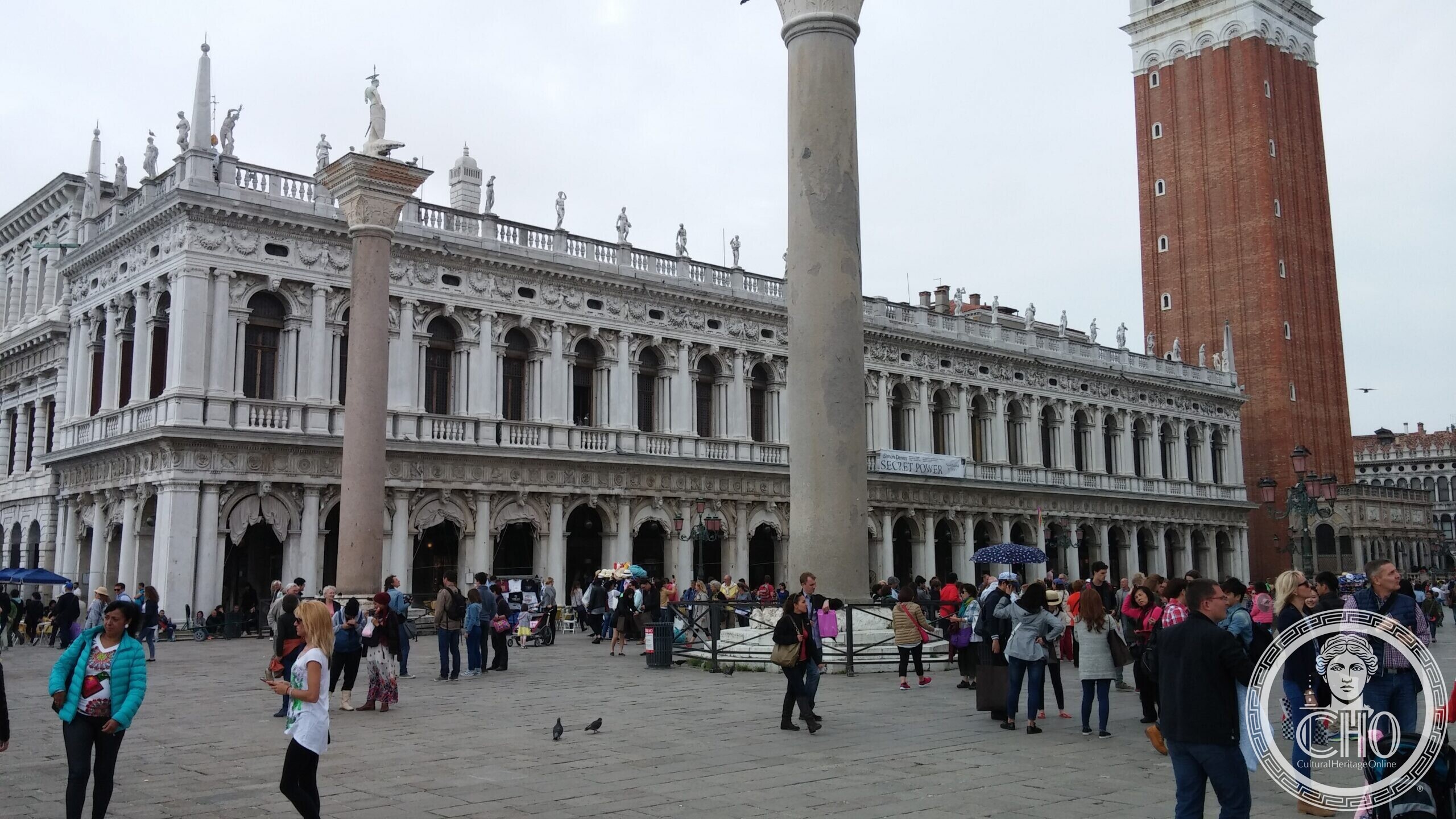
The Palazzo della Libreria represents Renaissance classicism adapted to Venetian aesthetics. Sansovino’s design harmonizes noble classical forms with local architectural character. Interior spaces feature elaborate coffered ceilings, sculptural decoration, and painted embellishments. Artists including Titian, Paolo Veronese, Alessandro Vittoria, Tintoretto, and Battista Franco contributed to the ornamentation, making the building itself a work of art.
Cultural significance
The Marciana represents a watershed moment in public access to learning. Born from a cardinal’s vision and refined through centuries of acquisition, it preserves unparalleled documentation of Greek culture, Venetian history, and Renaissance printing. The collection of Aldine editions—books produced by the legendary Aldine press—stands as testimony to Venice’s role as Europe’s printing capital. Today, the library anchors Venice’s intellectual life and attracts researchers from across the globe.
Key facts
- Address: Piazza San Marco, 7, 30124 Venice
- Coordinates: 45.4333365, 12.3393987
- Phone: 041 240 7211
- Website: marciana.venezia.sbn.it
- Holdings: 1 million volumes, 13,000 manuscripts, 2,800+ incunabula
- Designed by: Jacopo Sansovino (1537); completed by Vincenzo Scamozzi (1588)
- Founded: 1468 (Cardinal Bessarione’s donation); construction began 1537
Practical information
Opening hours and admission policies are not listed; check the official website or call ahead. The library serves researchers and scholars; access may require advance permission or registration. Digitized materials and catalogs are increasingly available online.
Getting there
The Marciana occupies Palazzo della Libreria in Piazza San Marco, Venice’s principal square. Water buses serve the Piazza San Marco stop. The library also extends into the adjacent Fabbrica della Zecca (Mint building), also designed by Sansovino. Walking from any waterfront vaporetto stop to the piazza takes ten minutes or less.
Sources & resources
Photo gallery
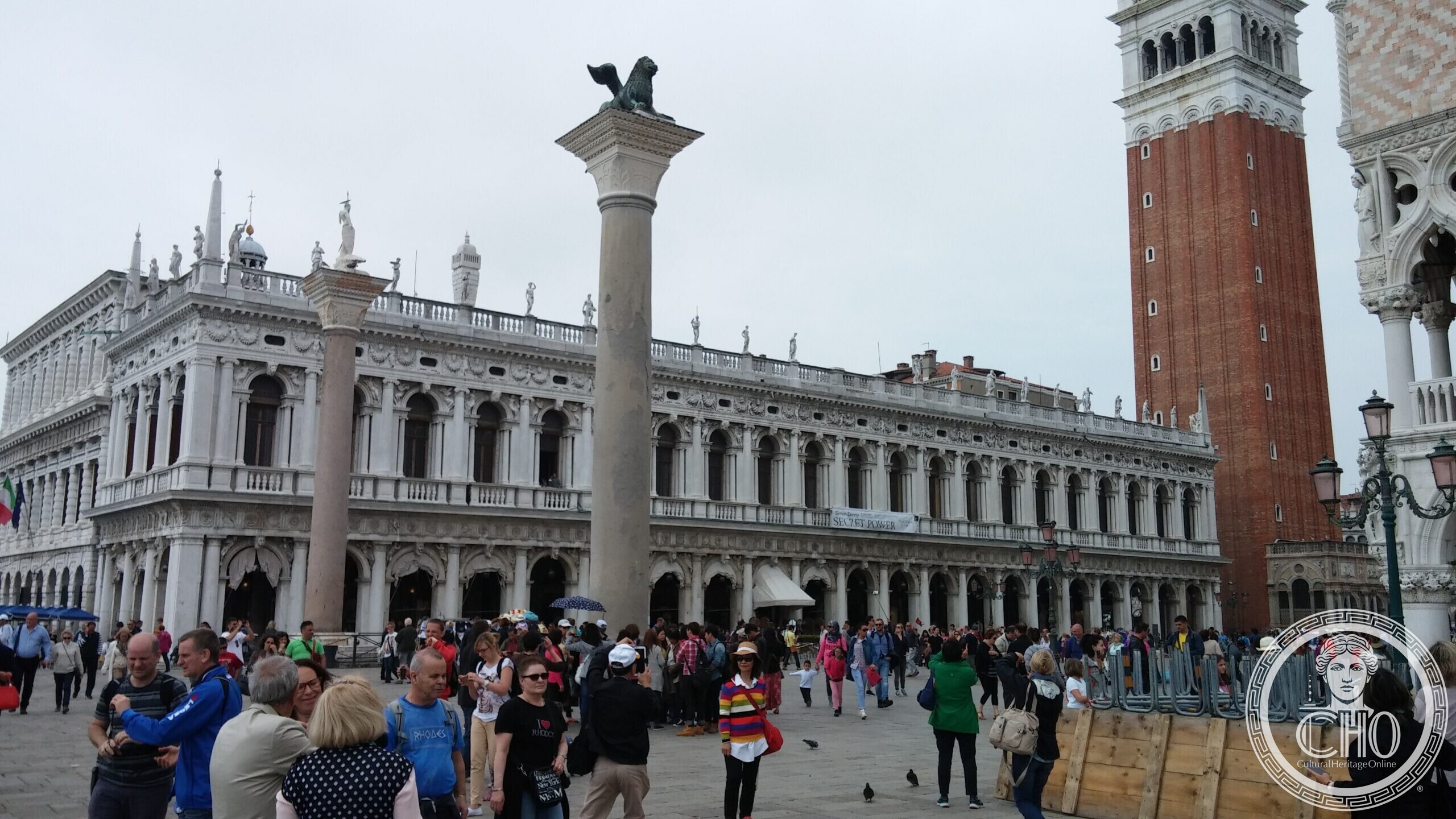
Photographs contributed by a Cultural Heritage Online member.
Find it on the map
See this place and what’s around it →Events here — now on & upcoming
- Feast of Saint Mark the Evangelist — April 2525 Apr 2027See the event →
📷 Become a Cultural Heritage Online photographer
Share your photos of places: they stay published under your name as the author. The more they're seen, the more you get noticed — and soon a contest will reward the most appreciated photos.
Log in or sign up free to add a photoIs this page about you?
This page is read by travellers and heritage enthusiasts who find it on Google. Tell us how you are connected to this place and we will take it from there.