

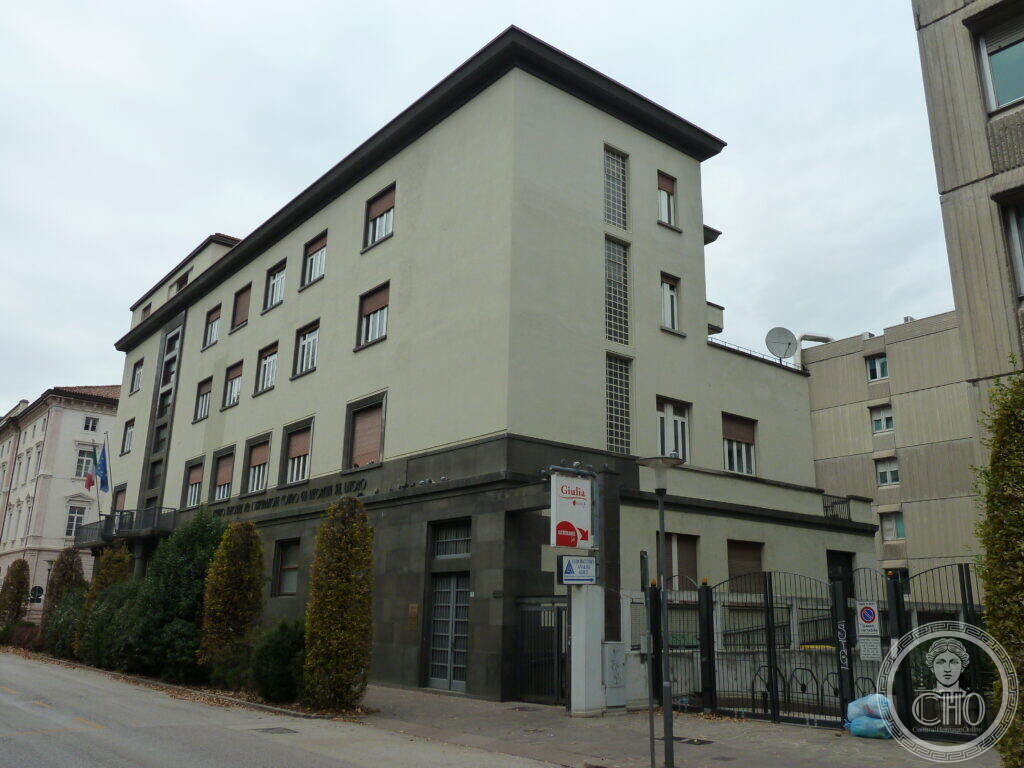
The former INAIL provincial headquarters stands at the corner of Via Gazzoletti and Via Vannetti, a composed example of the classicising, anti-decorative architecture promoted in Italy in the late 1930s.
At a glance
The building occupies a central corner site in Trento, at Via Gazzoletti 1/3. It was realised in 1938 to house the INAIL offices, on a design by the Bergamasque engineer Ernesto Suardo, and was partially rebuilt in 1948. Patrimonio del Trentino S.p.a. acquired the property in 2009 and lists it among its heritage assets, with a planned future use as administrative offices.
Key facts
- Where: Via Gazzoletti 1/3, Trento
- What: Palace
- When: 1938; partially rebuilt 1948
- GPS: 46.0719, 11.1221 · Open in Google Maps
History
The palace was built in 1938 as the Trento seat of INAIL, the national institute for insurance against workplace accidents. The design was commissioned from Ernesto Suardo, an engineer from Bergamo. The building was partially reconstructed in 1948, suggesting damage during the war years, though the sources found do not state the cause directly.
In 2009 the property was purchased by Patrimonio del Trentino S.p.a., the heritage company of the autonomous province. A 2013 report in the local press recorded that INAIL had accepted a request from the provincial council to vacate the palace, which the council intended to use for its political groups and council bodies. At that time INAIL was seeking a new provincial headquarters, with two purchase offers under consideration.
The FAI, Italy’s national trust, notes that the palace houses two tempera paintings by Gino Pancheri depicting agricultural and mining work scenes. Pancheri, born in Trento in 1905, was active in the region during the 1930s and died in 1943 from wounds suffered in the bombing of Trento on 2 September of that year.
What you see
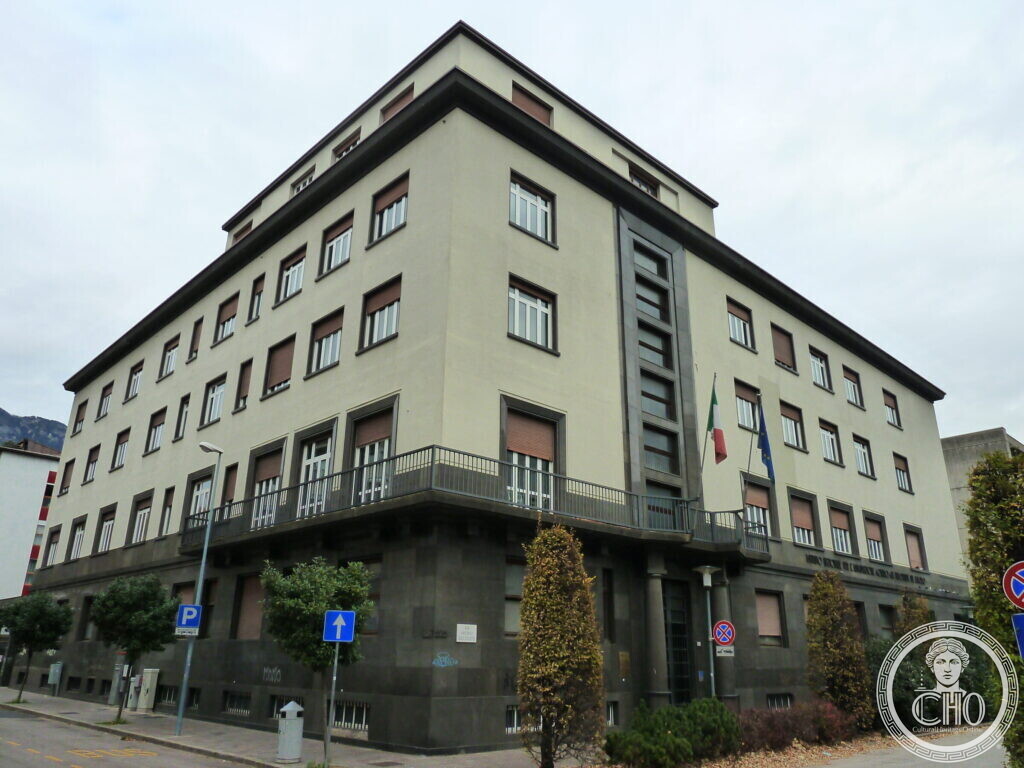
The photograph shows a corner block with a pale, light-green upper facade above a darker stone base. A continuous balcony runs along the lower part of the upper section, following the corner. The ground floor is clad in dark stone, with a large entrance gate visible on Via Gazzoletti. The building carries the word «Giulia» and the letters «INAIL» on its exterior. The composition is sober and symmetrical, with little applied ornament, reflecting the solemn, classicising approach described in the property record.
Do you know more about this place?
If you know a date, a name, a document, a plaque or a photograph that tells its story, write to Sofia through the contact page. What arrives with a source goes into this page, with your name as the contributor.
Nearby
- Palace of the Autonomous Province of Trento — the provincial government seat, just a short walk away
- Museum in the Buonconsiglio Castle — the city’s main castle and museum, nearby
Gallery
Sources
- Patrimonio del Trentino S.p.a., Palazzo INAIL – Patrimonio del Trentino: construction date, architect, location, partial reconstruction, acquisition.
- FAI – Fondo per l’Ambiente Italiano, PALAZZO INAIL | Luogo FAI: presence of two tempera paintings by Gino Pancheri; biographical details of the artist.
- TrentoToday, Trento, Sedi consiliari nel palazzo Inail, ma prima serve una nuova sede: 2013 plans for council use; INAIL’s pending departure.
- Gazzetta Ufficiale della Repubblica Italiana, Avviso di rettifica – INAIL Direzione provinciale di Trento: INAIL address at Via Gazzoletti n. 1; 2014 property search.
- Stefano Vigolo, photographs and notes to the editorial staff (2026): identification of the subject and the site visit coordinates. Not a published source.
Find it on the map
See this place and what’s around it →
Advertisement. Pictured, from the Cleveland Museum of Art (CC0) and not for sale: Latz commode, Meissen group, Paul Storr tureen. How we handle this
📷 Become a Cultural Heritage Online photographer
Share your photos of places: they stay published under your name as the author. The more they're seen, the more you get noticed — and soon a contest will reward the most appreciated photos.
Log in or sign up free to add a photoIs this page about you?
This page is read by travellers and heritage enthusiasts who find it on Google. Tell us how you are connected to this place and we will take it from there.