

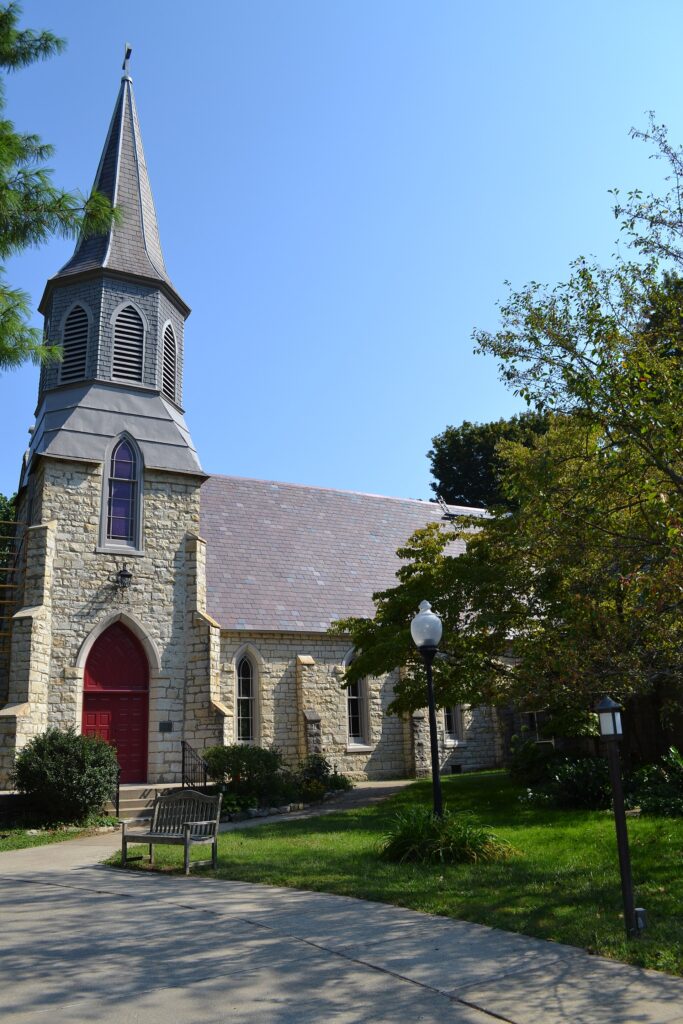
A small Gothic Revival church built in 1869 from native limestone, based on sketches of a 12th-century English country church.
At a glance
Saint James’ Episcopal Church is a historic church in Pewee Valley, Kentucky. It was completed in 1869 and added to the National Register of Historic Places in 1985. The cost of construction was $4,000, a modest sum even for the period.
History
The design came from sketches made by Kentucky Bishop Benjamin Bosworth Smith. During a trip to England, the bishop drew a 12th-century country church, and those drawings guided the architect. That architect was William Henry Redin, who lived from 1822 to 1904. The congregation first occupied the building in 1869.
In 1908, the congregation needed a rectory. To raise funds for the new building, they sold 14 acres from the original 20-acre site.
What you see
Native Pewee Valley limestone gives the church its character. The stone was quarried locally and shaped into a Gothic Revival form. Pointed openings and a clear vertical emphasis mark the style. The building sits on a reduced parcel of land, six acres remaining after the 1908 sale.
Cultural significance
The church earned a place on the National Register of Historic Places in 1985. Its connection to Bishop Smith and the direct inspiration from English medieval architecture set it apart in the region.
Key facts
- Country: United States
- City: Pewee Valley, Kentucky
- Coordinates: 38.3131, -85.4844
- National Register of Historic Places: 1985
Practical information & getting there
Saint James’ Episcopal Church stands in Pewee Valley, Kentucky, near Louisville. The coordinates are 38.3131, -85.4844. Visitors should check with the parish for opening hours and service times.
Sources & resources
Find it on the map
See this place and what’s around it →📷 Become a Cultural Heritage Online photographer
Share your photos of places: they stay published under your name as the author. The more they're seen, the more you get noticed — and soon a contest will reward the most appreciated photos.
Log in or sign up free to add a photoIs this page about you?
This page is read by travellers and heritage enthusiasts who find it on Google. Tell us how you are connected to this place and we will take it from there.
This entry stays online and free either way — and a free account lets you add to it yourself.