

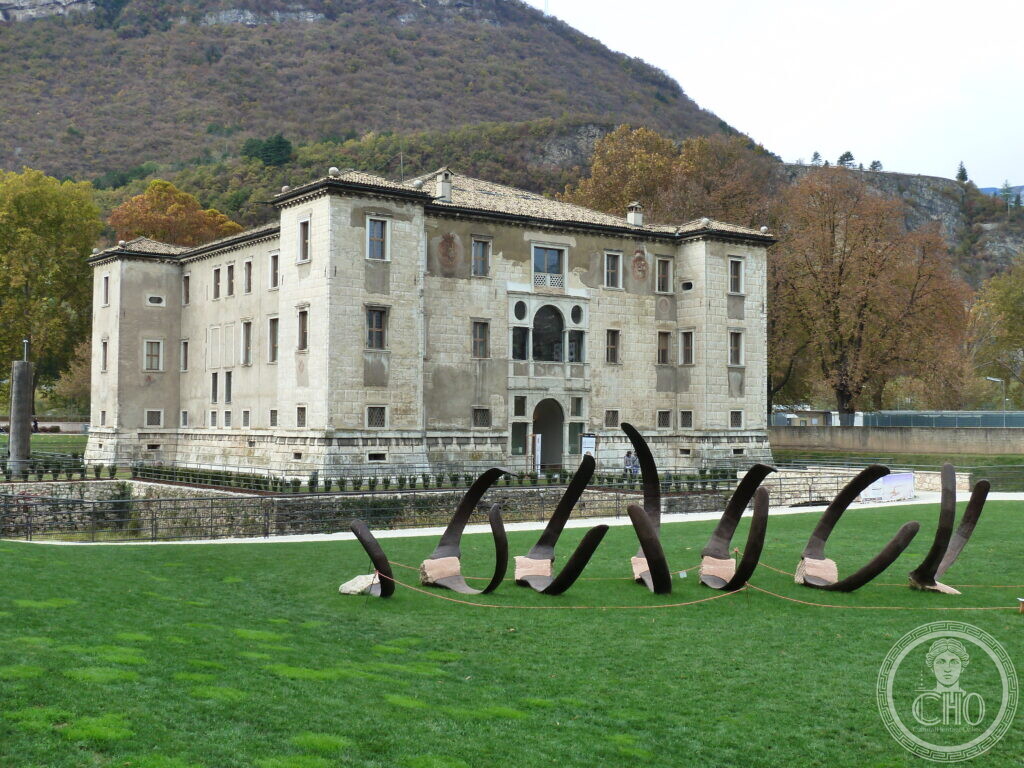
A sixteenth-century suburban villa-fortress near the Adige river in Trento, once the summer residence of the Madruzzo family and now a venue for exhibitions that bring art and science together.
At a glance
Palazzo delle Albere stands at Via Roberto da Sanseverino 43, close to the MUSE science museum on the northern edge of the Le Albere district. It is an ancient Renaissance villa-fortress, square in plan with four corner towers, and today hosts temporary exhibitions and cultural events managed jointly by MUSE and the Mart.
Key facts
- Where: Via Roberto da Sanseverino, 43, Trento
- What: Palace
- When: Built between the third and fourth decade of the sixteenth century
- GPS: 46.0632, 11.1140 · Open in Google Maps
History
The palace was built for Gaudenzio Madruzzo, father of Cristoforo Madruzzo, the bishop of Trento at the time of the Council. Its design is attributed to the military engineer Francesco Chiaramella da Gandino, and construction can be placed between the third and fourth decade of the sixteenth century. The building served as the summer residence of the noble Madruzzo family until 1659 and was originally known as Villa delle Albere, after the double row of poplars that lined the approach to it. A fire in 1796 marked the start of its decline, and the construction of the adjacent railway from 1858 altered its setting further. It was later abandoned and used as a farm building, until the provincial government of Trento bought it in 1969 and carried out a restoration completed in 1978. Since 1981 it has been used as a space for modern and contemporary art, and in 1987 it became the first seat of the Mart. The museum continued its activity there until 2010, when the building closed for renovation works.
What you see
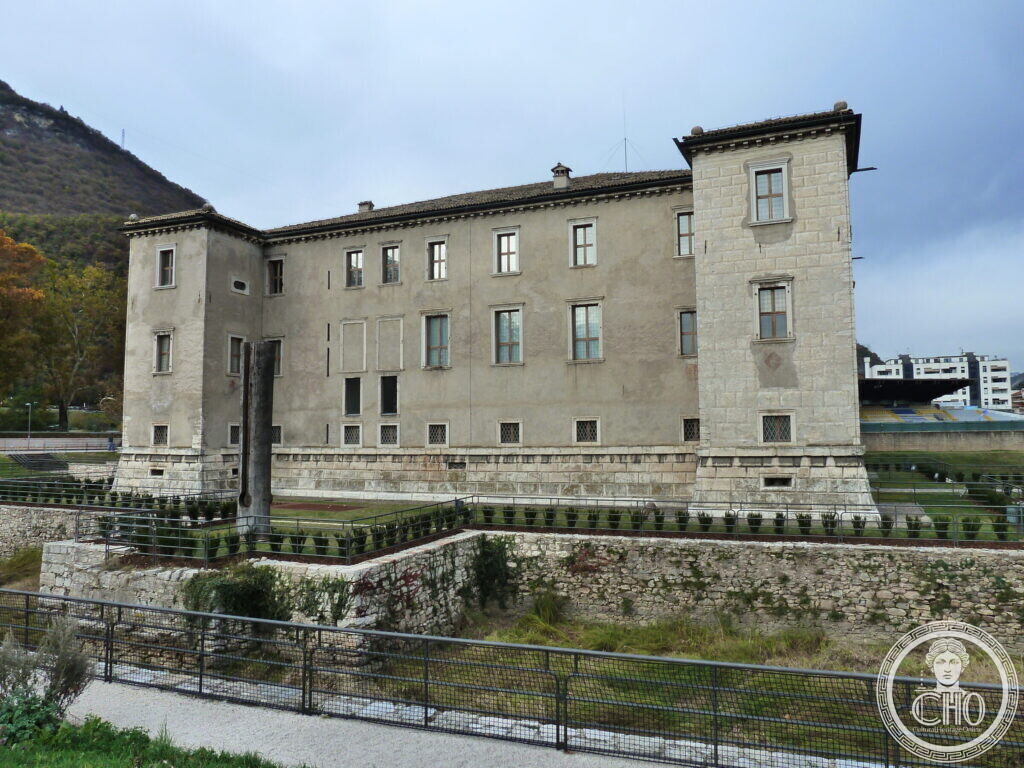
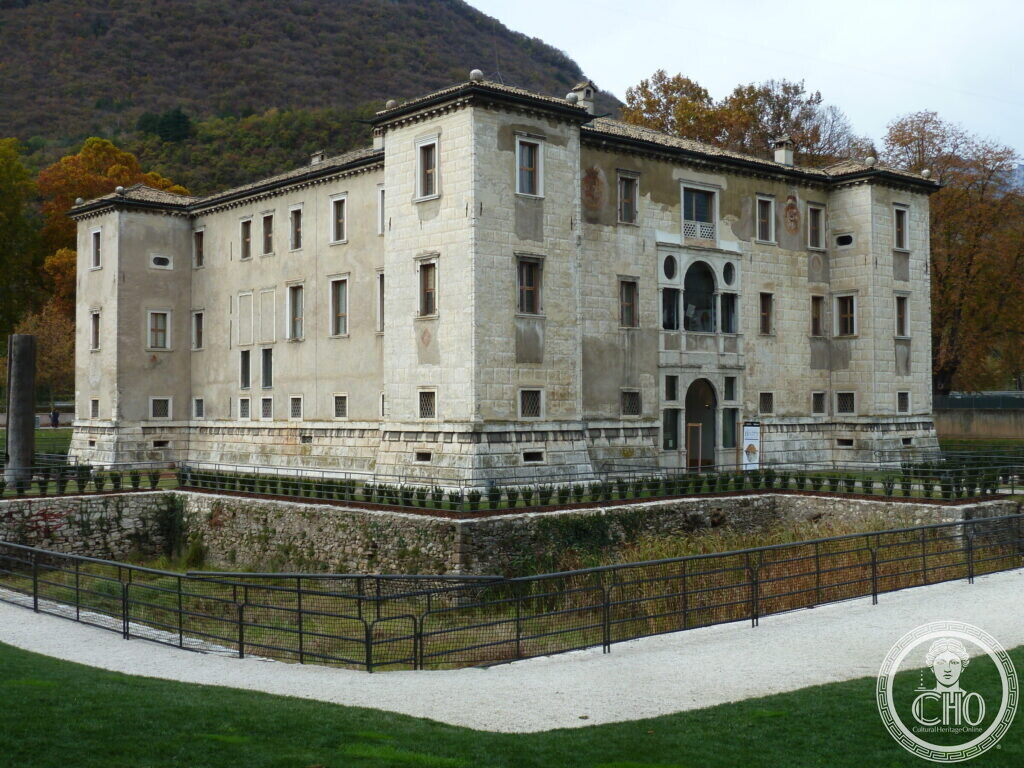
The photographs show a large stone palace with a square, fortress-like form. In the main view, a lawn in front of the palace holds several dark metal sculptures shaped like anchors. A side elevation is visible behind a low stone retaining wall with a wire fence and a gravel path. Another view shows the main facade across a sunken walled courtyard, enclosed by fencing and green grass. The building is square in plan with four corner towers, combining the character of a villa and a fortress.
Do you know more about this place?
If you know a date, a name, a document, a plaque or a photograph that tells its story, write to Sofia at sofia@culturalheritageonline.com or through the contact page. What arrives with a source goes into this page, with your name as the contributor.
Nearby
- No nearby place cards yet.
Gallery
Sources
- Muse – Museo delle Scienze di Trento, Palazzo delle Albere | Muse – Museo delle Scienze di Trento: current address, opening hours, and description as an ancient Renaissance villa-fortress and summer residence of the Madruzzo family until 1659
- Mart, Il Mart a Palazzo delle Albere: construction period and history, the name Villa delle Albere, the role of Gaudenzio Madruzzo and Francesco Chiaramella, the fire of 1796, the restoration completed in 1978, and the building’s use as the first seat of the Mart from 1987 until its closure in 2010
- Visit Trento, Palazzo delle Albere – TRENTO: confirmation of the building as a Renaissance villa-fortress and summer residence of the Madruzzo family until 1659, and its current use as a venue for exhibitions and events
- Trentino Cultura, Palazzo delle Albere – Trentino Cultura: construction between the third and fourth decade of the sixteenth century, the square plan with four corner towers, and the painter Marcello Fogolino’s attributed frescoes
- Renzo Piano Building Workshop, MUSE and “Le Albere” area: location of Palazzo delle Albere on the northern edge of the Le Albere district, described as a Renaissance villa-fortress
- Stefano Vigolo, photographs and notes to the editorial staff (2026): identification of the subject and the location. Not a published source
Find it on the map
See this place and what’s around it →📷 Become a Cultural Heritage Online photographer
Share your photos of places: they stay published under your name as the author. The more they're seen, the more you get noticed — and soon a contest will reward the most appreciated photos.
Log in or sign up free to add a photoIs this page about you?
This page is read by travellers and heritage enthusiasts who find it on Google. Tell us how you are connected to this place and we will take it from there.