
Second Nature: Japanese Rinpa Paintings from the Gitter-Yelen Collection — New Orleans Museum of Art, 2 October 2026 – 14 February 2027
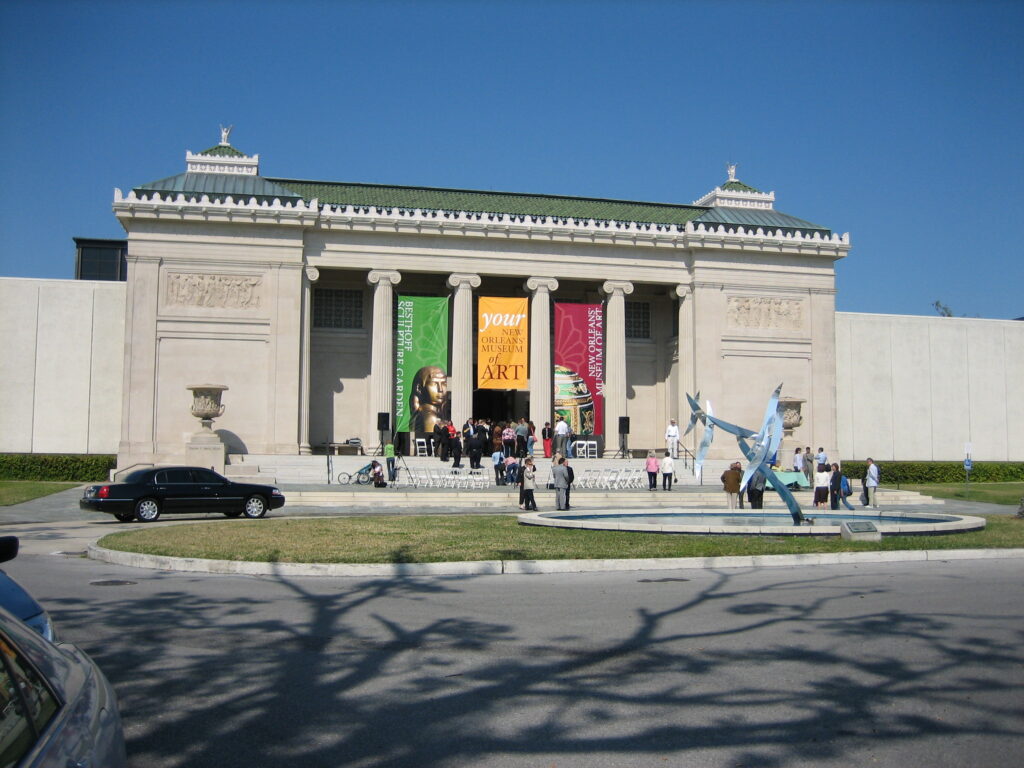 Photo: Infrogmation of New Orleans, via Wikimedia Commons, CC BY 2.5
 Rinpa is one of the most distinctive schools of Japanese painting, a lineage rather than a workshop, passed from master to admirer across the Edo period (1615–1868) and beyond. Its artists joined specialised ink techniques to bright, many-coloured palettes and made the natural world their subject, using seasonal motifs as a kind of symbolic herbarium that stood for the passing of time and the range of human feeling.
Second Nature at the New Orleans Museum of Art presents nearly 60 works, drawn mainly from the Gitter-Yelen Collection and completed by the museum’s own Japanese holdings. The generations are all here: Hon’ami Kôetsu (1558–1637) and Tawaraya Sôtatsu (c. 1600–1640), who began the tradition; Ogata Kôrin (1658–1716), who gave it its name; Sakai Hôitsu (1757–1828), Suzuki Kiitsu (1796–1858) and Nakamura Hôchû (d. 1819), who revived it in Edo; and Kamisaka Sekka (1866–1942), who carried it into the age of Art Nouveau, with which it shares more than a passing resemblance. Hanging scrolls, folding screens, fan paintings, handscrolls and album leaves are all represented.
The exhibition is curated by Yukio Lippit of Harvard University and organised by the New Orleans Museum of Art, with support from the Blakemore Foundation.
Practical details
- Dates: 2 October 2026 – 14 February 2027
- Where: New Orleans Museum of Art, One Collins C. Diboll Circle, City Park, New Orleans, LA 70124, United States
- Organised by: New Orleans Museum of Art; curator Yukio Lippit, Harvard University
- Admission: through the museum’s ticketing at my.noma.org
Cultural Heritage Online lists this exhibition for readers who follow the Japanese sources of European Art Nouveau. Sekka’s generation worked in the same decades as the Paris and Vienna designers who collected Japanese prints, and the Rinpa line is the clearest place to see what they were looking at.
📷 Become a Cultural Heritage Online photographer
Share your photos of events: they stay published under your name as the author. The more they're seen, the more you get noticed — and soon a contest will reward the most appreciated photos.
Log in or sign up free to add a photo