
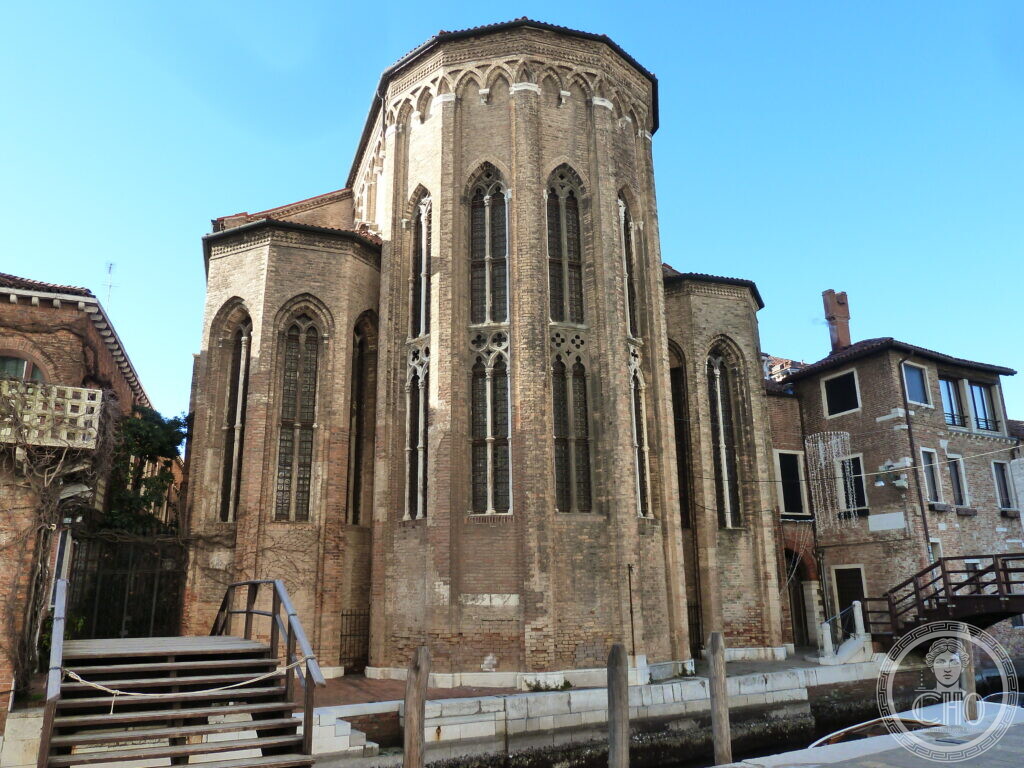
A Benedictine abbey that outlived the abbey it came from, was suppressed in 1775, closed by Napoleon, and then spent a century and a half as a workshop. Its Gothic apse still rises straight out of the water beside the Salute.
At a glance
The deconsecrated church of San Gregorio stands in Dorsoduro, at the mouth of the Grand Canal, immediately behind Santa Maria della Salute. What you see is the fifteenth-century rebuilding by Antonio Cremonese, who replaced a Venetian-Byzantine building with a Gothic one: a single tall nave ending in three apses, the floor of the apse end raised a few steps. It has not been a church since 1808. Since 2017 it has been under conversion to house the Museum of Oriental Art.
Key facts
- Founded: apparently at the beginning of the 9th century
- 989: placed under the Benedictines of the abbey of Sant’Ilario
- 1214: became the main seat of the community, as Sant’Ilario declined
- Rebuilt: in the 15th century by Antonio Cremonese, in Gothic, over the earlier Venetian-Byzantine church
- 1450: reduced to a commenda, beginning a long decline
- Suppressed 1775; closed to worship 1808 under Napoleon
- Afterwards: a refinery workshop of the mint, then a restoration laboratory; since 2017 being converted for the Museum of Oriental Art
- GPS: 45.43078, 12.33408 · Open in Google Maps
History
San Gregorio begins as a church of the early ninth century and becomes an abbey by inheritance. In 989 it was put under the Benedictines of Sant’Ilario, out in the lagoon; as that house declined, its monks moved across in ones and twos until, in 1214, San Gregorio became the community’s main seat. The Gothic church came in the fifteenth century, when Antonio Cremonese rebuilt over the Venetian-Byzantine structure.
From 1450 the abbey was held in commenda — that is, its revenues went to a holder who need not live there — and it declined for three centuries until the monastery was suppressed in 1775. The church stayed open a little longer as a parish, then closed for good in 1808 under Napoleon. What followed is the part most visitors would never guess: the building was used as a refinery workshop of the mint, and later as a restoration laboratory. Conversion work to make it the home of the Museum of Oriental Art has been under way since 2017.
What you see
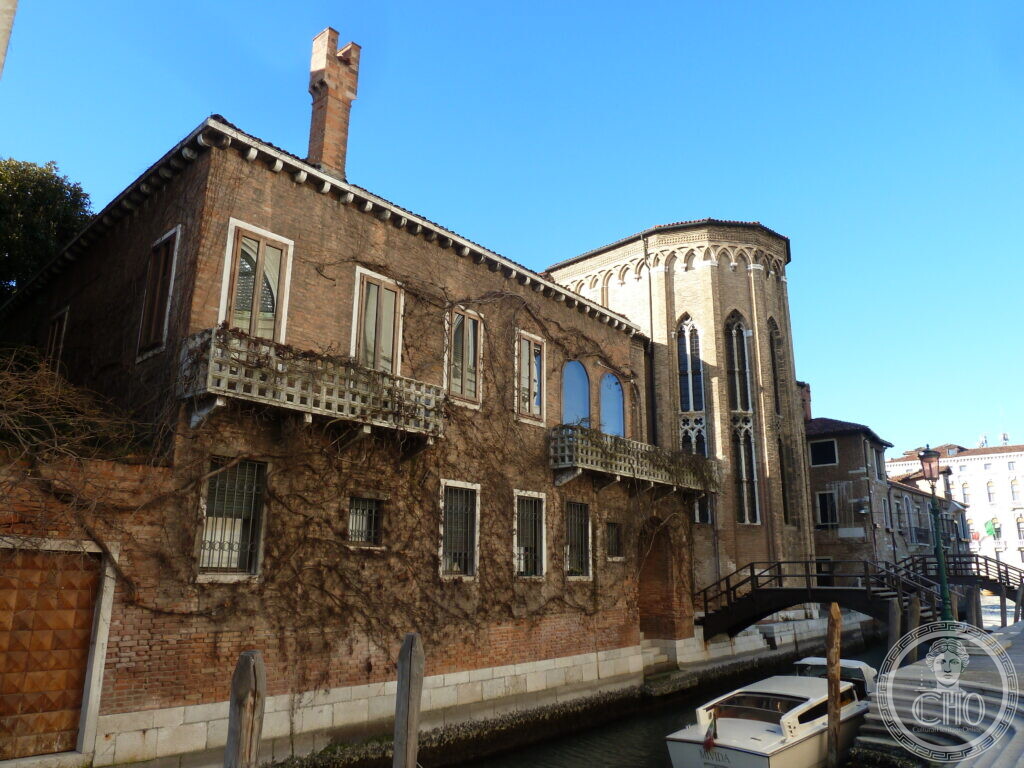
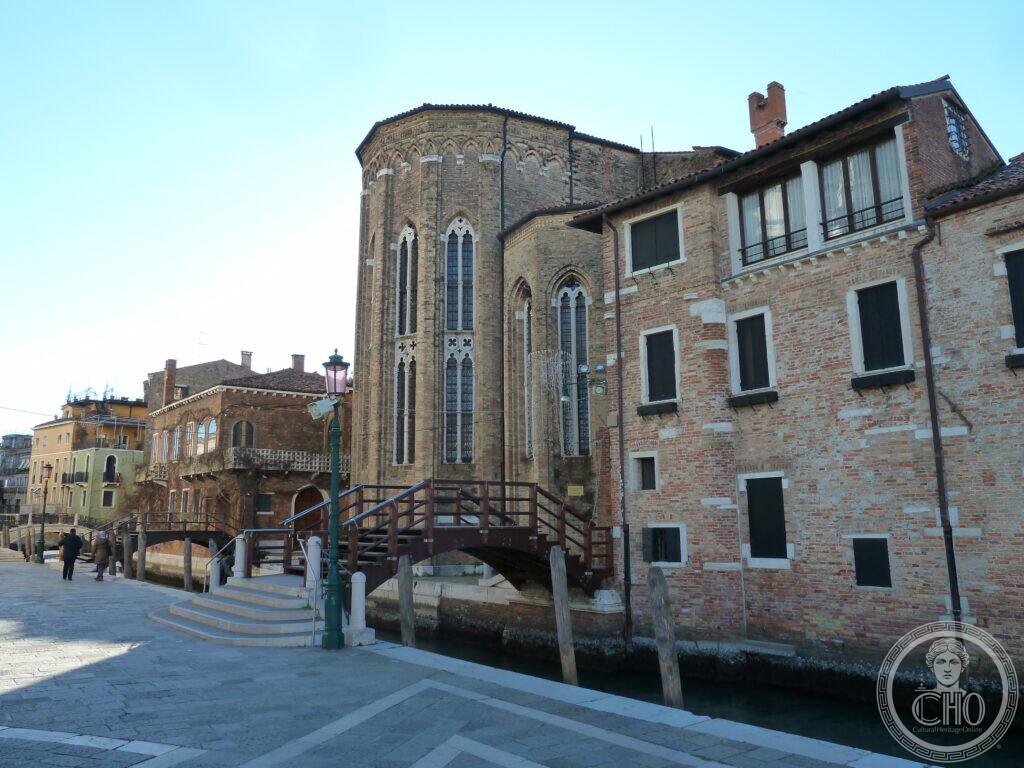
From the bridge the apse is the whole argument: a tall polygonal brick drum rising straight out of the canal, with slender lancet windows the full height of it and stone tracery at their heads, under a cornice of small arches. There is no stone facing, no marble, nothing to soften it. The nave behind is lower and plainer, and the abbey buildings that lean against it — one of them carrying a stone balcony and a curtain of creeper — are domestic in scale. The Salute is fifty metres away and gets the crowds; this wall gets the light.
Nearby
- Basilica di Santa Maria della Salute — fifty metres away, at the point
- Punta della Dogana — the tip of Dorsoduro, a short walk east
- The Patriarchal Seminary and its Manfredinian Gallery — the next building along
Sources
- Wikipedia (Italian), Chiesa di San Gregorio (Venezia): the ninth-century foundation, 989 and the Benedictines of Sant’Ilario, the transfer of 1214, the fifteenth-century Gothic rebuilding by Antonio Cremonese, the three apses and single nave, the commenda of 1450, the suppression of 1775, the closure of 1808, the later use as a mint refinery workshop and restoration laboratory, and the conversion under way since 2017
Gallery
Find it on the map
See this place and what’s around it →📷 Become a Cultural Heritage Online photographer
Share your photos of places: they stay published under your name as the author. The more they're seen, the more you get noticed — and soon a contest will reward the most appreciated photos.
Log in or sign up free to add a photoIs this page about you?
This page is read by travellers and heritage enthusiasts who find it on Google. Tell us how you are connected to this place and we will take it from there.