Founded in 1928 on the shores of Lake Maggiore as a chemical partnership between Italy and France, Rhodiatoce introduced synthetic fibers and nylon to Italy, leaving behind an imposing chapter of lakeside industrial archaeology.
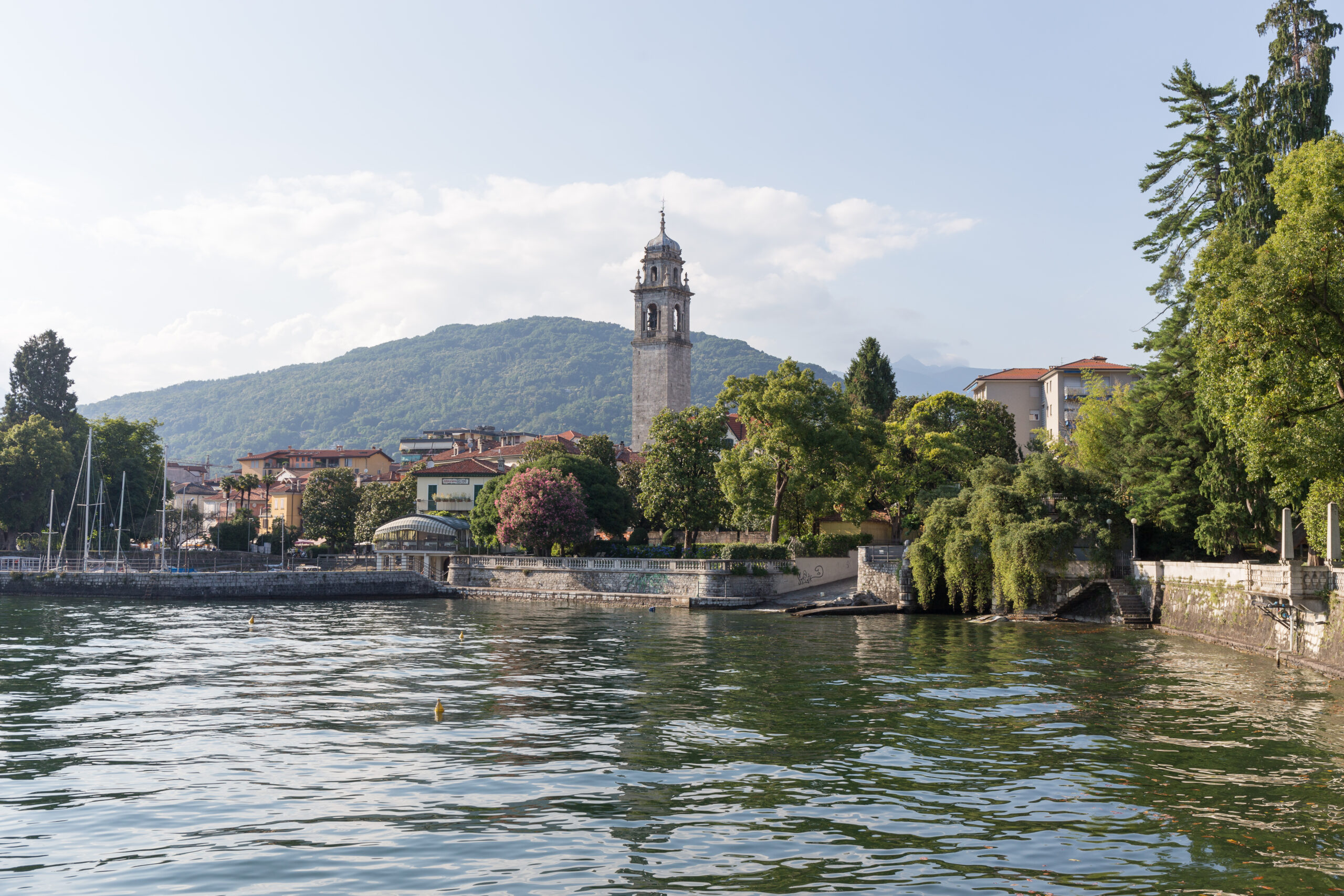
To anyone arriving by steamship in the late 1920s, the Borromean Gulf of Lake Maggiore was synonymous with aristocratic leisure. Since the mid-nineteenth century, Pallanza and Stresa had welcomed royalty, writers, and wealthy holidaymakers to their grand neoclassical hotels and botanical gardens. Yet just behind this facade of camellias and promenade cafes, where the broad Toce river rolls down from the Val d’Ossola into the lake, a colossal industrial project took shape in 1928.
That year, Italy’s chemical giant Montecatini and the French chemical group Société Chimique des Usines du Rhône (later Rhône-Poulenc) formed an international joint venture: the Società Elettrochimica del Toce, soon renamed Rhodiatoce. The aim was audacious: to free Italy from its dependence on imported natural cotton and silk by manufacturing synthetic polymers and cellulose acetate at massive industrial scale.
Water, watts, and artificial threads
The choice of Pallanza was dictated by strict chemical geography. Transforming raw wood cellulose into glossy acetate yarn required two non-negotiable resources: immense quantities of chemically pure, mineral-free water to wash the spun filaments, and cheap, uninterrupted electric power. The Toce river supplied the water, while the newly built alpine hydroelectric dams of the Ossola valleys fed high-voltage lines directly into the plant’s transformers.
The Pallanza complex was designed as an integrated industrial world: soaring red-brick distillation towers, chemical recovery plants, weaving halls, and private worker housing. In the late 1930s, under national economic autarky policies, Rhodiatoce became Italy’s premier producer of artificial silk. But its defining breakthrough came after the Second World War. Securing exclusive Italian licence rights from DuPont, Rhodiatoce began manufacturing polyamide 6.6—nylon. Marketed under the trademark Nailon Rhodiatoce and the famed symbol of the golden ladder (*Scala d’Oro*), it dressed an entire nation in synthetic stockings, raincoats, and parachutes.
The chemical sunset
For four decades, the plant was the economic heartbeat of Verbania, employing over four thousand workers. Yet the global petrochemical crisis of the 1970s and the restructuring of European manufacturing hit synthetic spinners hard. In 1972, Rhodiatoce was absorbed into Montefibre; uncompetitive against cheaper Asian synthetic imports, production was gradually wound down, and the roaring looms fell silent.
What remains today
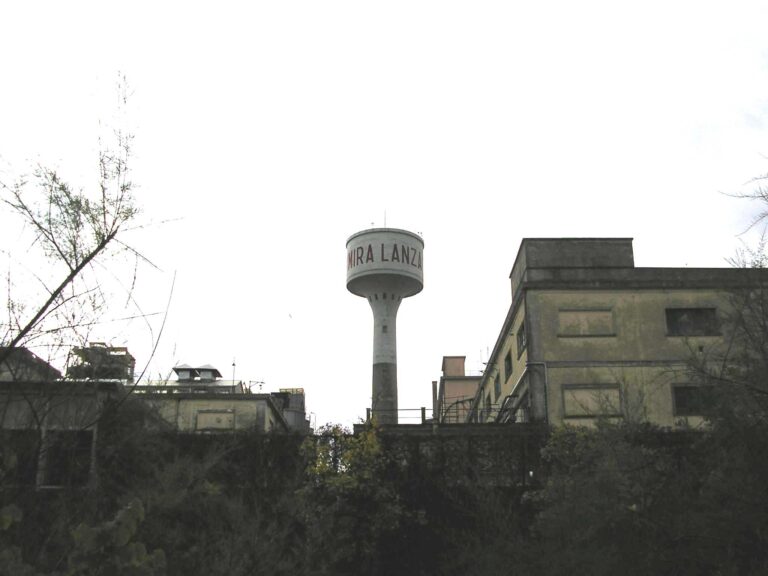
The vast industrial footprint of Rhodiatoce remains one of the most striking chapters of industrial archaeology in Piedmont. The soaring brick warehouses, boiler houses, and the former corporate headquarters at the mouth of the Toce stand in stark, evocative contrast to the tranquil waters of Lake Maggiore. The photographic and technical records of the plant are preserved in the Archivio Storico Montecatini (Edison) and the Centro Documentazione Storica of Verbania, documenting a time when the high valleys of the Alps were harnessed to spin the synthetic fabric of modern Europe.
Historic Views & Archives

From the Archives: Historical Newsreels
Pallanza e le regate internazionali sul Lago Maggiore (1935)
Archival footage from 1935 capturing the waters of Pallanza and the surrounding prealpine peaks where the Toce river supplied pure mountain runoff and electric power to the lakeside chemical mills.
Visiting the Site: Street View & Modern Geography
The massive industrial footprint of Rhodiatoce occupies the lakeside flatlands where the Toce river flows into Lake Maggiore in Verbania. Today partially transformed into services and eco-parks, its surviving brick administration towers and waterfront canal channels stand as evocative monuments of interwar synthetic chemistry.
Historic Address: Via Rhodiatoce / Foce del Fiume Toce, 28924 Verbania Pallanza (VB), Italy
Sources
- Archivio Storico Edison / Montecatini, Fondo Rhodiatoce di Pallanza (1928–1972), Milan
- Sistema Informativo Unificato per le Soprintendenze Archivistiche (SIUSA), Fondo Montefibre – Stabilimento di Verbania Pallanza
- Centro Documentazione Storica della Città di Verbania, L’industria sul lago: Storia dello stabilimento Rhodiatoce, Verbania, 2004
- Franco Amatori, Grande impresa e distretti industriali: La chimica italiana nel Novecento, Bologna, Il Mulino, 2002