
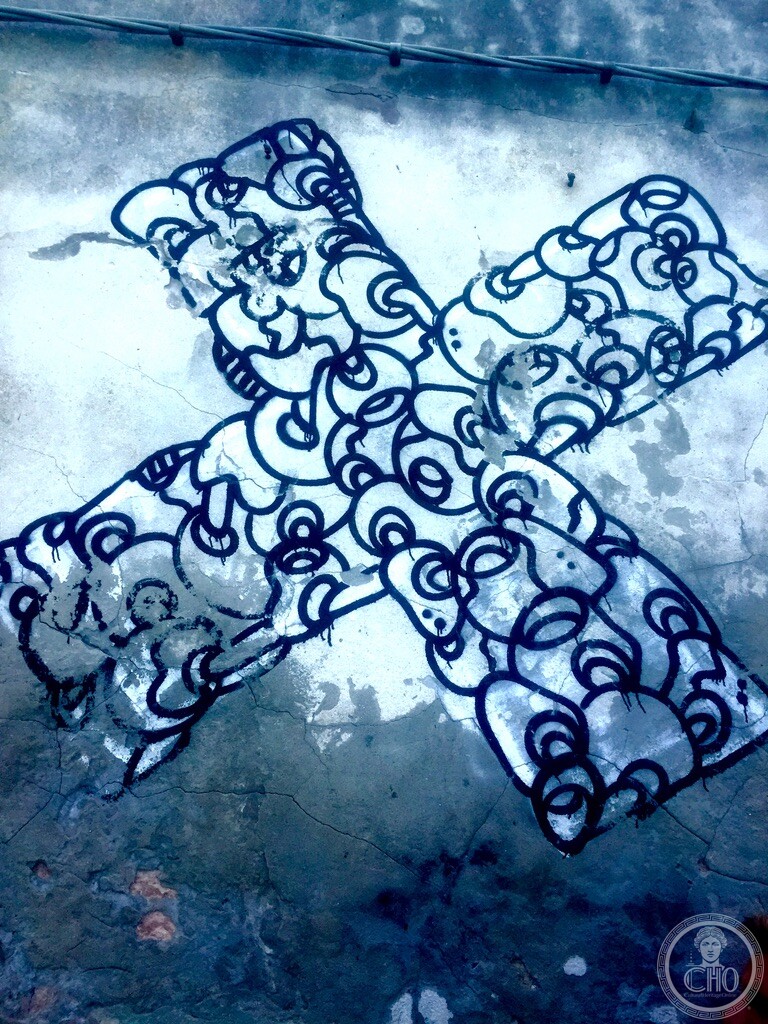
Tucked inside a derelict building along Fondamenta San Giacomo, this intricate black-and-white mural illustrates the underground counterculture of the Giudecca, where artists and squatters have repurposed Venice’s decaying industrial shells as temporary creative laboratories.
At a glance
While the historic center of Venice is celebrated for its Gothic palazzi and Renaissance churches, the island of Giudecca lived a radically different history during the 19th and 20th centuries. Spared from the strictest preservation edicts, the island became Venice’s industrial powerhouse, hosting giant flour mills, precision watch factories, breweries, and metal foundries. When heavy industry shuttered in the late 20th century, vast complexes of brick workshops and worker quarters were abandoned, creating fertile ground for Venice’s contemporary art scene, alternative artist collectives, and clandestine street art.
Key facts
- Location: Fondamenta San Giacomo, on the southern waterfront / interior canals of Giudecca
- Art form: Contemporary urban street art painted in black ink on decaying lime plaster
- Industrial context: Part of the network of decommissioned 19th- and 20th-century workshops that characterized western and central Giudecca
- Subject: A complex cross-shaped glyph densely packed with surrealist eyes, cellular bubbles, and interconnected organic shapes
- Cultural significance: Documents the living tension between urban decay, industrial heritage, and spontaneous artistic occupation in Venice
- GPS: 45.42564, 12.33042 · Open in Google Maps
History
Throughout the Republic, Giudecca (historically Spinalonga) was a tranquil retreat of aristocratic pleasure gardens, vineyards, and monastic sanctuaries. Following the fall of the Republic in 1797 and the advent of steam power, the island’s wide open parcels and deep-water canal frontage made it the natural hub for modern industry. By 1900, Giudecca bustled with factory sirens: the Stucky flour mill at the western tip, the Junghans clock factory, the Fortuny textile factory, and various boatyards.
When manufacturing declined in the 1970s and 1980s, the island experienced widespread depopulation and urban vacancy. Before major gentrification initiatives and luxury hotel conversions took hold, artists, students from the Accademia di Belle Arti, and independent theater troupes occupied these cavernous brick spaces. Fondamenta San Giacomo and its adjoining alleys became known for spontaneous art installations, political murals, and alternative cultural events, giving Giudecca a gritty, bohemian identity found nowhere else in the lagoon.
What you see
The mural shown here was discovered inside a partially gutted building under temporary structural shoring. Set against cracked, peeling whitewash that exposes the underlying brickwork, the artwork takes the bold form of an expanded Saint Andrew’s cross, executed with sweeping black strokes and fluid contours.
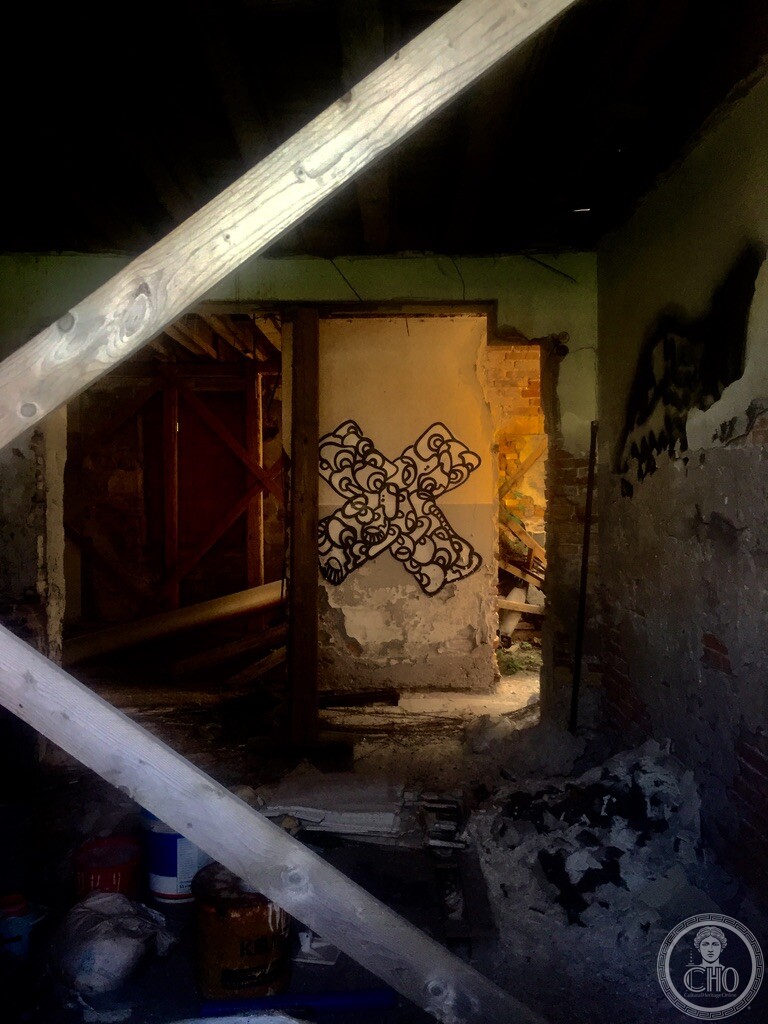
Inside the cross’s four arms, hundreds of stylized, watchful eyes and coiled tubular shapes jostle together in high contrast. Diagonal wooden struts and raw masonry frame the composition, demonstrating how contemporary urban expressions take root directly within the fragile, layered fabric of Venetian architecture.
Practical information
- Fondamenta San Giacomo: Public canal promenade, freely accessible at any time
- Street art in Venice: Ephemeral by nature; works in derelict structures and along warehouse walls frequently change, weather, or vanish as buildings undergo rehabilitation
- Walking Giudecca: A continuous stroll from Palanca to Redentore along the interior calli and southern lagoon edges reveals artist studios, active shipwright yards (squeri), and contemporary galleries
- Recommended duration: 30 to 45 minutes for a walking exploration of Fondamenta San Giacomo and the Giudecca artisan quarters
Getting there
Located on Giudecca island, three minutes’ walk west of the Redentore vaporetto stop (Lines 2, 4.1, 4.2) or five minutes east of Palanca.
Nearby
- Chiesa del Redentore — three minutes east on the Giudecca waterfront, Palladio’s votive plague masterpiece
- Ex-Convento dei Santi Cosma e Damiano — five minutes west, now an incubator for contemporary artisan workshops
- Mulino Stucky — ten minutes west at the western tip of Giudecca
Sources
- Scibilia, Vittorio. La Giudecca: Dalla Spinalonga all’archeologia industriale. History of Giudecca’s industrial transformation and worker culture.
- Comune di Venezia — Urban redevelopment archives and historical mapping of Fondamenta San Giacomo.
- Geographical coordinates: 45.42564, 12.33042.
Find it on the map
See this place and what’s around it →Record researched and written by Carla Szathvary for Cultural Heritage Online, 2026.
📷 Become a Cultural Heritage Online photographer
Share your photos of places: they stay published under your name as the author. The more they're seen, the more you get noticed — and soon a contest will reward the most appreciated photos.
Log in or sign up free to add a photo