
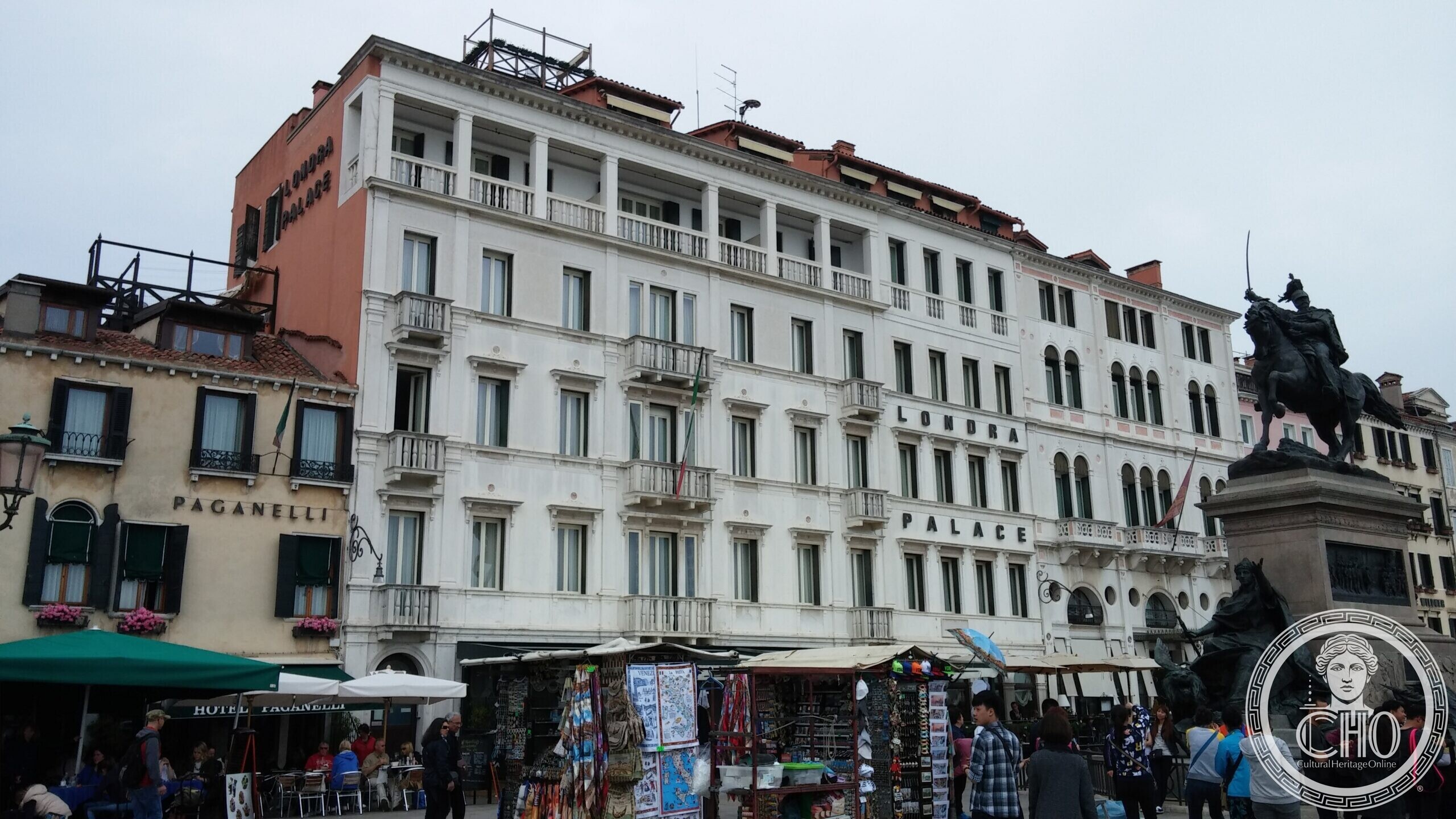
A hotel made of two hotels on the Riva degli Schiavoni, with a hundred windows facing the water and a plaque recording a fortnight in December 1877 that produced one of the most played symphonies in the repertoire.
At a glance
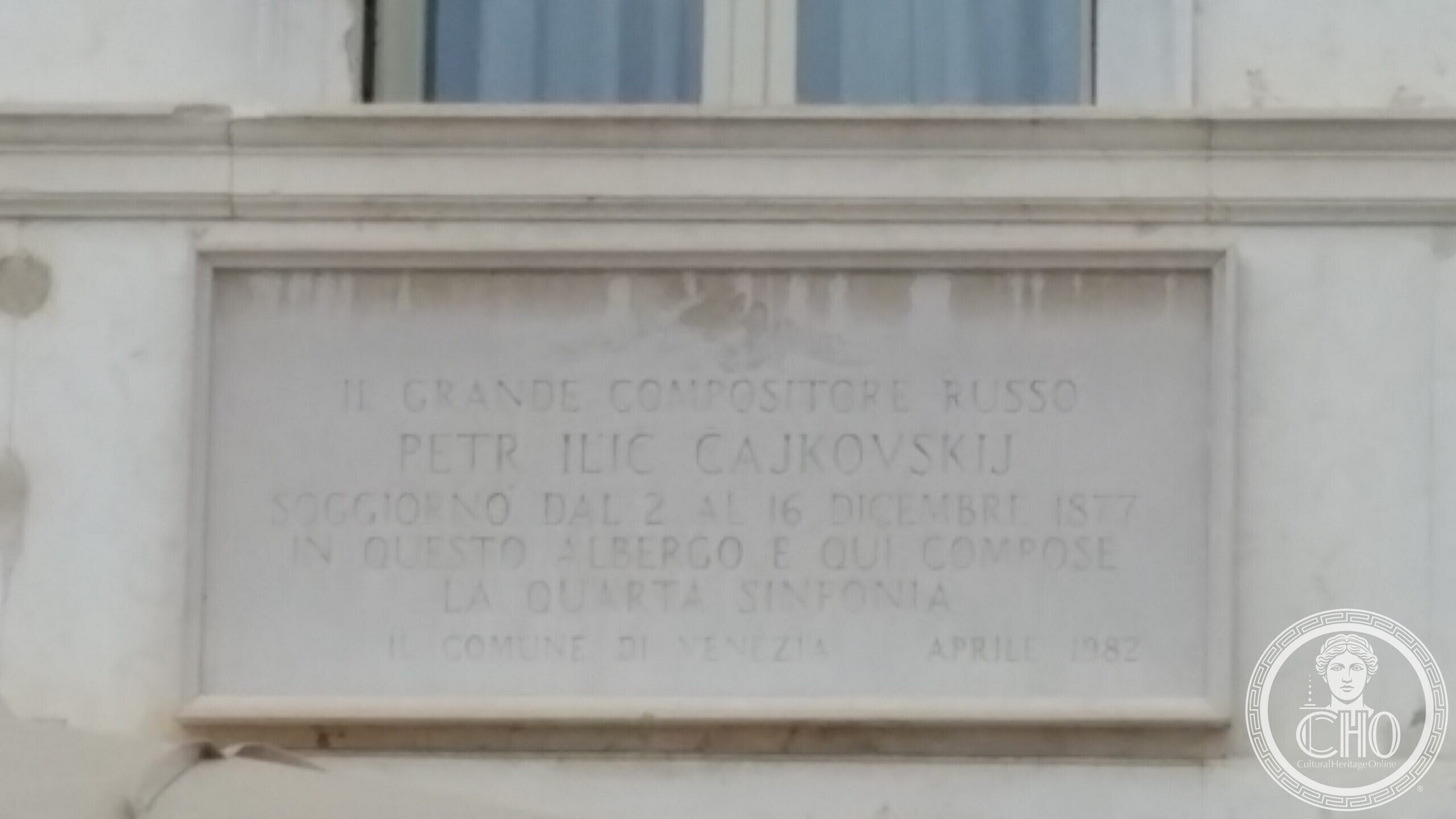
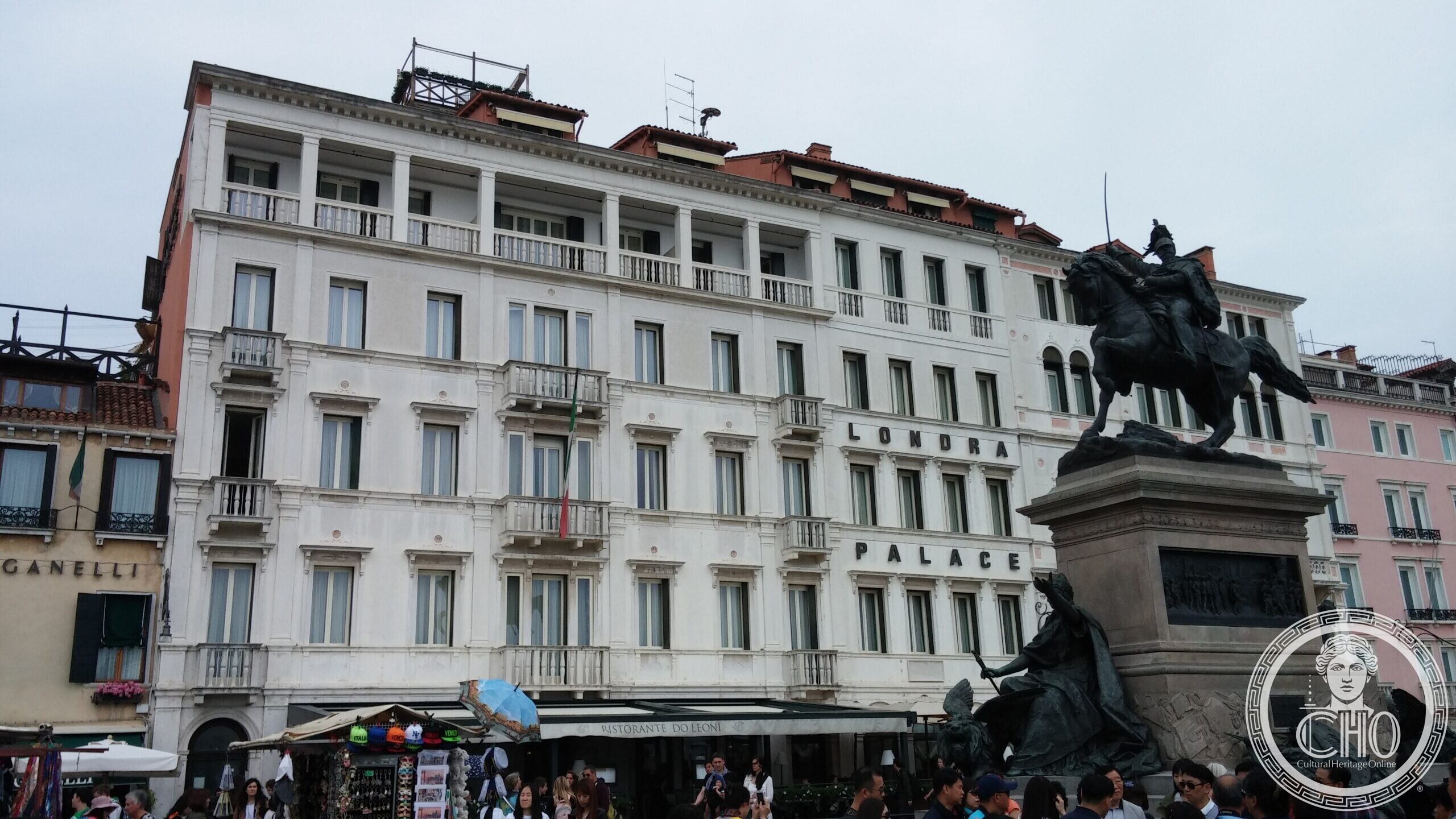
The building looks like one hotel and is two. The Hotel d’Angleterre opened on the Riva in 1853; next to it stood the Beau Rivage, designed by the Venetian engineer Giovanni Fuin in a neo-Lombardesque manner. In 1900 the two were joined, and the result — Hotel Londres et Beau Rivage, later the Londra Palace — presents a hundred windows to the lagoon. On the wall, a marble plaque put up by the city in April 1982 records that Pyotr Ilyich Tchaikovsky stayed here from 2 to 16 December 1877 and wrote his Fourth Symphony.
Key facts
- Opened: 1853, as the Hotel d’Angleterre et Pension, on the Riva degli Schiavoni
- The second building: the Hotel Beau Rivage, by the Venetian engineer Giovanni Fuin, in neo-Lombardesque style
- Joined: 1900, as the Hotel Londres et Beau Rivage
- Facade: one hundred windows facing the lagoon
- Tchaikovsky: stayed 2–16 December 1877, in room 106
- Plaque: placed by the Comune di Venezia, April 1982
- GPS: 45.43408, 12.34344 · Open in Google Maps
History
The Riva degli Schiavoni became a hotel front in the nineteenth century, when the grand tour turned into an industry and the quay facing San Giorgio Maggiore became the most valuable strip of frontage in the city. The Hotel d’Angleterre opened there in 1853. Its neighbour, the Beau Rivage, was the work of Giovanni Fuin, a Venetian engineer who gave it the arcaded, Lombard-revival manner that was fashionable in the decades after unification. In 1900 the two establishments were amalgamated into one, with a single continuous elevation to the water.
The stay that made the building famous happened in the older half. In December 1877 Tchaikovsky was travelling in Italy in the aftermath of his catastrophic marriage, working on the symphony he had promised to Nadezhda von Meck. He took a room looking over the lagoon — number 106 — and worked there for a fortnight.
What exactly was written in that room is worth stating precisely, because the two sources differ. The city’s plaque says he composed the Fourth Symphony here. The hotel’s own history is narrower and more likely: that in room 106 he wrote the first three movements. Either way the work he did on the Riva sits inside a symphony whose opening fanfare is among the most recognisable in nineteenth-century music, and the hotel has named the room after him.
What you see
A long white front in two tempers. The left-hand half is plain and repetitive — storey upon storey of identical windows with slender iron balconies, the wall carrying the hotel’s name in raised letters across it. The right-hand half is busier, with paired arched windows and coloured stonework in the Lombard-revival taste. A loggia runs along the top floor under a shallow roof, and there are roof terraces above that.
The building has to compete with what stands in front of it: the bronze equestrian monument to Victor Emmanuel II, with its allegorical figures on the plinth, planted on the quay just to the east. From most angles the hotel is read past the horse’s tail. The plaque to Tchaikovsky is on the upper part of the wall and is easy to miss entirely.
Practical information
- A working hotel: the facade and the plaque are seen from the public quay, free, at any hour
- The Riva is at its emptiest early in the morning, which is also when the light is on this side
- Ten minutes
Getting there
On the Riva degli Schiavoni, four minutes’ walk east of Piazza San Marco. The nearest vaporetto stop is San Zaccaria, a minute away.
Nearby
- The three palaces of the Hotel Danieli, two minutes west along the quay
- The Hotel Savoia & Jolanda, next door
- The Palazzo delle Prigioni Nuove and the Bridge of Sighs, four minutes west
Sources
- The plaque on the building, photographed and transcribed here: the stay of 2–16 December 1877, the Fourth Symphony, and the city’s date of April 1982
- Londra Palace Venezia, the hotel’s own published history — londrapalace.com: the 1853 opening as the Hotel d’Angleterre, the Beau Rivage by the Venetian engineer Giovanni Fuin in neo-Lombardesque style, the joining of the two buildings in 1900, the hundred-window facade, and the first three movements of the Fourth Symphony written in room 106
- Coordinates from the position supplied by the photographer and cross-checked against OpenStreetMap
Photo gallery
Photographs contributed by a Cultural Heritage Online member.
Find it on the map
See this place and what’s around it →Record researched and written by Carla Szathvary for Cultural Heritage Online, 2026.
📷 Become a Cultural Heritage Online photographer
Share your photos of places: they stay published under your name as the author. The more they're seen, the more you get noticed — and soon a contest will reward the most appreciated photos.
Log in or sign up free to add a photoIs this page about you?
This page is read by travellers and heritage enthusiasts who find it on Google. Tell us how you are connected to this place and we will take it from there.