
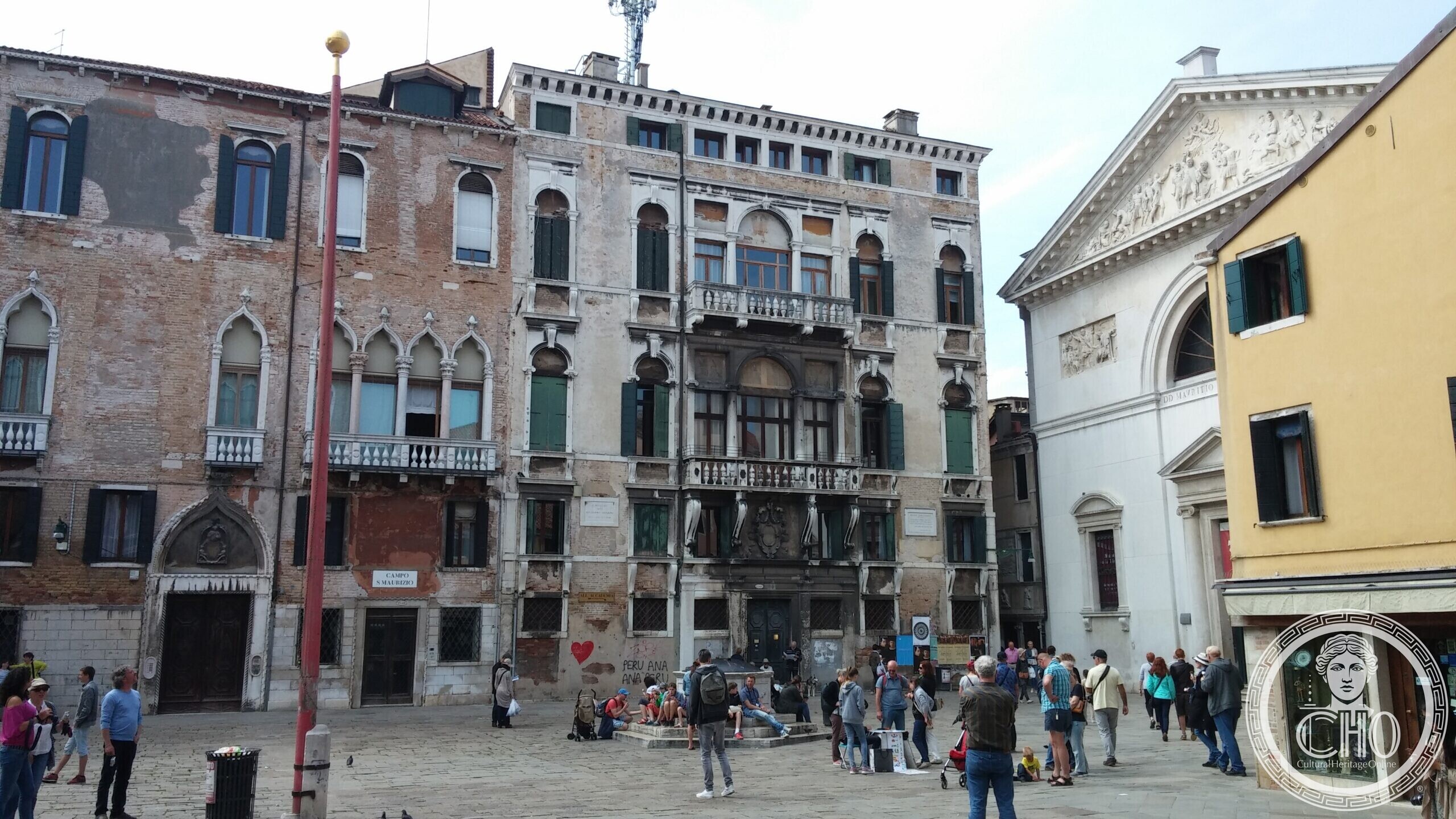
A merchant’s palace on Campo San Maurizio that once carried frescoes by Veronese and has none left, and where the most obscene poet in Venetian literature spent his last nine years.
At a glance
Palazzo Bellavite is the plainest-looking building on its campo, and it has lost the two things that made it worth looking at. Its facade was frescoed in the sixteenth century by Paolo Veronese; nothing of that painting survives. And on its wall is a plaque to Giorgio Baffo, who lived here until his death in 1768 and whose verse — written in Venetian dialect and almost entirely pornographic — circulated for two centuries in manuscript and in editions printed abroad. The plaque was put up in 1987, and it quotes Guillaume Apollinaire.
Key facts
- Built: sixteenth century, for Dionisio Bellavite, a merchant in flour and oil
- Site: raised in place of the old bell tower of the church of San Maurizio
- Lost decoration: frescoes on the facade by Paolo Veronese (1528–1588); nothing remains
- Also known as: Palazzo Bellavite Baffo, after the last of the Baffo family to live there
- Giorgio Baffo: 1694–1768; lived here from 1759 until his death
- Later guest: Alessandro Manzoni stayed in the building
- Plaque: placed in 1987 by the “amici del Baffo”, quoting Apollinaire’s judgement of 1910
- GPS: 45.43296, 12.33130 · Open in Google Maps
History
Dionisio Bellavite made his money in flour and oil, and in the early sixteenth century he built here, on ground cleared by the removal of the old campanile of San Maurizio. The palace that resulted was not large by the standards of the Grand Canal, but its front was painted, and the painter was Veronese. Venice had a habit of frescoing its facades, and a climate that destroyed them; of the dozens of painted fronts recorded in the sixteenth century almost nothing survives anywhere in the city. Here too the wall has been stripped back to plaster and stone.
The name that stuck to the building is not Bellavite’s. Giorgio Baffo, born in 1694, was a Venetian patrician and a magistrate, and he wrote sonnets in dialect of a frankness that no Venetian press would touch. They circulated in manuscript among people who could afford to be discreet, and were printed only after his death, abroad. He moved into the palace in 1759 and died here in 1768.
His reputation outside Venice is owed largely to France. In 1910 Guillaume Apollinaire, then editing a series of erotic classics, called him the poet of love who had sung “with the greatest freedom and with grandeur of language”. That sentence is what the friends of Baffo cut into the marble in 1987, and it is why a plaque celebrating an obscene poet hangs on a quiet campo.
What you see
Four storeys of plaster over brick, a central group of arched windows with a stone balcony, and single windows to either side: the plan of an ordinary sixteenth-century Venetian house, without ornament. The plaster is patched and stained in bands where the render has been renewed at different times, and that patchwork is the only trace of what the wall used to be.
The plaque is set between two windows on the upper floor, where you have to stop and look up to read it. Cut in Roman capitals on white marble, it names Baffo, gives his dates, gives Apollinaire’s judgement, and signs off with the year 1987. It is a small monument to a writer whose work the city he served would not publish.
Practical information
- A private building: the facade and the plaque are seen from the campo, at any hour, free
- Morning light reaches the plaque; in the afternoon it falls into shadow
- Ten minutes
Getting there
Campo San Maurizio lies on the direct walk from the Accademia bridge to Piazza San Marco, five minutes from either. Nearest vaporetto stops: Santa Maria del Giglio and Accademia.
Nearby
- The church of San Maurizio, on the same campo, now a museum of musical instruments
- Palazzo Zaguri, a minute away
- The monument to Niccolò Tommaseo in Campo Santo Stefano, three minutes north
Sources
- The plaque on the building, photographed and transcribed here, with Baffo’s dates, Apollinaire’s judgement and the year 1987
- Wikipedia (English), Palazzo Bellavite: the sixteenth-century date, the commission by Dionisio Bellavite, a merchant in flour and oil, the site of the old bell tower of San Maurizio, the facade frescoes by Paolo Veronese of which nothing remains, Giorgio Baffo’s residence from 1759 to 1768, and the stay of Alessandro Manzoni
- Coordinates from the position supplied by the photographer and cross-checked against OpenStreetMap
- ⚠️ Some accounts describe Veronese as the palace’s designer. He was a painter, not an architect, and we record only what the sources agree on: that he painted its facade.
Photo gallery
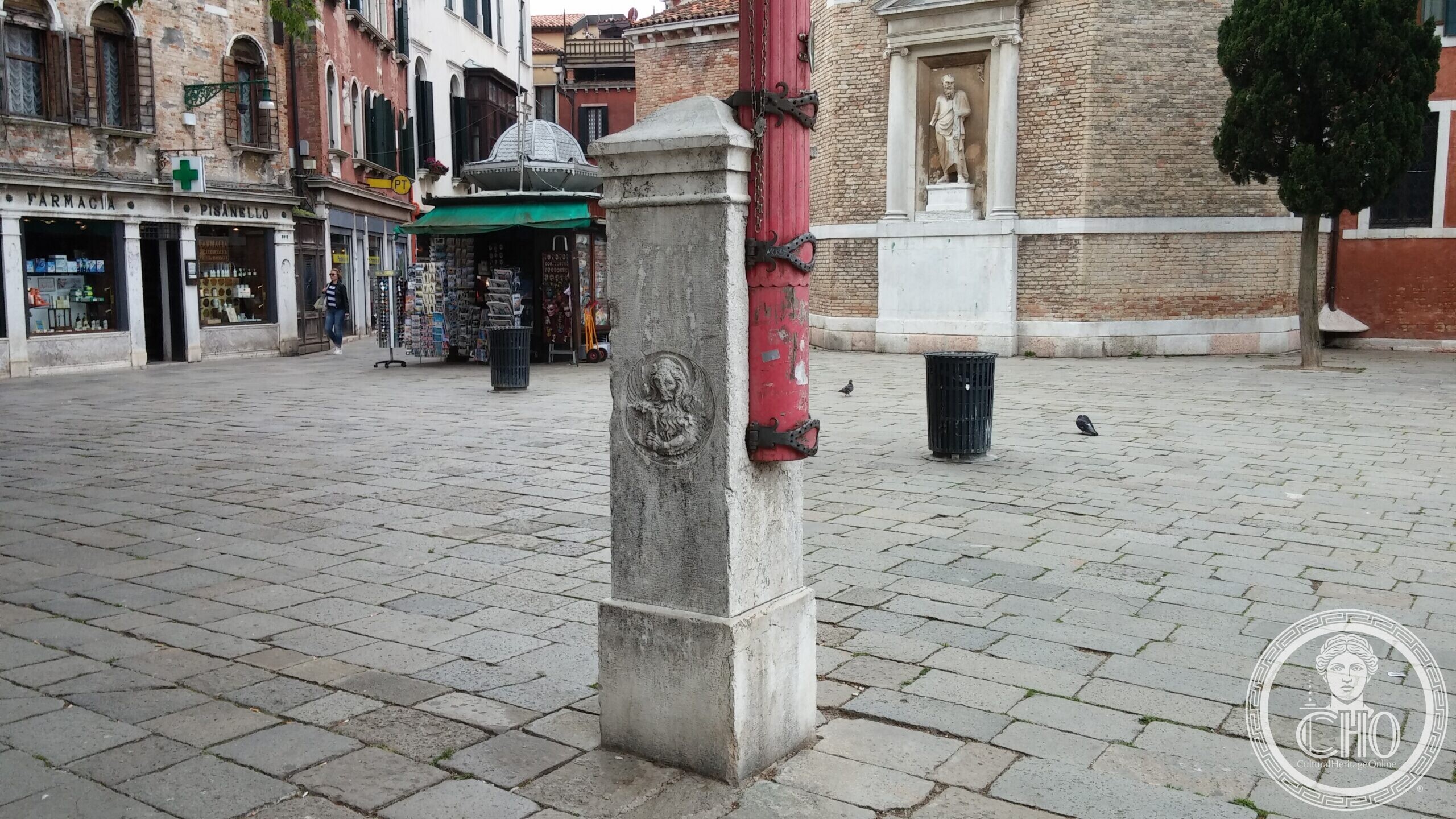
Photographs contributed by a Cultural Heritage Online member.
Find it on the map
See this place and what’s around it →Record researched and written by Carla Szathvary for Cultural Heritage Online, 2026.
📷 Become a Cultural Heritage Online photographer
Share your photos of places: they stay published under your name as the author. The more they're seen, the more you get noticed — and soon a contest will reward the most appreciated photos.
Log in or sign up free to add a photoIs this page about you?
This page is read by travellers and heritage enthusiasts who find it on Google. Tell us how you are connected to this place and we will take it from there.