
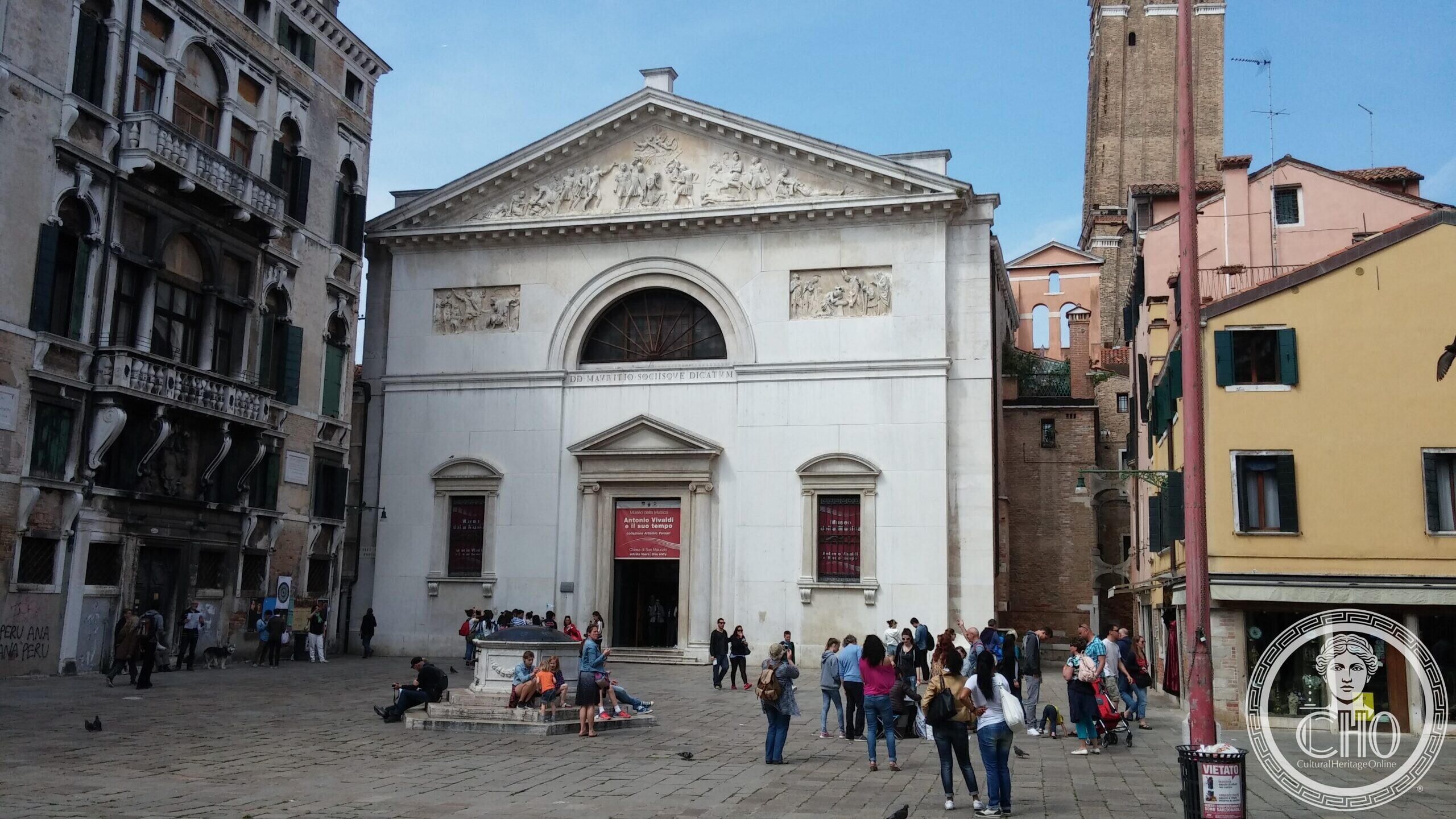
A church of the seventh century that Venice knocked down in 1806 and put up again in neoclassical dress, and which today holds no congregation but a collection of antique instruments, free to enter.
At a glance
San Maurizio stands on one of the quietest campi between the Accademia and Piazza San Marco, and almost nothing of what you see is older than two centuries. The parish dates from 699. The building was taken down in 1806, in the years when Napoleonic Venice was reorganising its churches, and rebuilt from 1807 on the plan of a church that no longer exists — Sansovino’s San Geminiano, demolished to make room for the Ala Napoleonica. Deconsecrated, it is now a museum of musical instruments.
Key facts
- Founded: 699, as San Lazzaro; rebuilt under its present dedication in 1105 after a fire
- Earlier rebuilding: sixteenth century, consecrated 1590
- Demolished: 1806; rebuilt from 1807
- Architects: the work began under the amateur Pietro Antonio Zaguri and passed to Giannantonio Selva (1751–1819) with Antonio Diedo (1772–1847)
- Model: the plan of Sansovino’s church of San Geminiano, itself demolished in those same years
- Plan: Greek cross, with a central dome and four blind cupolas over the arms
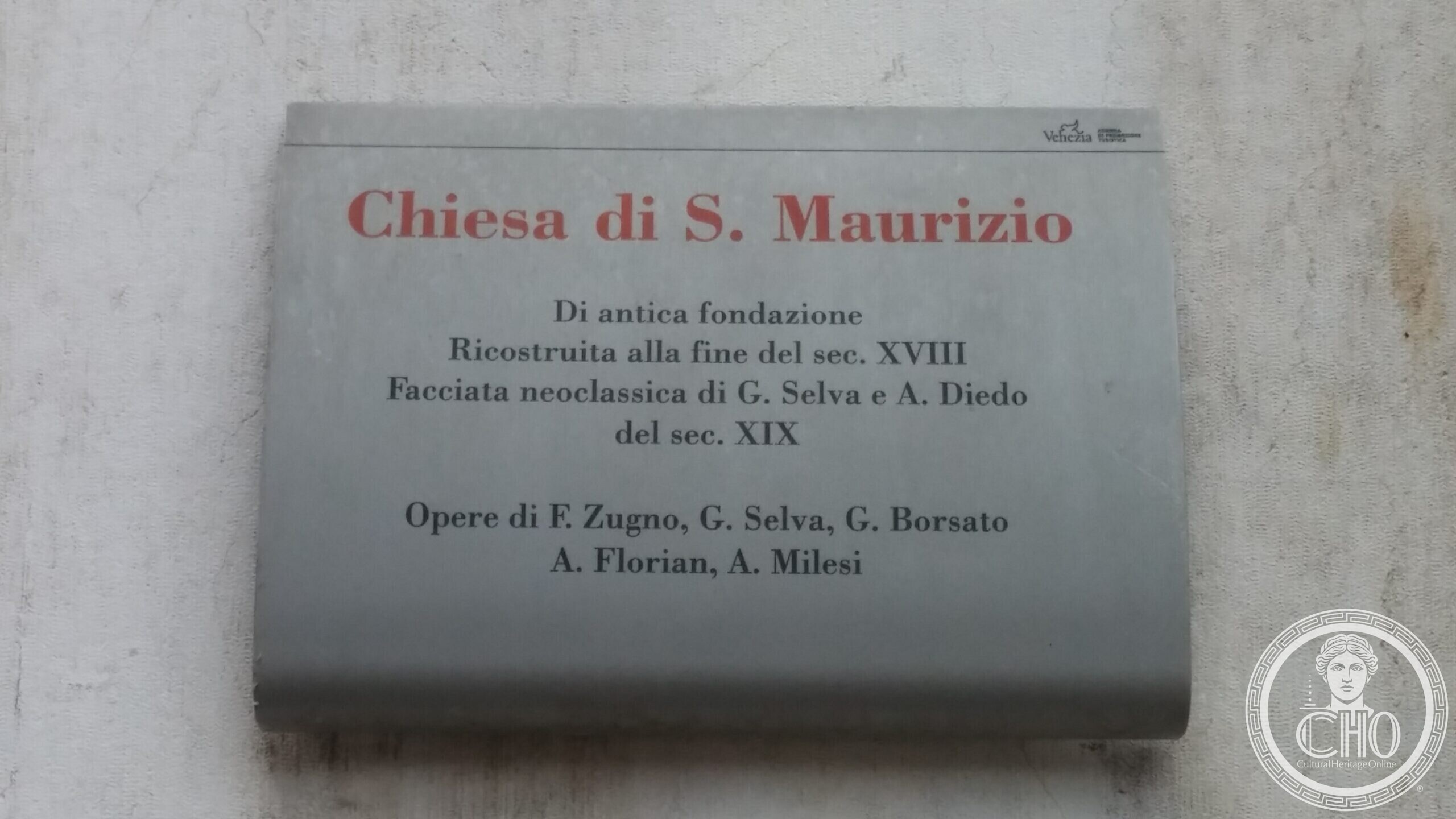
- Works inside, per the city plaque: F. Zugno, G. Selva, G. Borsato, A. Florian, A. Milesi
- GPS: 45.43303, 12.33162 · Open in Google Maps
History
The date on the plaque is 699, which puts the first San Maurizio among the oldest parishes of the lagoon, when it was dedicated to Saint Lazarus. Fire destroyed it, and in 1105 it was rebuilt under the name it still carries. A third building went up in the sixteenth century and was consecrated in 1590. None of these survive.
What happened next belongs to the strangest decade in Venetian building history. Under Napoleonic rule the city suppressed and demolished churches on a scale not seen before, and one of the casualties was Sansovino’s San Geminiano, pulled down to complete the west end of Piazza San Marco. San Maurizio went down too, in 1806 — but it went back up. The rebuilding began in 1807, and the plan chosen was that of the church Venice had just destroyed. The commission passed quickly from Pietro Antonio Zaguri, a nobleman and amateur, to Giannantonio Selva, the architect of La Fenice, working with Antonio Diedo.
The church was later deconsecrated. Since then it has held the Museo della Musica, a display of antique instruments that keeps the building open and free, and it hosts concerts. The change is less of a break than it looks: a church built on the plan of another church, in a city that recycles.
What you see
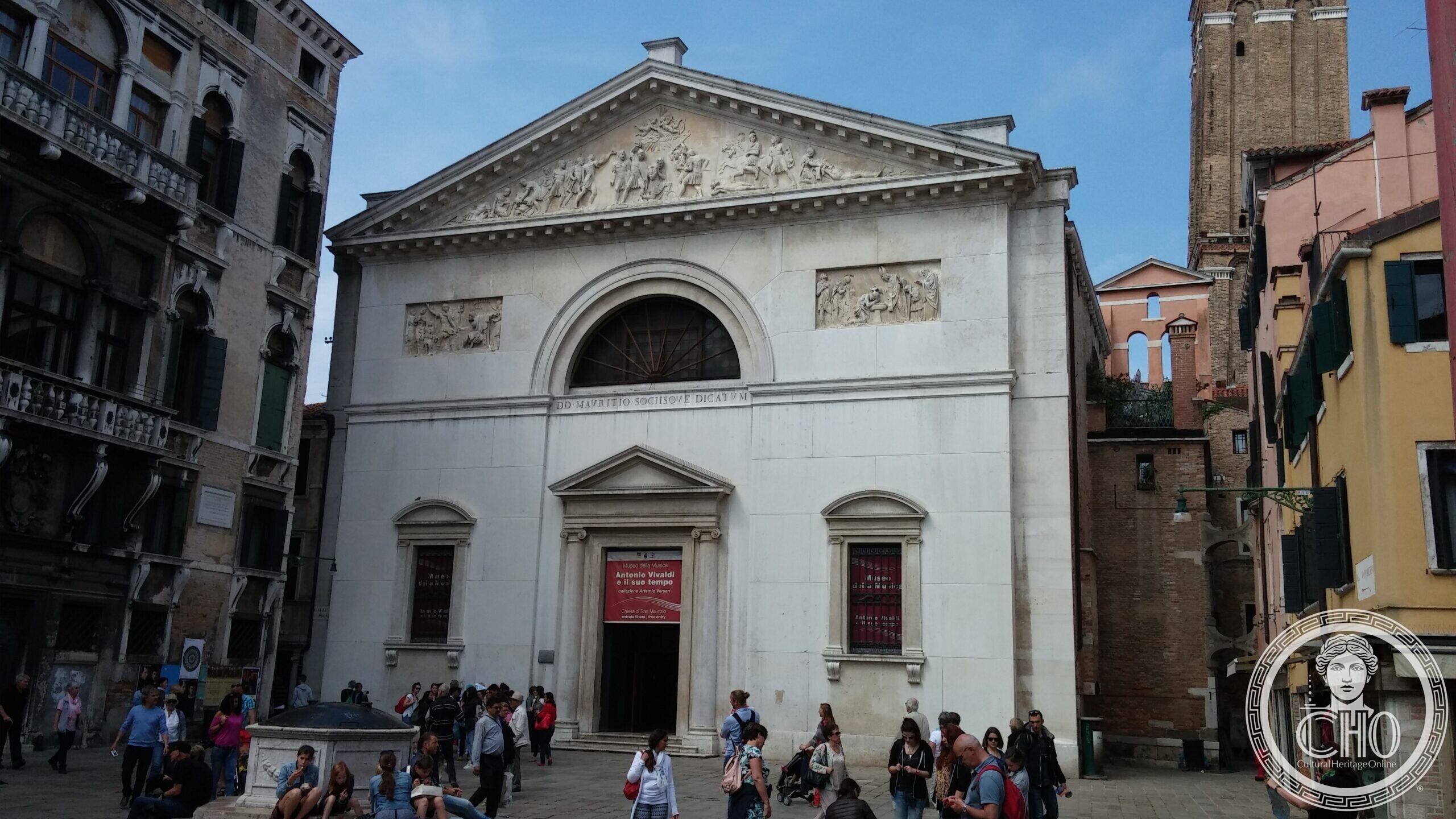
The front is a single pale block under a pediment, and everything on it is carved: a long relief across the tympanum, two more set into the wall on either side of the thermal window, and the dedication cut in Roman capitals along the string course. There is no portico and no colour. Against the brick and plaster of the campo it reads as a piece of paper set on edge.
Inside, the Greek-cross plan does what Sansovino’s did: a central space under a dome, four short arms with blind cupolas, and light coming from above rather than from the sides. The instruments stand in cases around the walls. In the campo outside, the base of the flagpole carries a carved head, and behind the roofline the leaning campanile of Santo Stefano appears from almost every angle.
Practical information
- The building is open as a museum of musical instruments, with free entry; hours vary by season
- Concerts are held in the church; tickets are sold separately
- The campo outside is one of the few in the sestiere with benches and no restaurant tables
- Twenty minutes is enough
Getting there
Campo San Maurizio is on the walking route between the Accademia bridge and Piazza San Marco, five minutes from either. The nearest vaporetto stops are Santa Maria del Giglio and Accademia.
Nearby
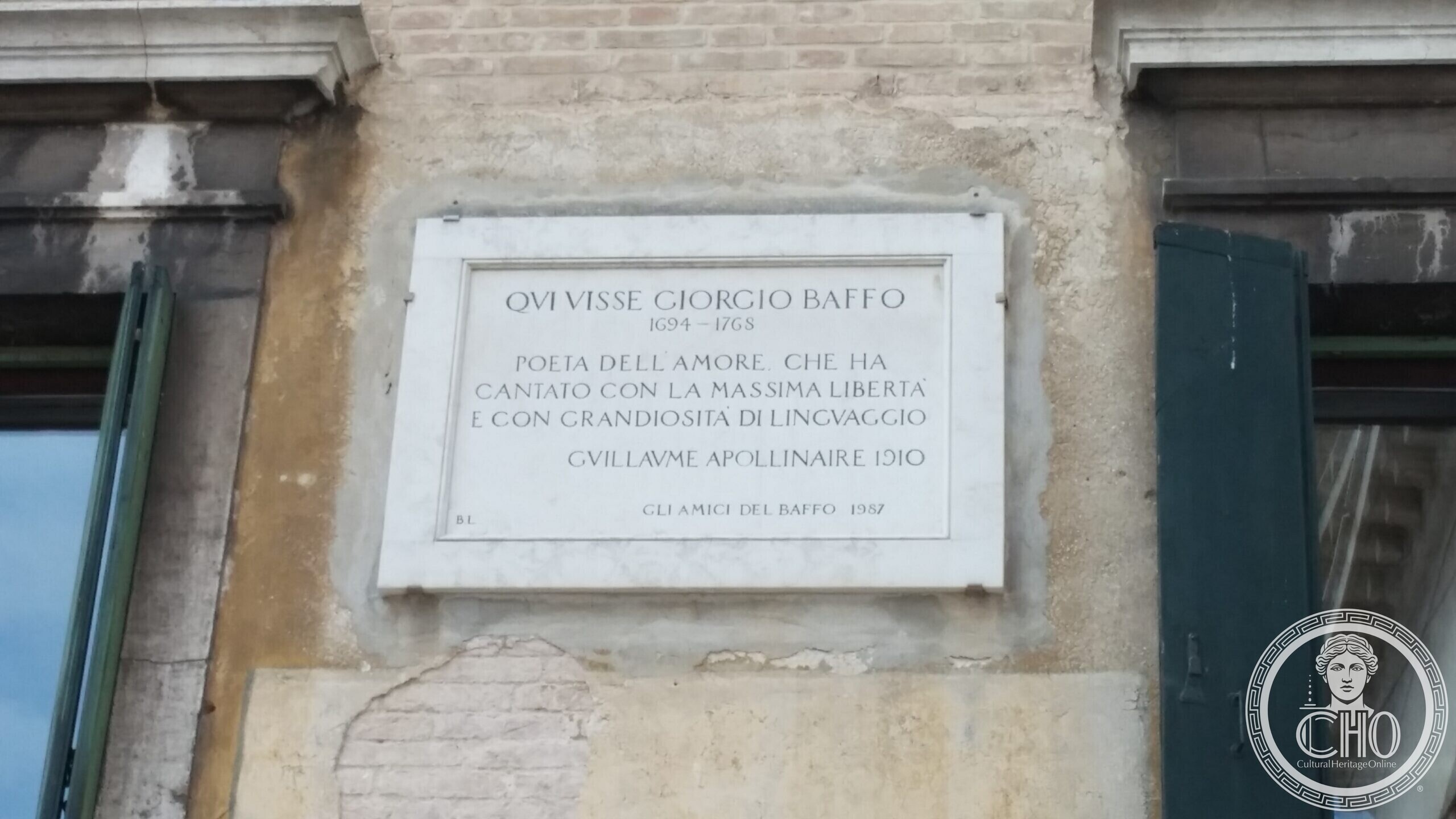
- Palazzo Bellavite, on the same campo, where the poet Giorgio Baffo died
- Palazzo Zaguri, a minute away
- The cloister of Santo Stefano, three minutes north
Sources
- The city plaque on the church, photographed and transcribed here: ancient foundation, rebuilding at the end of the eighteenth century, neoclassical facade by G. Selva and A. Diedo, and the list of artists whose works the church holds
- Wikipedia (Italian), Chiesa di San Maurizio (Venezia): the foundation of 699 as San Lazzaro, the rebuilding of 1105 after the fire, the sixteenth-century church consecrated in 1590, the demolition of 1806 and the rebuilding from 1807 on the plan of Sansovino’s San Geminiano, the passage of the commission from Pietro Antonio Zaguri to Selva and Diedo, the Greek-cross plan with central dome and four blind cupolas, and the present use as Museo della Musica
- Coordinates from the position supplied by the photographer and cross-checked against OpenStreetMap
Photo gallery
Photographs contributed by a Cultural Heritage Online member.
Find it on the map
See this place and what’s around it →Record researched and written by Carla Szathvary for Cultural Heritage Online, 2026.
📷 Become a Cultural Heritage Online photographer
Share your photos of places: they stay published under your name as the author. The more they're seen, the more you get noticed — and soon a contest will reward the most appreciated photos.
Log in or sign up free to add a photoIs this page about you?
This page is read by travellers and heritage enthusiasts who find it on Google. Tell us how you are connected to this place and we will take it from there.