
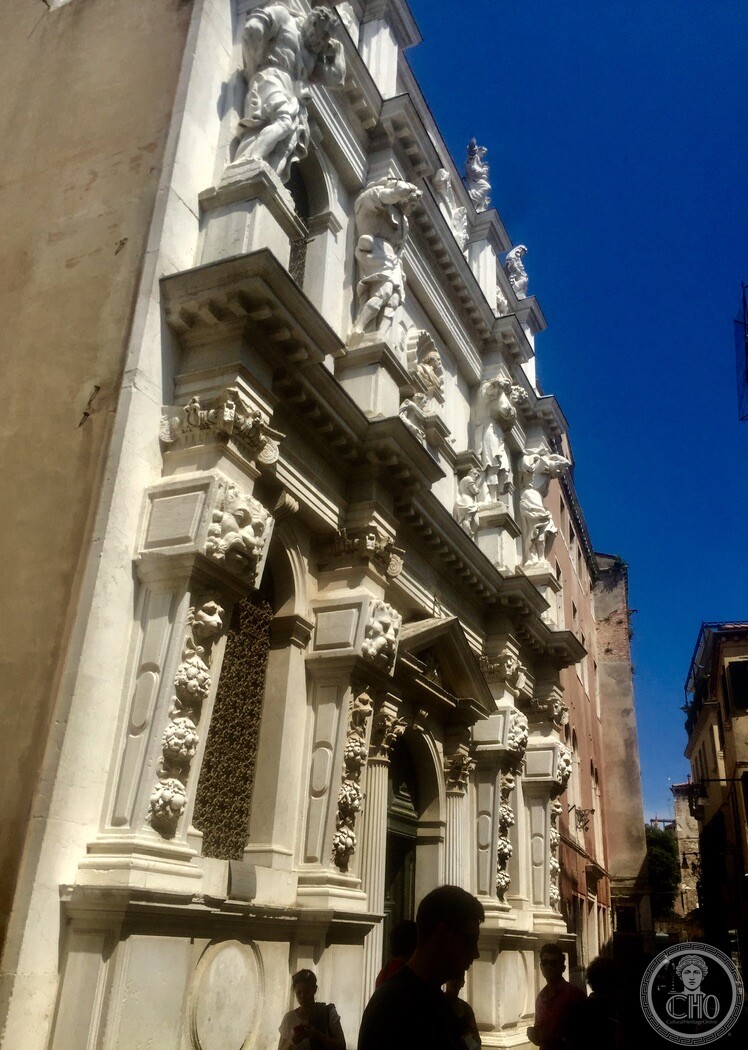
A famine hospital that became one of Venice’s four great music schools, behind the most crowded church front in the city — built on a street too narrow to stand back and look at it.
At a glance
The Ospedaletto began as emergency shelter and ended as a conservatory. Founded in the late 1520s to take in the starving who reached Venice from the mainland, it grew into one of the four Venetian ospedali that trained orphaned girls in music and became famous across Europe for their choirs. The church at its centre was designed by Andrea Palladio and given a new front in 1670 by Baldassare Longhena, who packed it with heads, festoons and straining figures. The street in front is barely four metres wide. You cannot step back from it, and that is the point.
Key facts
- Institution: the Ospedale dei Derelitti, founded during the famine of the late 1520s — 1527 in the complex’s own account, 1528 in others, under Saint Girolamo Emiliani
- Church: designed by Andrea Palladio (1508–1580), built in 1575
- Facade: Baldassare Longhena (1596–1682), 1670, funded by the bequest of Bartolomeo Cargnoni
- Sculpture: four allegorical statues above the cornice, from the workshop of Giusto Le Court
- High altar: ciborium designed by Longhena, 1668
- Sala della Musica: built 1776–1777 to a design by Francesco Patron, frescoed by Jacopo Guarana and Agostino Mengozzi Colonna
- Organ: signed by Pietro Nacchini, 1751
- GPS: 45.43891, 12.34289 · Open in Google Maps
History
The hospital was improvised. In 1527 a famine drove the rural poor of the Veneto into the city, and a shelter of wooden structures went up on an old shooting ground in Castello to hold them. What began as a temporary measure hardened into an institution, taking in the sick, pilgrims and orphaned children of both sexes. Its formal foundation is credited to Girolamo Emiliani, later canonised, and dated by the complex itself to 1527 and by other accounts to 1528.
Venice ran four such hospitals, and each of them turned its orphan girls into musicians. The girls of the Derelitti sang and played behind grilles for audiences that included visiting princes; the practice made the Venetian ospedali a European reference for choral and instrumental training through the seventeenth and eighteenth centuries. The organ Pietro Nacchini signed in 1751 is still in the church. The Sala della Musica, added in 1776–1777 to a design by Francesco Patron and frescoed by Jacopo Guarana with the quadratura painter Agostino Mengozzi Colonna, was the last and most theatrical room the institution built for that purpose.
The church itself came earlier: Palladio’s design, built in 1575, then modernised in the seventeenth century by Longhena, who supplied both the 1668 ciborium at the high altar and, in 1670, the facade that everyone argues about. The complex today belongs to the Venetian public welfare institutions and is opened to visitors by booking.
What you see
Longhena’s front is a wall of carving. Bearded heads push out of the pilasters at eye level; clusters of fruit and drapery hang between them; above the portal, figures twist out of their niches as if the building were shedding them. Four allegorical statues from Giusto Le Court’s workshop stand along the cornice. None of it can be taken in whole, because the Barbaria de le Tole gives no distance: the eye climbs the facade in fragments, which is closer to how a Baroque sculptor worked than to how a Renaissance architect intended a building to be read.
Inside, the surprise is restraint. A single nave under a flat painted ceiling, a checkerboard marble floor, altars set into the side walls, and above the entrance the dark wooden gallery where the girls sang — visible, but screened. Giambattista Tiepolo’s Sacrifice of Isaac is among the canvases set high along the nave. The room’s acoustics and sightlines were built around a choir that was meant to be heard and not quite seen.
Practical information
- Visits to the complex, including the church and the Sala della Musica, are by advance booking with the foundation that manages the site
- Booking and current hours: gioiellinascostidivenezia.it, telephone +39 041 3096605
- The facade can be seen from the street at any hour, free of charge
- Allow an hour for the guided visit; the church is occasionally used for concerts and exhibitions
Getting there
The church stands on the Barbaria de le Tole, a two-minute walk east of Campo Santi Giovanni e Paolo. The nearest vaporetto stop is Ospedale, on the northern quay, about five minutes away; from the Rialto the walk takes around fifteen.
Nearby
- The basilica of Santi Giovanni e Paolo and the Scuola Grande di San Marco, two minutes west
- Santa Maria Formosa, about eight minutes south-west
- The Libreria Acqua Alta, about seven minutes south
Sources
- Gioielli Nascosti di Venezia, official visitor page for the Complesso dell’Ospedaletto — gioiellinascostidivenezia.it: the 1527 famine and the provisional wooden shelter, Palladio’s design, Longhena’s Baroque facade and new high altar, the Sala della Musica frescoed by Guarana and Mengozzi Colonna, the girls’ choirs, the 1751 Nacchini organ, management by the Fondazione Venezia Servizi alla Persona and visits by booking
- Wikipedia (Italian), Chiesa dell’Ospedaletto: the 1528 foundation under Girolamo Emiliani on the area “del bersaglio”, the church built in 1575, the 1670 facade funded by the bequest of Bartolomeo Cargnoni, the four allegorical statues from the school of Giusto Le Court, the 1668 Longhena ciborium, Tiepolo’s Sacrificio di Isacco, the 1777 date of the Sala della Musica frescoes, and ownership by IPAV
- Coordinates cross-checked against OpenStreetMap Nominatim for the Chiesa dell’Ospedaletto, Barbaria de le Tole
Photo gallery
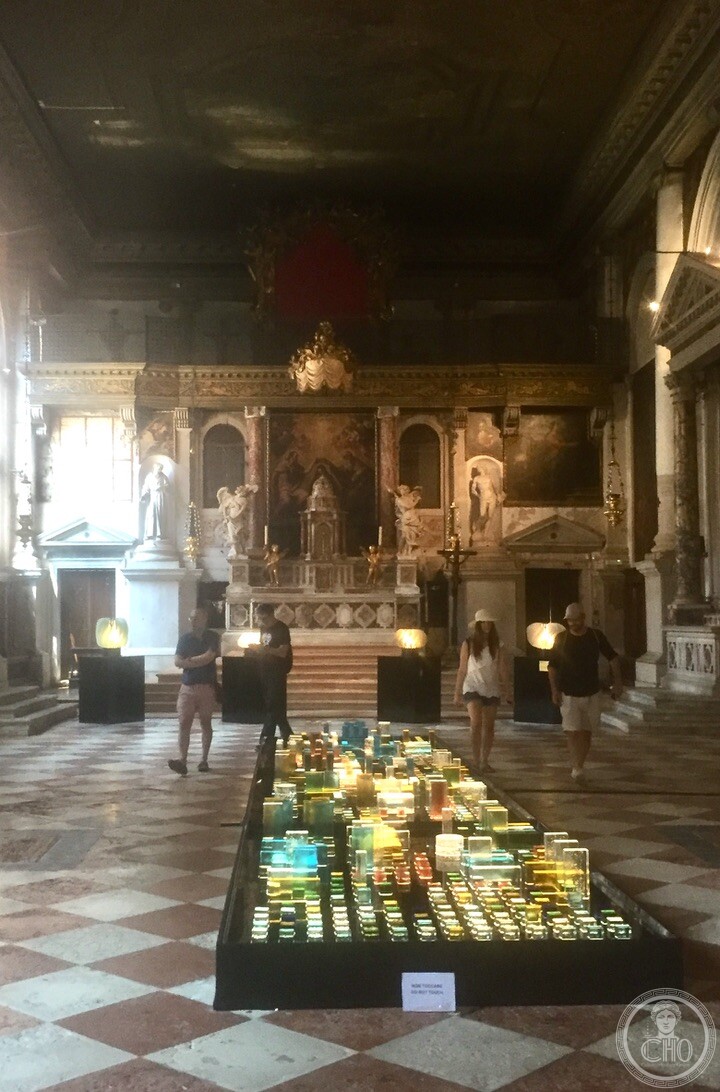
Photographs contributed by a Cultural Heritage Online member.
Find it on the map
See this place and what’s around it →Record researched and written by Carla Szathvary for Cultural Heritage Online, 2026.
📷 Become a Cultural Heritage Online photographer
Share your photos of places: they stay published under your name as the author. The more they're seen, the more you get noticed — and soon a contest will reward the most appreciated photos.
Log in or sign up free to add a photoIs this page about you?
This page is read by travellers and heritage enthusiasts who find it on Google. Tell us how you are connected to this place and we will take it from there.