
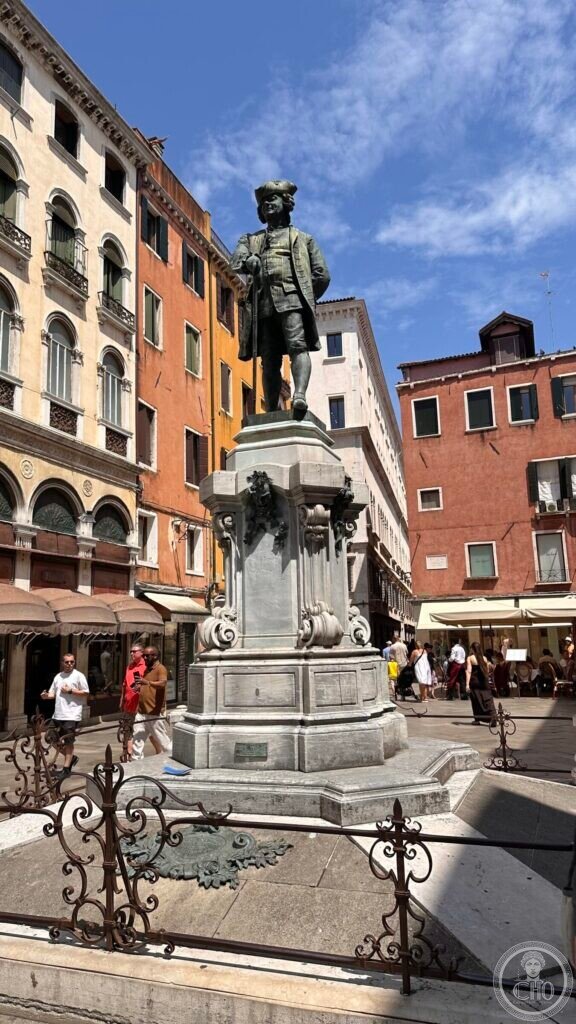
Antonio Dal Zotto’s bronze was unveiled in 1883 in Campo San Bartolomeo, and has stood there ever since in the middle of the crowd — which is roughly where Goldoni found his characters.
At a glance
- Sculptor: Antonio Dal Zotto (Venice, 7 May 1841 – 19 February 1918)
- Unveiled: 1883
- Cast by: P. Arquati
- Pedestal: rococo, designed by the architect Pellegrino Orefice
- Where: Campo San Bartolomeo, sestiere of San Marco
What you see
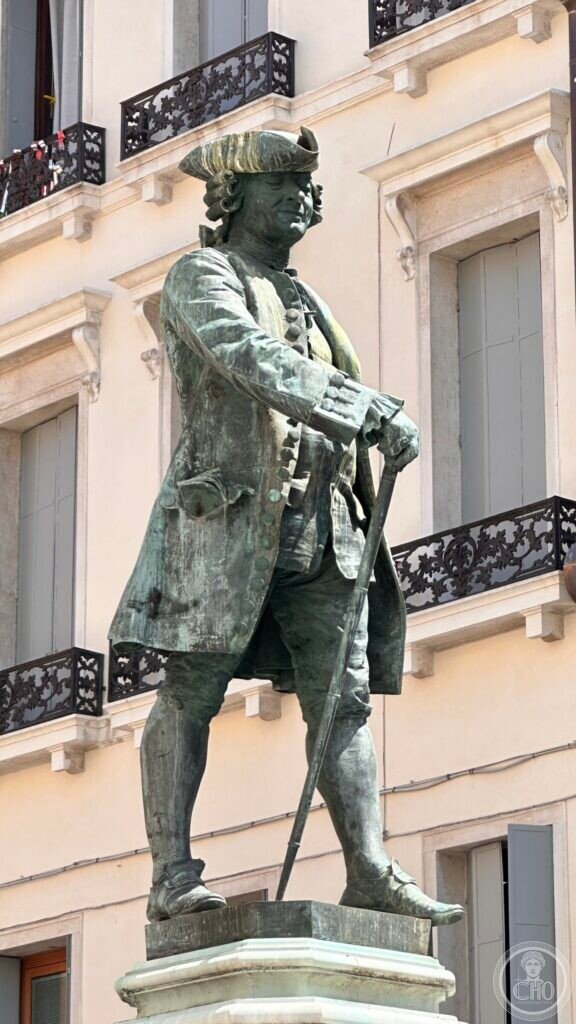
Goldoni stands in the dress of his own century, cloak over the arm, stick in hand, caught mid-stride rather than posed. The work is universally taken as Dal Zotto’s masterpiece, and the reason usually given is the face.
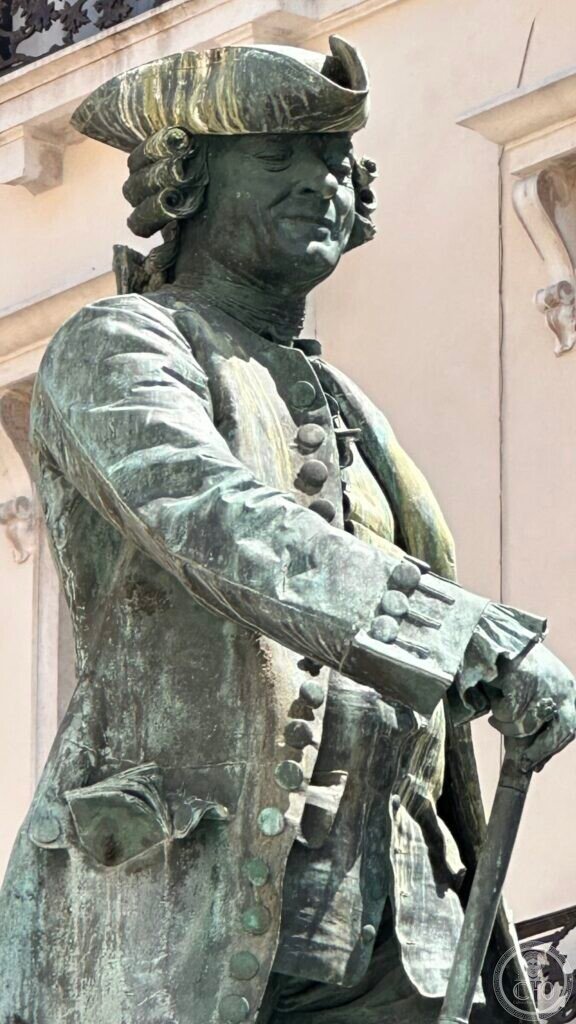
Close up, the expression does the work: alert, amused, turned very slightly towards whoever is passing. It is a portrait of a man looking at people, which is what his comedies were made of.
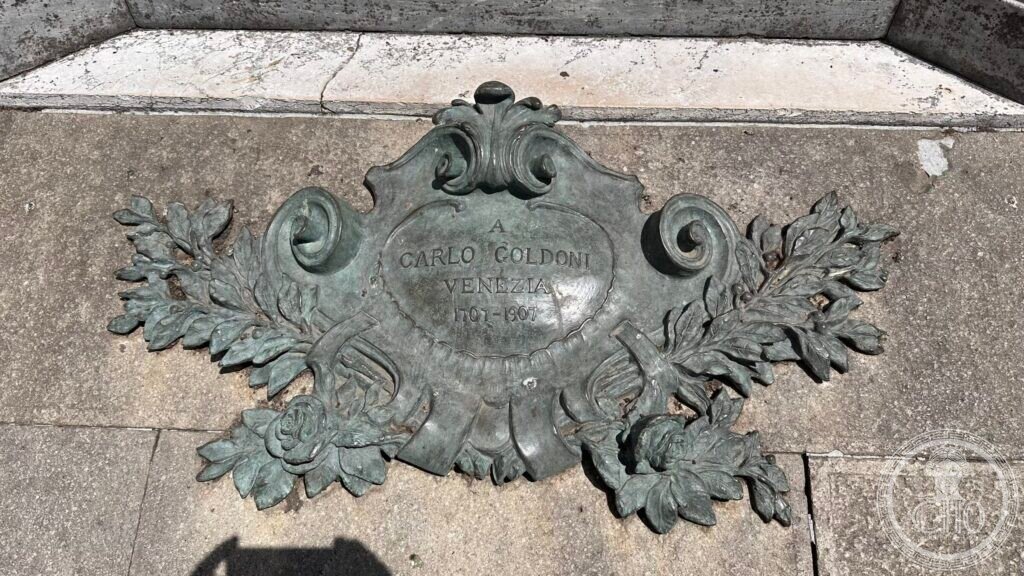
The pedestal is a separate design, by the architect Pellegrino Orefice: rococo, with a bronze cartouche carrying the name framed in foliage — eighteenth-century in manner, like the man on top of it.
Why it matters
Campo San Bartolomeo was a market square before it was a meeting place, and it is now one of the most crossed spaces in Venice: the way from Rialto to San Marco runs through it. Goldoni was set down in the middle of that traffic in 1883, and the position has kept the monument in use. Venetians arrange to meet at the statue. The church that gives the campo its name was founded in 840, dedicated then to Saint Demetrius, and later housed the Scoletta alemanna, the German merchants’ confraternity.
Practical information
- In the open air on Campo San Bartolomeo, visible at all hours
- Railed off at the base; the campo is a through route and is busy for most of the day
Getting there
A minute from the Rialto bridge on the San Marco side; waterbus to Rialto. The campo is on the main route between Rialto and Piazza San Marco.
Sources
- Treccani, Dizionario Biografico degli Italiani, entry DAL ZOTTO, Antonio
- Comune di Venezia, Campo San Bortolomio — live.comune.venezia.it
Photographs by Luigi De Marchi. Editorial text © Cultural Heritage Online, 2026.
📷 Become a Cultural Heritage Online photographer
Share your photos of places: they stay published under your name as the author. The more they're seen, the more you get noticed — and soon a contest will reward the most appreciated photos.
Log in or sign up free to add a photoIs this page about you?
This page is read by travellers and heritage enthusiasts who find it on Google. Tell us how you are connected to this place and we will take it from there.