
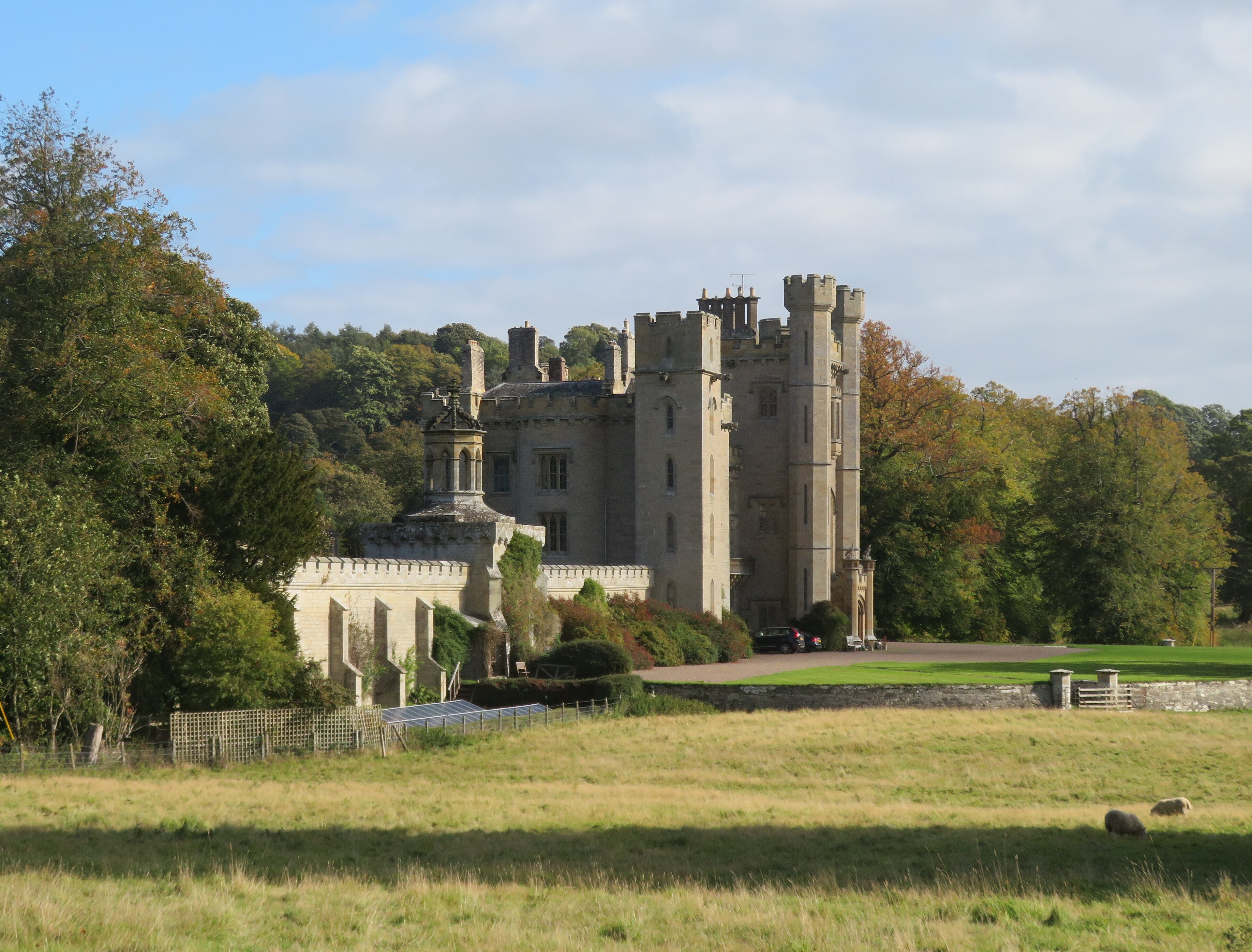
A fortified stronghold in the Scottish Borders anchored by a formidable Norman keep, Duns Castle stands as a remarkable survival of medieval military architecture.
At a glance
Duns Castle is a historic house dominated by its imposing Pele Tower, a defensive structure of massive proportions. The castle and its associated buildings are protected as a Category A listed building, Scotland’s highest designation for structures of national or more than special interest.
History
The Norman Keep at Duns Castle is traditionally dated to 1320, though the exact circumstances of its construction remain obscure. Pele towers—fortified keeps built along the Scottish borders—served as refuges during periods of cross-border conflict and provided defensible strongholds for their inhabitants during times of upheaval.
What you see
The castle’s defining feature is its massive Norman Keep, a squat, heavily built tower designed for defence rather than display. The fortress stands austere and formidable, its thick walls a testament to medieval military engineering. The property encompasses several structures, all maintained within the protected estate.
Cultural significance
Duns Castle exemplifies the border architecture that emerged from centuries of contested land between Scotland and England. Its preservation as a Category A listed building reflects the national importance placed on this rare survival of 14th-century Scottish defensive construction.
Key facts
- Location: Duns, Scottish Borders, United Kingdom
- Coordinates: 55.7822, −2.3558
- Date: Supposedly 1320
- Designation: Category A listed building
- Primary feature: Norman Keep or Pele Tower
Practical information & getting there
Duns Castle is located in the small town of Duns in the Scottish Borders region. The site is privately owned; visitors should make enquiries locally before visiting.
Sources & resources
Find it on the map
See this place and what’s around it →📷 Become a Cultural Heritage Online photographer
Share your photos of places: they stay published under your name as the author. The more they're seen, the more you get noticed — and soon a contest will reward the most appreciated photos.
Log in or sign up free to add a photoIs this page about you?
This page is read by travellers and heritage enthusiasts who find it on Google. Tell us how you are connected to this place and we will take it from there.