
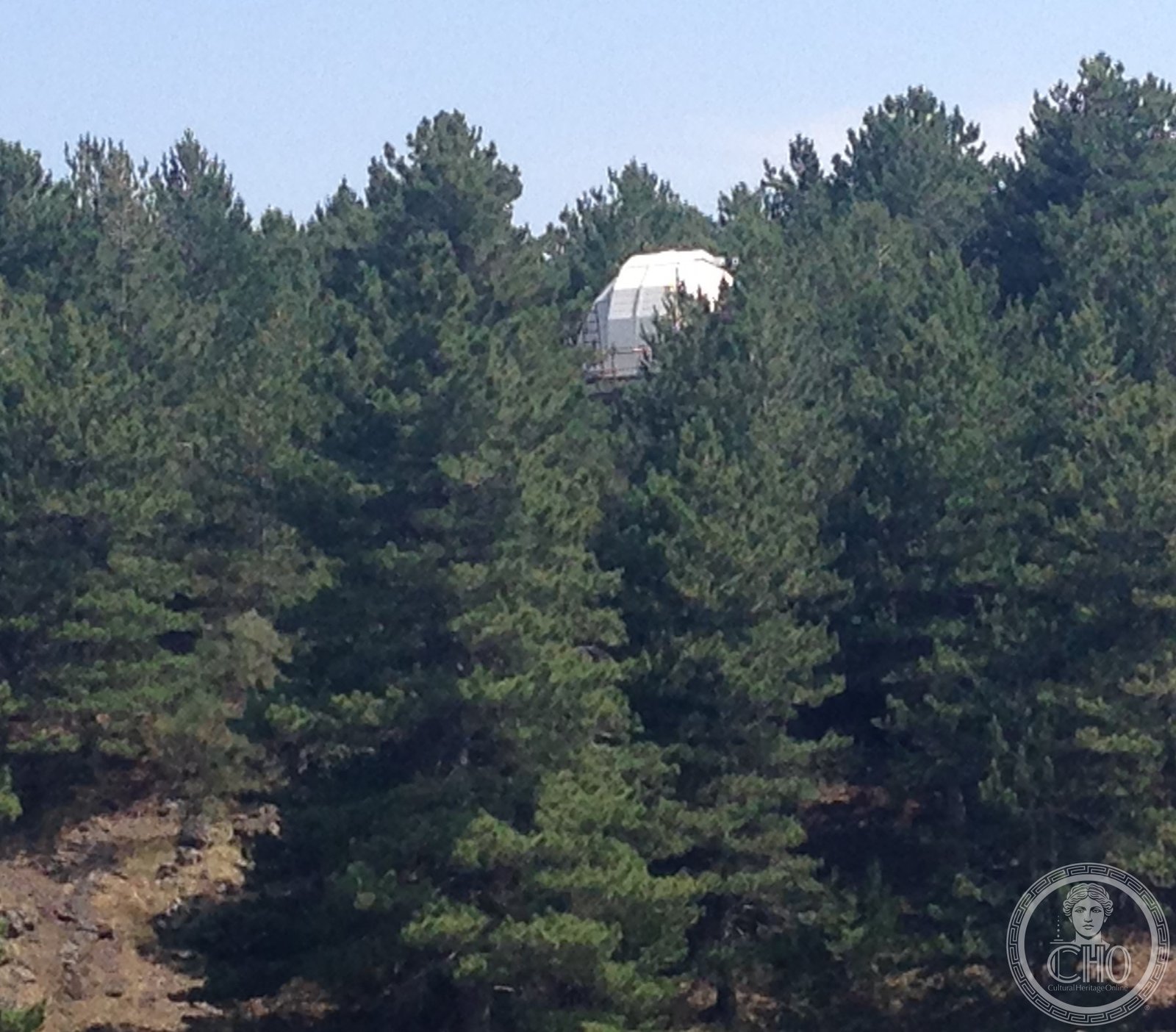
Serra La Nave Astrophysical Observatory
Serra La Nave Astrophysical Observatory is a scientific research station of the National Institute of Astrophysics (INAF) situated on the southern slope of Mount Etna in Sicily, at approximately 1,730 metres above sea level. Established in 1953 and operated by the Catania Astrophysical Observatory, it is equipped with a 91-centimetre reflecting telescope and specialises in solar physics, stellar photometry, and the monitoring of Etna’s volcanic activity as a form of natural atmospheric interference. The site combines cutting-edge astrophysical research with one of the most dramatic volcanic landscapes in Europe.
- Address
- Serra La Nave, Piano Vetore, Nicolosi, 95030 Catania CT (accessible via SP92)
- Period
- Established 1953; expanded through the 1960s–2000s
- Institution
- INAF – Osservatorio Astrofisico di Catania (National Institute of Astrophysics)
- Altitude
- Approx. 1,730 m a.s.l. on the southern flank of Mount Etna
- Function
- Active astrophysical research station; public outreach and education
- Coordinates
- 37.6925° N, 14.9741° E
- Notes
- Main instrument: 91-cm Cassegrain reflector; the site also hosts the M.G. Fracastoro station named after the Italian astronomer; night-sky quality protected by Etna Park regulations
At a glance
- Type
- Astrophysical research observatory and public science facility
- Period
- Active since 1953
- Location
- Southern slope of Mount Etna, Metropolitan City of Catania, Sicily
- Operator
- INAF – Osservatorio Astrofisico di Catania
- Main telescope
- 91-cm Cassegrain reflector (M.G. Fracastoro Station)
Overview
Perched on the southern slope of Europe’s most active volcano, Serra La Nave represents Italy’s commitment to combining natural heritage with scientific research. The observatory takes advantage of the altitude, reduced light pollution, and the predominantly stable atmospheric conditions offered by the Etna massif to conduct high-precision observations of the sun, variable stars, and extragalactic objects. As part of INAF’s national network, it contributes data to international astronomical surveys and collaborates with observatories across Europe.
History
The Catania Astrophysical Observatory was founded in 1899 in the city of Catania, but the Serra La Nave mountain station was established in 1953 specifically to escape the growing light pollution and atmospheric turbulence of the urban site. The choice of Mount Etna’s southern flank — within what would later become the Etna Natural Park — proved scientifically sound, offering more than 200 clear nights per year on average. Over the following decades the station was progressively equipped with instruments for solar and stellar observation.
The main telescope, the 91-cm Cassegrain reflector known as the M.G. Fracastoro Station (named after the Renaissance scientist Girolamo Fracastoro), was installed in the 1960s and remains the site’s principal research instrument. Proximity to active volcanic vents has also made the observatory a unique laboratory for atmospheric optics research.
What you see
Visitors to Serra La Nave encounter a compact scientific campus of white-rendered buildings set amid Etna’s characteristic black lava flows and pine forest, with the volcanic summit visible on clear days. The main dome houses the Fracastoro reflector; additional domes and flat-roof instruments serve solar monitoring and photometric work. The surrounding landscape is part of the Etna Natural Park (Parco dell’Etna), a UNESCO World Heritage Site since 2013, adding a layer of natural grandeur to the scientific mission of the site.
Cultural significance
Serra La Nave embodies the Italian scientific tradition of locating research institutions within places of exceptional natural heritage. The observatory’s work is intertwined with the study of Etna itself — one of the most documented volcanoes on Earth — giving its research a dual scientific and cultural resonance. Cultural Heritage Online documents this site as part of Sicily’s scientific and natural heritage landscape.
Practical information
Address: Serra La Nave, Piano Vetore, Nicolosi (CT), Sicily.
Opening hours: Open to the public during organised educational visits and open-night events; check INAF Catania’s official website for scheduled public observing nights.
Admission: Educational visits typically free or at a nominal fee; advance booking recommended.
Website: oact.inaf.it
Getting there
Serra La Nave is most easily reached by car from Catania (approximately 40 km) via the SP92 road through Nicolosi toward Piano Vetore. There is no regular public bus service to the observatory; a private vehicle or organised group transfer from Nicolosi or Catania is necessary. Nicolosi itself is served by AST buses from Catania’s central bus terminal.
Sources & resources
Find it on the map
See this place and what’s around it →Historical events at this place (1)
📷 Diventa un fotografo di Cultural Heritage Online
Condividi le tue foto dei luoghi: restano pubblicate con la tua firma come autore. Più vengono viste, più ti fai conoscere — e presto un concorso premierà le foto più apprezzate.
Accedi o registrati gratis per aggiungere una foto