
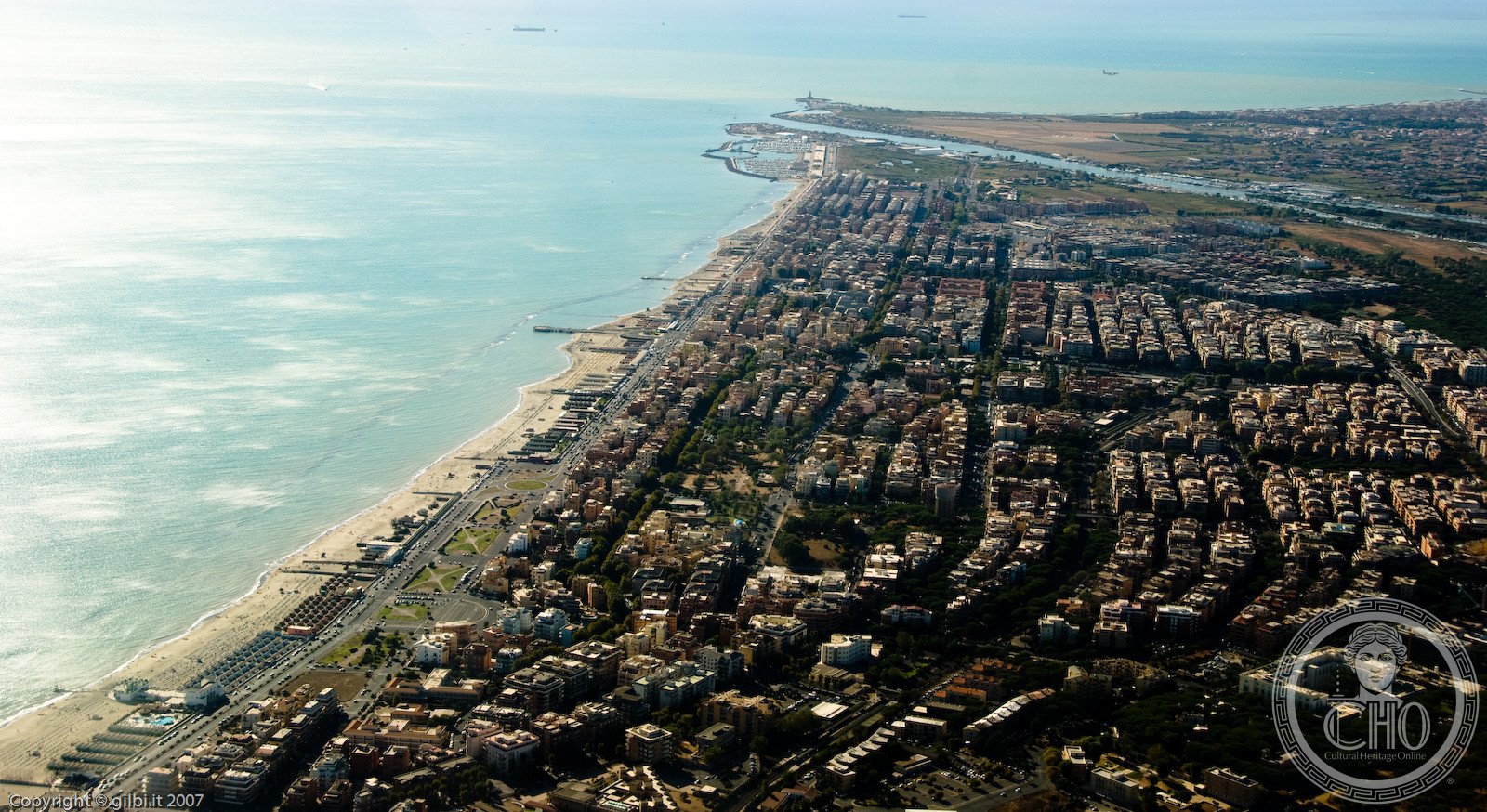
Lido di Ostia — officially Ostia — is a large coastal neighbourhood of Rome located on the Tyrrhenian Sea, in the Municipio X administrative district. The only seaside resort within the municipality of Rome, it lies adjacent to the ancient port city of Ostia Antica, whose extraordinary Roman ruins form one of the most significant open-air archaeological sites in Italy. For generations of Romans, Lido di Ostia has been the city's summer escape.
- Address
- Lido di Ostia (Ostia), Municipio X, 00122 Roma RM
- Period
- Modern resort development from early 20th century; ancient Roman harbour nearby
- Location
- Tyrrhenian Sea coast, 25 km south-west of central Rome
- Nearby heritage
- Ostia Antica (ancient Roman port city), Castello di Giulio II
- Coordinates
- 41.7311° N, 12.2854° E
- Notes
- Connected to Rome city centre by the Roma-Lido commuter railway (Linea 3); UNESCO-listed Ostia Antica archaeological park is 3 km inland
At a glance
- Type
- Coastal neighbourhood and beach resort
- Period
- Modern (20th century development); ancient harbour city adjacent
- Location
- Municipio X, Rome, Lazio
- Distance
- Approximately 25 km south-west of central Rome
Overview
Lido di Ostia is the seaside district of Rome, situated at the mouth of the Tiber where it meets the Tyrrhenian Sea. It is the sole part of the municipality of Rome with direct sea access, making it the city's principal beach resort since the early 20th century. The area is bounded by ancient heritage: the modern resort sits adjacent to Ostia Antica, the remarkably preserved ancient Roman port city that once served as Rome's commercial harbour and is today one of Italy's most important archaeological parks.
History
The ancient Roman town of Ostia was the harbour-city of Rome from at least the 4th century BC, declining after the harbour shifted to nearby Portus under Claudius and Trajan. The medieval successor settlement eventually gave way to the modern resort, which developed rapidly in the early 20th century as rail connections to Rome improved. The Roma-Lido railway, inaugurated in 1924, opened the coast to everyday Romans and established Ostia as the city's popular seaside destination. Post-war development brought dense residential construction alongside the historic shoreline.
What you see
The modern Lido di Ostia offers a long stretch of Tyrrhenian coastline divided between stabilimenti balneari (private beach clubs) and free public beaches. The Lungomare Duca degli Abruzzi runs along the seafront, lined with early 20th-century Liberty-style buildings and mid-century architecture. The nearby Castello di Giulio II (15th century) in the old borgo of Ostia marks the transition to the historic landscape. Just inland, the archaeological park of Ostia Antica preserves temples, baths, theatres, and an entire street grid of the ancient city.
Cultural significance
Lido di Ostia holds a dual significance: as a living part of Rome's contemporary urban geography and as the gateway to one of the most important Roman archaeological landscapes in the world. Ostia Antica preserves evidence of daily Roman commercial and civic life impossible to match anywhere else. Cultural Heritage Online has documented the broader Ostia area as a key heritage corridor linking Roman antiquity with living seaside culture.
Practical information
Lido di Ostia is reached from Rome in approximately 40 minutes. Ostia Antica archaeological park: Via dei Romagnoli 717, 00119 Ostia Antica — open daily except Mondays; ticket required. The beach areas are open seasonally. Check the official archaeological park website for current hours.
Getting there
Take the Roma-Lido train (Linea 3) from Porta San Paolo station (adjacent to Piramide on Metro Line B). The journey to Lido Centro takes approximately 35–40 minutes and runs frequently. For Ostia Antica, alight at the Ostia Antica station. Bus connections also operate from EUR and Piazzale Ostiense.
Sources & resources
See the place
Find it on the map
See this place and what’s around it →Historical events at this place (1)
📷 Become a Cultural Heritage Online photographer
Share your photos of places: they stay published under your name as the author. The more they're seen, the more you get noticed — and soon a contest will reward the most appreciated photos.
Log in or sign up free to add a photo