

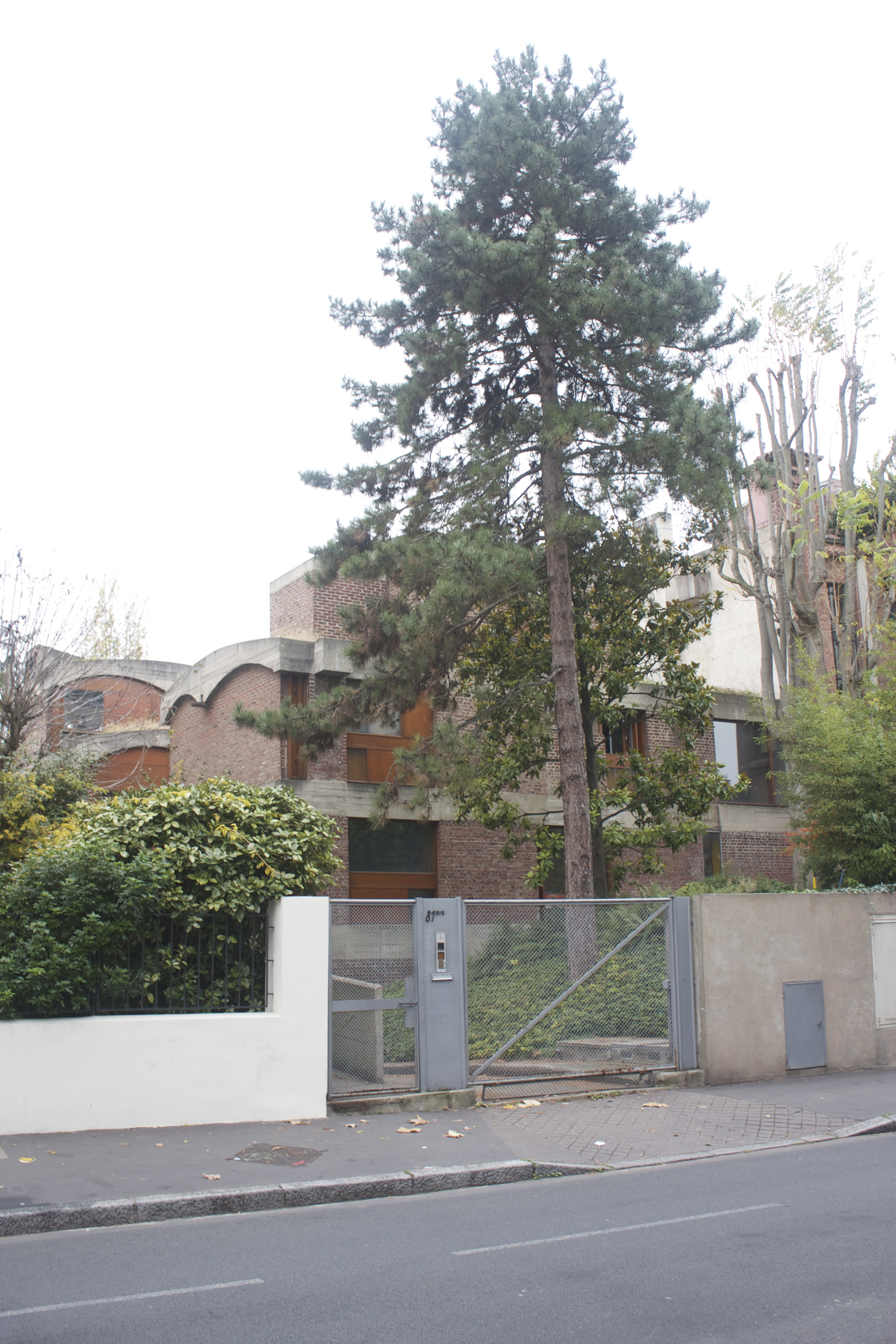
A pair of residences that exemplify Le Corbusier’s post-war shift toward raw materiality and sculptural form, these houses in a prosperous Paris suburb remain landmarks of modernist domestic architecture.
At a glance
Two adjoining houses in Neuilly-sur-Seine designed by Le Corbusier and completed between 1954 and 1956. Built for the Jaoul family, they rank among the architect’s most significant works of the post-war period and showcase his distinctive use of exposed concrete and brick.
History
Le Corbusier designed the Maisons Jaoul during a pivotal moment in his career. Completed in 1956, they emerged as a departure from his earlier, more austere aesthetic. The houses represented a new direction in his thinking about domestic space and material honesty.
What you see
The houses are distinguished by their extensive use of unpainted béton brut—raw cast concrete left exposed to reveal its texture and construction marks. Rough brickwork complements the concrete, creating a deliberate contrast of materials. The design prioritizes sculptural form and structural expression over polished surfaces.
Cultural significance
The Maisons Jaoul stand as pivotal examples of Le Corbusier’s evolving philosophy in the post-war era. Their unadorned materiality and formal boldness influenced generations of architects and remain central to discussions of modernist residential design and the aesthetics of concrete construction.
Key facts
- Location: Neuilly-sur-Seine, France
- Coordinates: 48.88°N, 2.254°E
- Architect: Le Corbusier
- Completed: 1954–56
- Material: Béton brut (cast concrete) and brick
Practical information & getting there
The houses are located in Neuilly-sur-Seine, an upmarket suburb northwest of central Paris. Access is by public transport (Metro Line 1 serves the area) or by car. Visitors should note that these are private residences and exterior viewing only is possible without prior arrangement.
Sources & resources
Find it on the map
See this place and what’s around it →📷 Become a Cultural Heritage Online photographer
Share your photos of places: they stay published under your name as the author. The more they're seen, the more you get noticed — and soon a contest will reward the most appreciated photos.
Log in or sign up free to add a photoIs this page about you?
This page is read by travellers and heritage enthusiasts who find it on Google. Tell us how you are connected to this place and we will take it from there.